Indiana’s New Anti-Voting Laws Challenged for Targeting Naturalized Citizens
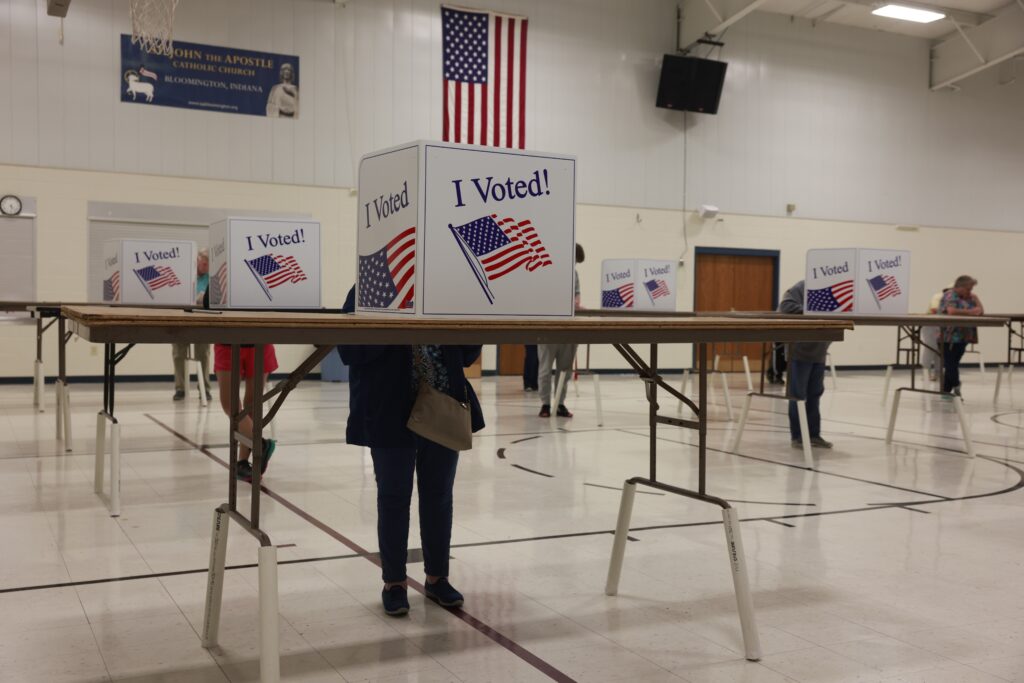
A coalition of pro-voting groups is suing Indiana over two new anti-voting laws they say unfairly target naturalized citizens and threaten to remove eligible voters from the rolls.
The lawsuit, filed in federal court Tuesday, alleges that the laws violate federal protections meant to ensure fair and nondiscriminatory voter registration.
Get updates straight to your inbox — for free
Join over 350,000 readers who rely on our daily and weekly newsletters for the latest in voting, elections and democracy.
The outcome in Indiana could have national implications, especially as GOP legislatures in other states push similar voting barriers.
The first law, House Bill 1264 (2024), forces the state to cross-check voter rolls with the Bureau of Motor Vehicles database. Anyone flagged as having once held a temporary driver’s license or ID is required to show new “documentary proof of citizenship” (DPOC) within 30 days or risk being removed from the voter rolls. The second, House Bill 1680 (2025), bars registration for anyone using a temporary-credential number unless they also provide citizenship papers at the time of registration.
“Hoosiers who have become U.S. citizens are needlessly harmed by two new Indiana election laws. As a result, these laws risk disenfranchising eligible Hoosier voters,” the complaint reads. “These DPOC requirements are never imposed on individuals who were born U.S. citizens and are only imposed on certain naturalized or derived citizens.”
Both measures, plaintiffs argue, single out naturalized and derived citizens — people who became U.S. citizens through naturalization or through their parents — while leaving those born in the U.S. untouched.
The pair of laws were passed by Indiana GOP lawmakers under the guise of “election security.” But the plaintiffs assert that these laws rest on the false premise of noncitizens voting in Indiana elections.
State officials have provided no evidence of widespread noncitizen voting, according to the filing.
“Only U.S. citizens may vote in state and federal elections, and the overwhelming evidence shows that Indiana does not face a problem with voting or attempts to vote by noncitizens,” the plaintiffs add. “The rare or nonexistent proven instances of noncitizens registering or applying to register provides no basis for the Challenged DPOC Provisions, which potentially will exclude numerous eligible citizens from registering to vote and voting.”
Even Secretary of State Diego Morales (R), who championed the laws, has stated that “Indiana has been a model for election laws, and frankly, I don’t anticipate learning that many non-citizens have landed on our voter registration rolls.”
For naturalized citizens, proving citizenship often isn’t simple. Documents like naturalization certificates can be costly or time-consuming to replace — and the 30-day deadline may be unforgiving for passport processing times.
“For many individuals who have become U.S. citizens and who lack DPOC, the costs in time and effort to obtain it, and then provide it to a county election official, will be substantial and result in many voters simply giving up and being disenfranchised,” the plaintiffs state. “Requiring naturalized or derived citizens to provide DPOC to remain registered to vote or to register to vote is discriminatory and may disenfranchise numerous eligible voters.”
Similar laws in Arizona and Kansas were struck down for violating federal protections. Courts there found that “the sheer magnitude of potentially disenfranchised voters” outweighed the nonexistent threat of noncitizen voting.
Voting rights groups in Indiana are pushing for a court order to stop the laws from taking effect before the 2026 elections.