Florida Supreme Court refuses to suspend or disbar election denier Kenneth Chesebro
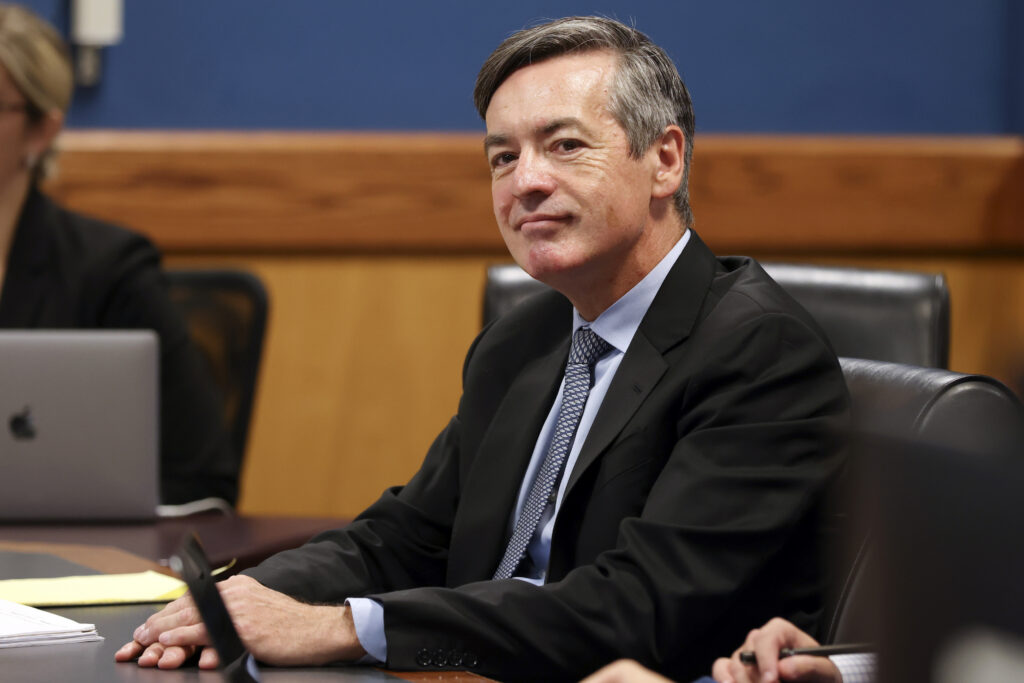
The Florida Supreme Court has refused to suspend or disbar Kenneth Chesebro, a former Trump campaign lawyer who pleaded guilty in Georgia to a felony charge tied to the ‘fake electors’ scheme that sought to undermine Joe Biden’s 2020 election victory.
In a 6-1 ruling, the court instead issued a public reprimand, ordered Chesebro to attend The Florida Bar’s Ethics School and directed him to pay $2,229.37 in costs. The court also lifted Chesebro’s felony suspension, which had been in place since October 2024, and reinstated him to the practice of law in Florida effective immediately.
A court-appointed referee had recommended a 30-day suspension but the court’s unsigned majority rejected that recommendation, even as it acknowledged that Chesebro did not dispute that he helped file a false certificate in federal court.
Get updates straight to your inbox — for free
Join 350,000 readers who rely on our daily and weekly newsletters for the latest in voting, elections and democracy.
The ruling marked another extraordinary moment in the long legal fallout from President Donald Trump’s effort to overturn the 2020 election: A lawyer who helped build the false electors strategy has been disbarred in New York, Illinois and Washington, D.C., yet Florida’s high court concluded that a reprimand was enough.
“This matter is unique,” the majority wrote. “We have a duty to regulate the practice of law in Florida and meaningfully sanction lawyer misconduct.”
The court said the case was shaped by Georgia’s First Offender Act, a state law that can allow certain defendants to avoid having a conviction on their record after they complete or are released from their sentence. Chesebro pleaded guilty in 2023 to conspiracy to commit filing false documents in Fulton County, Georgia, but his probation was later terminated early.
The Florida Supreme Court said the Georgia court’s decision meant Chesebro had been legally discharged from the case and should not be treated as having a criminal conviction. But the Florida court still found that discipline was required because Chesebro’s misconduct was not in dispute.
The court’s reasoning drew a blistering dissent from Justice Jorge Labarga, the only member of the Florida Supreme Court not appointed by Florida Gov. Ron DeSantis (R).
Labarga wrote that the majority had imposed a punishment that failed to match the seriousness of an attorney using the courts to advance false Electoral College documents.
“In my view, the intentional commission of fraud upon the court is one of the most egregious ethical transgressions a lawyer can commit, and such serious misconduct necessitates the imposition of severe professional sanctions,” Labarga wrote. “A written reprimand as issued by the majority in this case is not only inconsistent with the Florida Standards for Imposing Lawyer Sanctions but disproportionate to the severity of Chesebro’s grave ethical violations, which ‘cause[d]injury or potential injury to . . . the public, or the legal system.’”
Labarga’s dissent cut to the center of what made the ruling so striking. Chesebro’s misconduct was not a paperwork error or a technical violation. It was tied to the broader effort to use false Electoral College documents to keep Trump in power after voters rejected him.
Chesebro was indicted in Georgia alongside Trump and others as part of the Fulton County election interference case. He later pleaded guilty to a single felony count connected to the filing of false documents.
In Florida’s disciplinary case, Labarga emphasized that Chesebro did not dispute that he aided the filing of a false certificate in federal court.
“Lawyers, acting as officers of the court, are ethically bound to uphold the integrity of the judicial process,” Labarga wrote. “Consequently, the knowing submission of fraudulent Electoral College documentation to a federal court constitutes an intolerable breach of professional ethics.”
Florida’s decision puts the state at odds with New York, where Chesebro was disbarred last year after a court found that his conduct went to the heart of the country’s democratic system. New York’s Appellate Division found that Chesebro’s role in the false electors scheme was not merely serious in a narrow legal sense, but an attack on the rule of law itself.
Chesebro is not the only Trump-aligned lawyer to face professional consequences for efforts to subvert the 2020 election. Rudy Giuliani has been disbarred in New York and Washington, D.C., John Eastman was disbarred in California and Jenna Ellis agreed to a three-year suspension of her Colorado law license after admitting to false statements about the 2020 election.
But in Florida, where DeSantis has appointed six of the seven justices on the state Supreme Court, the court took a far gentler approach.
Labarga’s lone dissent also came just after he stood alone in another politically charged election case.
Last week, the Florida Supreme Court declined to block a Republican gerrymander congressional map for the 2026 midterms that voting rights groups argued violated the state constitution’s ban on partisan gerrymandering, clearing the way for a plan that could help the GOP flip as many as four Democratic seats.