Federal court blocks Ohio law requiring proof of citizenship for voter registration
 Prefer us on Google
to see more of our voting rights news coverage when you search.
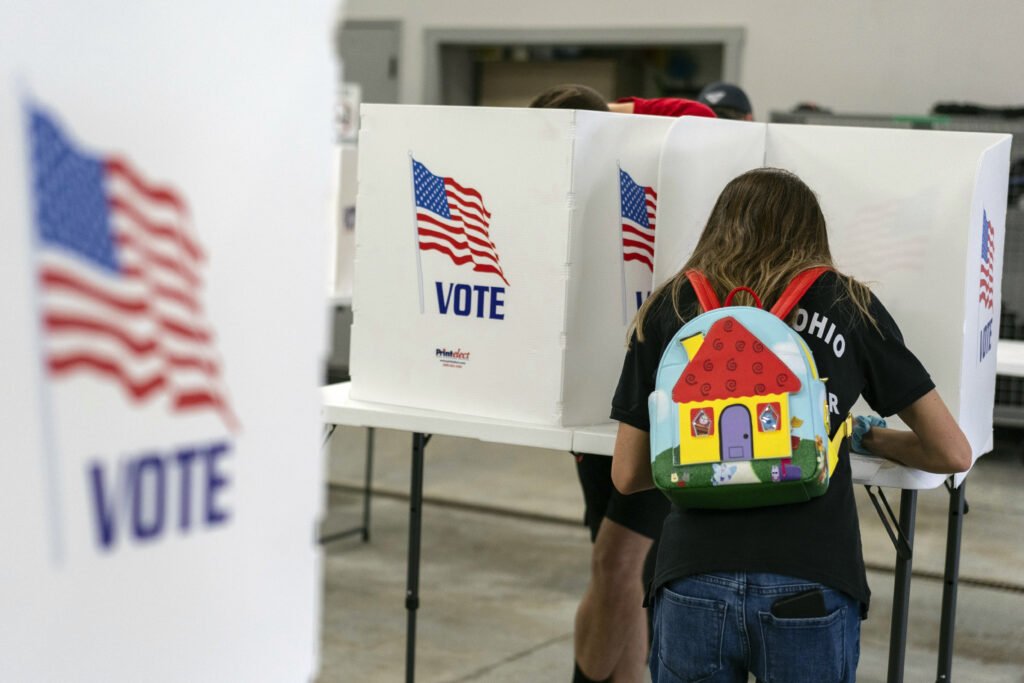
A federal court has blocked* for now an Ohio law that makes voting more difficult by requiring residents to provide documentary proof of citizenship when registering to vote at the Bureau of Motor Vehicles.
U.S. District Judge Solomon Oliver Jr. granted pro-voting plaintiffs’ request for a preliminary injunction, finding that the new law likely violates the National Voter Registration Act (NVRA) because it requires more than the minimum necessary amount of information to assess an applicant’s eligibility to vote.
Get updates straight to your inbox — for free
Join 350,000 readers who rely on our daily and weekly newsletters for the latest in voting, elections and democracy.
“(A)s the rest of Ohio’s voter registration scheme demonstrates, and Defendants’ statements at the Hearing shows, election officials do not need documentary proof of citizenship to assess a voter registration applicant’s citizenship because signed attestation of citizenship is enough,” Oliver wrote in his decision.
Ohio’s Republican-controlled legislature passed the citizenship provision in March 2025 as part of its biannual transportation appropriations bill, slipping in new rules that would make it more difficult to register to vote.
Nearly one-third of Ohioans register through the Bureau of Motor Vehicles, making it a critical access point to voting.
Red Wine & Blue and the Ohio Alliance for Retired Americans, two pro-voting groups, sued the state in August 2025, asking a federal district court to block the law on the grounds that the additional registration requirements violated the NVRA.
The plaintiffs argued the new law ran afoul of an NVRA provision that specifies that states “may require only the minimum information necessary to…enable state election officials to assess the eligibility of the applicant.”
Oliver ruled that, without granting a preliminary injunction, there was a “substantial risk of irreparable harm.”
In June, Oliver took the rare step of rejecting the Trump Justice Department’s attempt to help defend the Ohio law, finding its proposed filing redundant, disconnected from the claims made in the case and too late to help the court ahead of a hearing that took place the following week.
The blocked measure is just one part of a broader effort to crack down on voting in Ohio. Voting rights groups are also challenging a new Ohio voter purge law that allows the state to remove voters from the rolls without notice.
*The Elias Law Group (ELG) is representing the plaintiffs in the case. ELG Firm Chair Marc Elias is the founder of Democracy Docket.