Exclusive: Trump DOJ targeting overseas voters over registration info
 Prefer us on Google
to see more of our voting rights news coverage when you search.
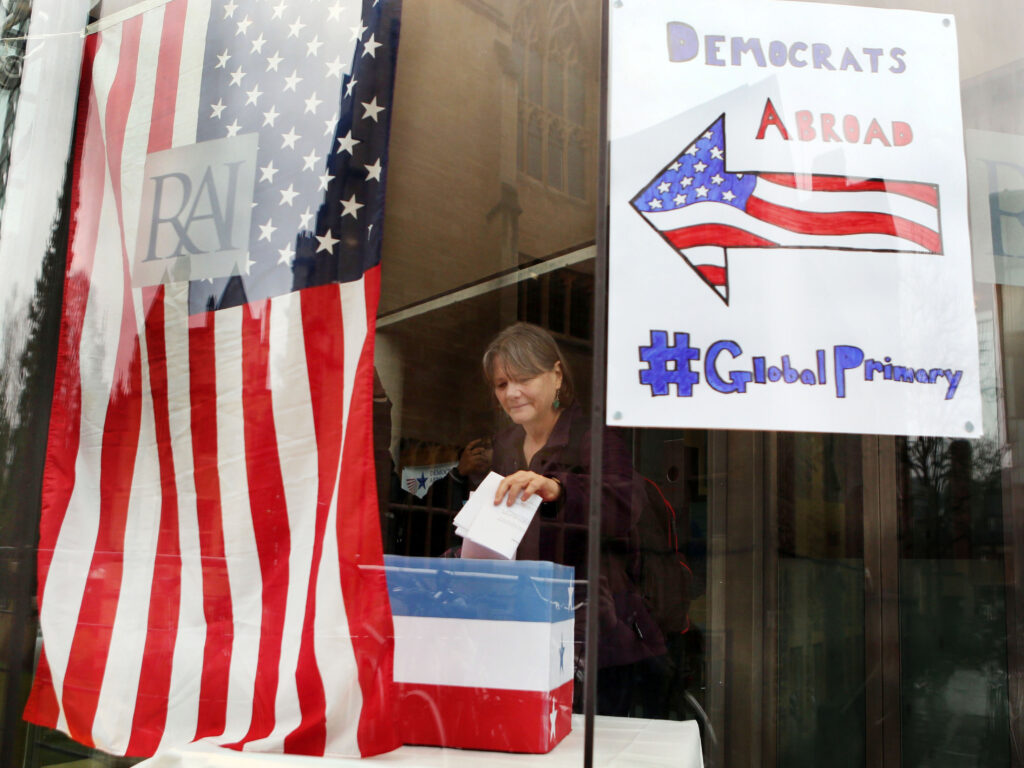
The U.S. Department of Justice (DOJ) is quietly pressing California to tighten voter registration verification for military and overseas voters — part of what it calls a “nationwide … enforcement program.”
The effort suggests that the Trump administration is now putting American citizens living overseas in the crosshairs of its high-profile push to tighten voter registration rules and make it easier to remove voters from the rolls.
Get updates straight to your inbox — for free
Join 350,000 readers who rely on our daily and weekly newsletters for the latest in voting, elections and democracy.
Emails reviewed by Democracy Docket reveal that DOJ contacted the office of California Secretary of State Shirley Weber (D) last month to discuss the state’s compliance with the Uniformed and Overseas Citizens Absentee Voting Act (UOCAVA) for the 2026 federal elections.
The emails were part of a larger batch of correspondence between DOJ and California obtained through a public records request, and posted online, by MuckRock, a nonprofit organization.
“As part of our nationwide UOCAVA enforcement program we are assessing states’ efforts to ensure compliance in 2026,” DOJ voting section attorney Jonathon P. Hauenschild wrote. “We would appreciate an opportunity to discuss your State’s preparations for UOCAVA compliance in next year’s [sic.] federal election cycle and any recent UOCAVA-related changes your State has adopted.”
The letter noted a core requirement of the federal law: that ballots must be transmitted to eligible uniformed services and overseas voters no later than 45 days before any federal election including primaries.
But it went on to emphasize a more restrictive aspect of voting law.
“We would also like to remind you of the requirement to verify the driver’s license and social security numbers,” Hauenschild wrote. “As mandated by the Help America Vote Act (HAVA), an applicant for voter registration for a federal election may not be accepted unless the applicant — including a UOCAVA applicant — provides their state issued driver’s license number or if the applicant indicates that they have not been issued a driver’s license the applicant must provide the last four digits of their Social Security number.”
This HAVA provision — which requires states to collect and match driver’s license numbers or the last four digits of Social Security numbers for federal election registrants — applies explicitly to UOCAVA applicants using the federal application.
“If the applicant has not been issued a driver’s license or social security number that must be indicated on the registration form,” the letter adds. “Election officials must verify the accuracy of the information provided by the applicant by matching the driver’s license or Social Security number to a government database.”
Follow-up emails show a meeting between DOJ and California to discuss the issue was scheduled for last week.
Neither Weber’s office nor DOJ responded immediately to requests for information on the meeting.
UOCAVA protects voting access for active-duty military as well as overseas civilians.
The push to enforce HAVA’s provisions on voter registration information aligns closely with the administration’s aggressive voter roll demands in lawsuits against nearly 30 states, as well as with the goals of the SAVE America Act passed by the U.S. House last month.
That bill would require documentary proof of citizenship for federal registration and impose nationwide photo ID rules — changes that could significantly complicate registration for UOCAVA voters.
State level Republicans also have targeted overseas voters lately.
North Carolina recently imposed new restrictions on overseas voters for state and local races, including new ID requirements. In Arizona and Michigan, the Republican National Committee sued last year to challenge the eligibility for some overseas citizens, noting partisan imbalances in how they vote and arguing their candidates were harmed by allowing those citizens to vote.
The DOJ’s exchange with California arrives months before the state’s June primary and as midterm preparations intensify.