Exclusive: Trump Administration Threatened Lawsuit Over Ohio Mail-In Ballot Deadline
 Prefer us on Google
to see more of our voting rights news coverage when you search.
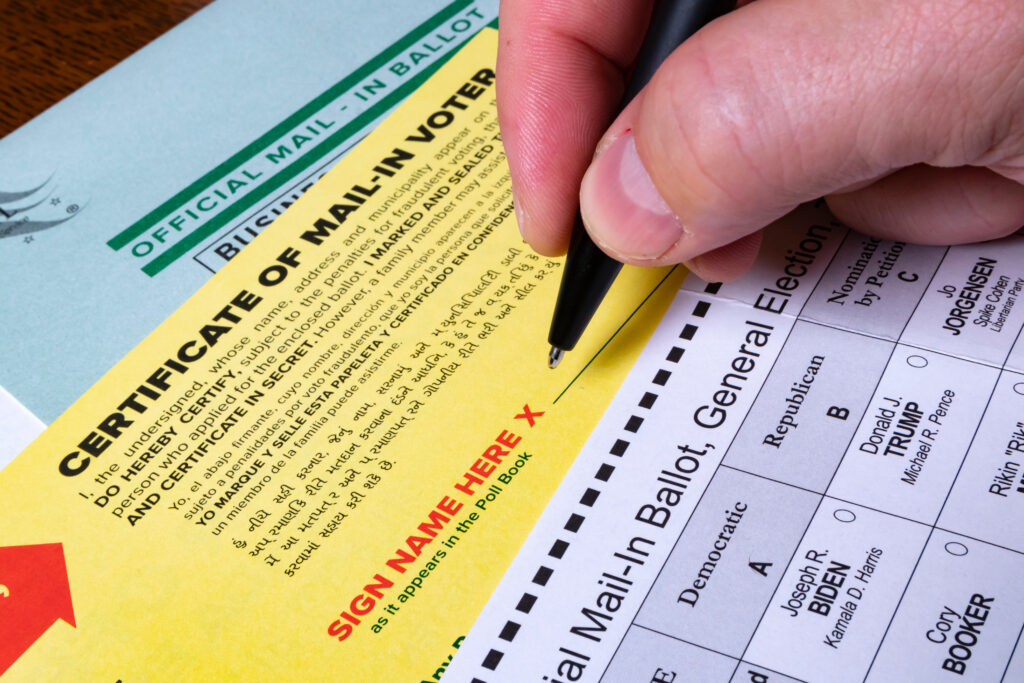
The Trump administration threatened Ohio with “costly litigation” unless it bans the counting of ballots that arrive after Election Day, the state’s top election official revealed in comments to lawmakers.
Soon afterwards, Republican lawmakers in the state introduced legislation that would do what DOJ demanded.
The move by DOJ is part of a broad campaign by President Donald Trump and the GOP to eliminate mail ballot grace periods, disenfranchising large numbers of voters whose mail ballots arrive after Election Day.
In testimony before lawmakers Tuesday, Ohio Secretary of State Frank LaRose (R) said, according to prepared remarks, that he was recently contacted by the U.S. Department of Justice (DOJ) about a state law that allows mail ballots that arrive up to four days after Election Day to be counted as long as they’re postmarked by the day before.
“The Department indicated that Ohio’s law should match that of 33 other states requiring ballots to be returned by the close of polls on Election Day,” LaRose added.
Get updates straight to your inbox — for free
Join over 350,000 readers who rely on our daily and weekly newsletters for the latest in voting, elections and democracy.
LaRose continued by quoting a September 29 letter from Assistant Attorney General Harmeet Dillon, head of DOJ’s Civil Rights Division. According to LaRose, Dhillon wrote that DOJ “implores Ohio to take immediate action (legislative or otherwise) to comply with federal law, and avoid costly litigation in federal court.”
LaRose said he told DOJ that he planned to work with lawmakers to pass legislation banning late-arriving ballots. He said he then spoke with legislative leaders about adding language to an elections bill that would do so. He urged lawmakers to “facilitate an outcome that prevents an unnecessary legal dispute and confusion for Ohio voters.”
Ohio Republicans introduced legislation earlier this month that would end the mail ballot grace period, as well as taking several other steps to impose stricter voting rules. LaRose was testifying about the bill.
In fact, federal law does not bar states from accepting late-arriving ballots. Trump issued an anti-voting executive order in March that aimed to pressure states to do so. But much of the order, including that provision, has been blocked by courts from being implemented in 13 Democratic-led states that have sued. Meanwhile, the 5th Circuit Court of Appeals ruled this year, in a case brought by the GOP, that the Constitution bars states from accepting late arriving ballots, but no other appeals court has joined it, and the Supreme Court is considering whether to hear an appeal.
DOJ did not immediately respond to a request for comment on its communications with Ohio, or on the basis for its claim that federal law bars states from accepting late-arriving ballots.
Ohio is one of 16 states and Washington, D.C. with mail-in ballot grace periods of varying lengths.
The Trump administration has launched a multi-pronged effort to kill mail-in ballot grace periods. In addition to Trump’s order and the Mississippi case, several GOP states have passed or introduced new measures to ban late-arriving ballots, and Congress has held hearings on the issue. Even the chair of a federal voting agency has signaled he’s on board with the effort.