Election officials warn of the casino-ification of voting
With the explosive growth of prediction market gambling, Americans are betting millions of dollars on 2026 election outcomes. Now, election officials are sounding the alarm about potential dangers that could come with the emerging “casino-ification” of voting.
More than one-third of likely voters said they would have less confidence in an election if the outcome differed from prediction market odds, according to a new survey from Partnership for Large Election Jurisdictions (PLEJ), a nonprofit national network of election officials. It’s a startling finding that election officials warn could signal trouble ahead for this year’s consequential midterms, especially given many GOP candidates’ unwillingness to accept results.
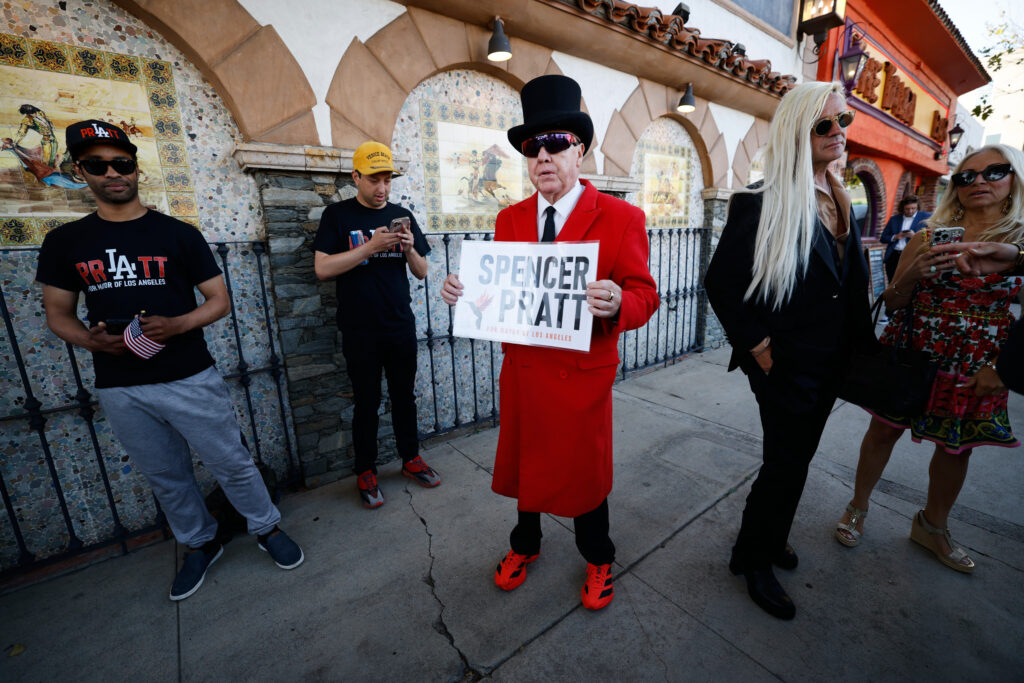
Dean Logan, the elections chief for Los Angeles County, said he and other officials found themselves responding to a “whole new layer of misinformation and speculation” this summer when the final vote count in LA’s mayoral primary election didn’t match the prediction market odds.
Paid influencers quickly circulated rumors that the prediction market odds were evidence that the election was rigged.
Get updates straight to your inbox — for free
Join 350,000 readers who rely on our daily and weekly newsletters for the latest in voting, elections and democracy.
“Prediction markets introduce another form of speculation that can too easily be mistaken for certainty,” Logan said during a PLEJ panel Wednesday on the potential risks of election betting. “I think we’re going to continue to see that challenged in high-profile races as a result of this new layer of misinformation.”
Logan stressed that prediction market odds aren’t comparable to polling — for one thing, prediction market users placing the wagers don’t even necessarily live in the area where the election is taking place.
Jim Allen, the director of elections in Delaware County, Pennsylvania, said election betting also introduces the possibility that prediction market users could create a false public perception that a candidate will win or a ballot measure will pass — which could prove costly to users who lose a lot of money by betting on unpredictable outcomes.
“I think this is a particularly volatile area where the people who lose big might be very angry or suspect some kind of issue with the election when there actually wasn’t,” Allen said.
Election experts worry those financial losses could easily turn into a flood of threats against election workers.
“I think about the potential for increased harassment, doxxing, targeting of election workers because of a lack of understanding and clarity between what a prediction market can mean and what polling is,” Elizabeth Whitehouse, a political strategist, said.
Prediction market odds could also discourage voters from casting a ballot if their preferred candidate appears to have little chance of winning.
“This is a moment in time for us to remind voters that they control the value and the weight of their vote,” Logan said. “And to not let these types of activities devalue that process.”
Many states with anti-gambling laws are already fighting court battles against leading prediction markets. But this month, that rising tension boiled over in Wisconsin, a state that also explicitly makes it a felony for voters to cast a ballot in elections if they have wagered on the outcome.
Kalshi blasted Wisconsin election officials for warning voters about the law, calling the announcement “active voter suppression.”
But election law expert Rick Hasen said he disagreed with Kalshi’s take.
“I don’t think that’s right,” Hasen said. “There’s no constitutional right to bet on elections.”
It’s still too soon to know exactly what influence prediction markets will have on voting. This is the first election cycle since a major federal ruling in September 2024 that opened the door for Americans to bet on election outcomes, despite state laws that ban gambling.
The Commodity Futures Trading Commission (CFTC), which has oversight of prediction markets, appealed that ruling. But after President Donald Trump took office, his son, Donald Trump Jr., was quickly hired as an advisor to both Kalshi and Polymarket. The CFTC dropped its appeal. And the regulator is now led solely by Trump appointee Mike Selig, an outspoken advocate for prediction markets. The other four commissioner seats at the CFTC are vacant.