DOJ’s California lawsuit may violate court order against Trump’s voter roll crusade, voting groups warn
 Prefer us on Google
to see more of our voting rights news coverage when you search.
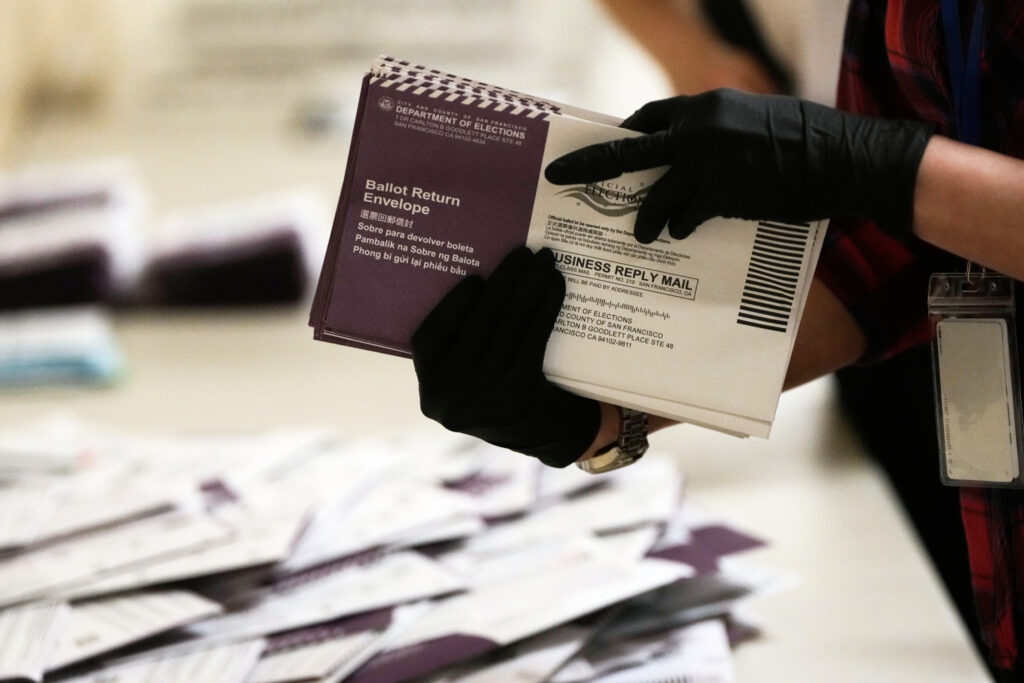
The Department of Justice’s demand that California investigate and block ballots from 20,000 people it alleges could be noncitizens may violate a court order barring the department from unilaterally attempting to shape state voter rolls and keep voters from the ballot, a pro-voting group told a federal judge.
Common Cause, which successfully challenged the administration’s broad effort to obtain Americans’ confidential voter information and compare that against federal immigration data to cull state voter rolls, is asking the court to hold a status conference on the matter.
The DOJ sued Thursday to stop California from counting ballots sent to more than 20,000 registered voters it alleges are “likely noncitizens” until their citizenship status is confirmed.
The lawsuit, a major escalation in the Trump administration’s effort to exert more federal control over elections, came after the department sent letters to California election officials with a slim 48-hour deadline to comb through and vet a thumb drive with names the government suspects may be noncitizens.
“By attempting to superintend voter roll list maintenance and prohibit registered voters from exercising the franchise without adequate consideration of the reliability of the underlying data, DOJ’s October 13 letters and the actions described in the California Complaint appear to implicate—and perhaps outright violate—the Court’s October 9 Vacatur Order,” Common Cause wrote in its filing overnight.
In the Oct. 9 order, U.S. District Judge Sparkle Sooknanan vacated what the DOJ internally deemed its “list maintenance project.” Her broad decision said the administration unlawfully exceeded its authority and violated privacy laws. She also asserted the administration downplayed the risk that eligible voters could be mistakenly flagged as noncitizens through flawed federal databases.
Get updates straight to your inbox — for free
Join 350,000 readers who rely on our daily and weekly newsletters for the latest in voting, elections and democracy.
Common Cause said it immediately contacted counsel for the DOJ with questions about how the department identified the alleged noncitizens in California and its data sources. It said the DOJ’s response adopted “an exceedingly narrow view” of Sooknanan’s order as only applying to the controversial SAVE database, which is used to verify immigration status.
The administration said it didn’t use that database in its review for California. Instead, it said the Department of Homeland Security used other data sets across several agencies, including the State Department and Social Security Administration, to gather and compare federal data to publicly available records.
The DOJ on Friday appealed Sooknanan’s decision to the D.C. Circuit Court of Appeals.
Common Cause isn’t the only one questioning whether the DOJ is disobeying Sooknanan’s order.
“In that order, the court vacated the DOJ’s policy of, among other things, comparing state voter roll information ‘against a federal database to identify purportedly ineligible voters,’ in collaboration with DHS, ‘and demanding that states remove voters from their rolls based on the results of those comparisons.’ It appears that your letter may utilize a policy that a federal court has already deemed unlawful,” California Secretary of State Shirley Weber (D) wrote in a response letter to the administration this week.
Services, Immigrant Rights and Education Network (SIREN) and Mi Familia en Acción (MFA) also cited Sooknanan’s order in their motion to intervene in the DOJ lawsuit in California’s defense.
“Just last week, a federal court in D.C. went further and vacated the policy at the heart of DOJ’s unlawful campaign,” the groups* wrote in a filing overnight. They added that the order “emphasized that DOJ’s efforts to target purported noncitizens have already resulted in the ‘remov[al of] citizens from the voter rolls in their home states and risks disenfranchising many more.’”
SIREN and MFA argued more broadly that the DOJ’s entire scheme in California is “lawless.”
“No federal law authorizes DOJ’s extraordinary demand, which would upend California’s elections and would result in an unprecedented intrusion of the federal government into state-run election administration,” the groups wrote.
*The Elias Law Group (ELG) represents the intervenors in this case. ELG Firm Chair Marc Elias is the founder of Democracy Docket.