DOJ says voter data won’t be used for immigration enforcement ‘now’
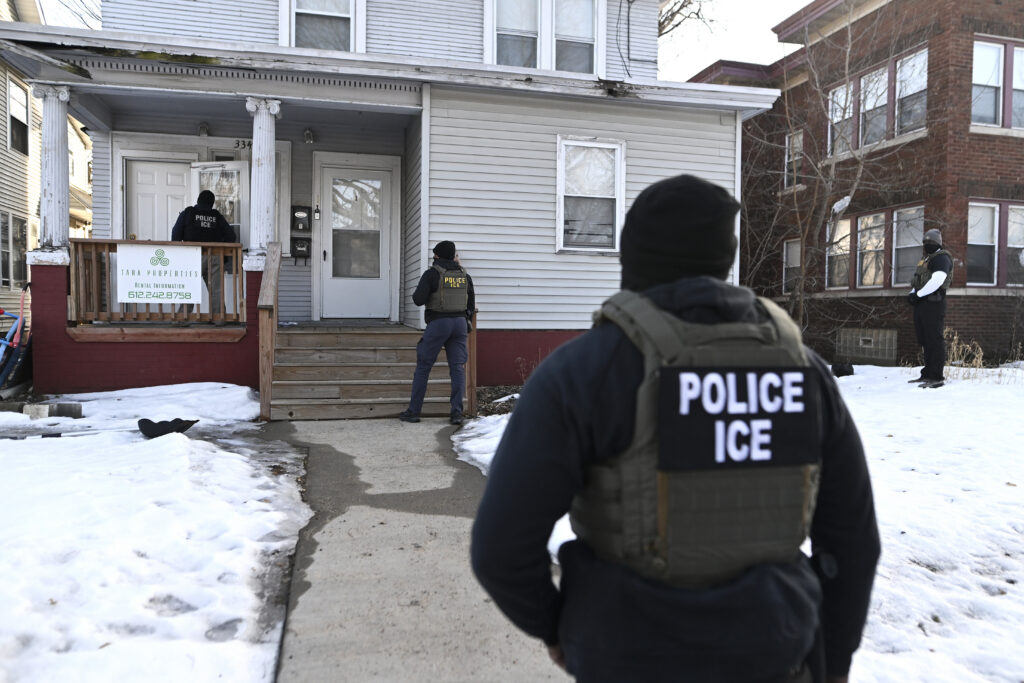
The U.S. Department of Justice (DOJ) would not rule out using voter data for immigration enforcement during a federal hearing in Minnesota, but said such data was not currently being used.
Since May, the DOJ has been seeking states’ unredacted voter rolls, which contain voters’ detailed personal information. The department is currently suing 29 states and the District of Columbia for access to the data.
During a motion hearing in the DOJ’s lawsuit against Minnesota Tuesday, U.S. District Judge Katherine Menendez asked the department whether private voter information that had already been accessed in other states had been used for immigration enforcement purposes.
“Not to my knowledge,” DOJ attorney James Tucker said. “Now, no.”
Get updates straight to your inbox — for free
Join 350,000 readers who rely on our daily and weekly newsletters for the latest in voting, elections and democracy.
When Menendez, who was appointed by former President Joe Biden, pressed Tucker further, asking whether Attorney General Pam Bondi could use the data to see every voter across the country and their legal status, he could not provide a clear answer.
“Your honor, I can honestly say I do not know the answer to that,” Tucker said.
After Border Patrol agents shot and killed protester Alexi Pretti in Minneapolis in January, Bondi demanded that Minnesota turn over its voter rolls as a condition for the Trump administration to end its aggressive immigration raids in the Twin Cities.
The DOJ had previously sued the state for access to the rolls back in September as part of its broad attempt to collect a trove of private voter information from across the nation.
While the DOJ’s lawsuits initially targeted blue states, the department has also recently taken aim at red states like Utah, Oklahoma, West Virginia and Kentucky. Even some Republican state election leaders, including from red states like Idaho, have refused the DOJ’s demands.
Under the Constitution, states — not the federal government — have the authority over elections.
But the DOJ has claimed that both the Help America Vote Act (HAVA) and the National Voter Registration Act give it authority to oversee state databases for “list maintenance compliance.,” as Tucker said in the hearing.
Federal judges have disputed that argument. Trump-appointee Hala Jarbou, the chief judge of the U.S. District Court in Western Michigan, rejected the DOJ’s claims in an opinion last month.
“There is simply no basis in the Federal Rules of Civil Procedure for the United States’s suggestion that it can file a HAVA claim, allege no violations of HAVA, and obtain information to support its (as-yet-nonexistent) claim via discovery,” Jarbou wrote.