Civil rights group and city of Denver ask court to block any plans for armed federal agents at polls during midterms
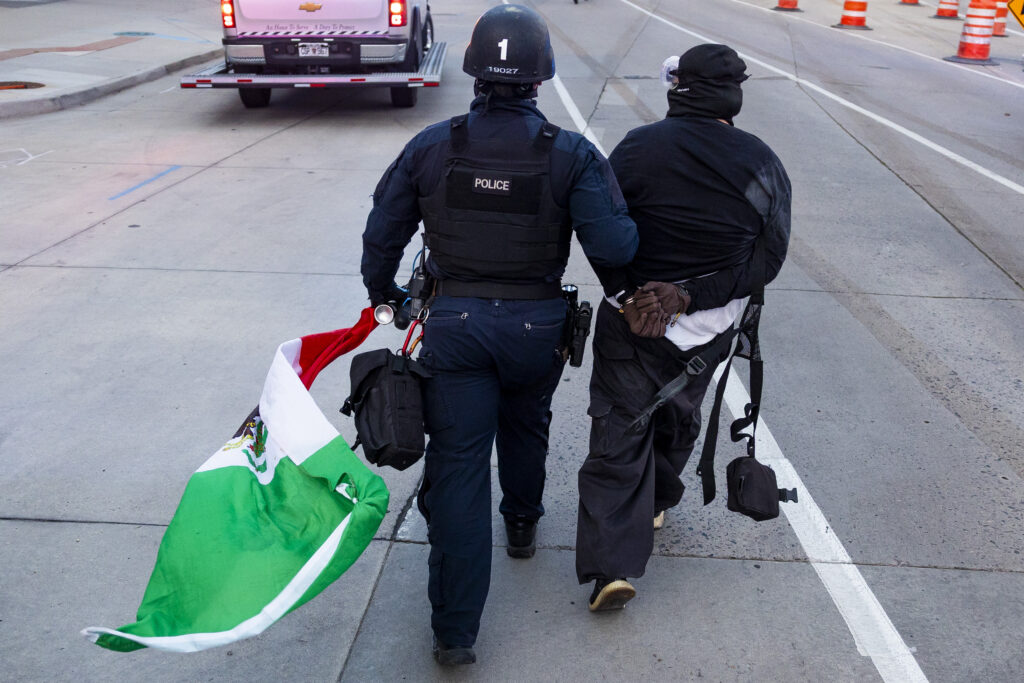
Armed federal agents are planning to patrol voting locations during elections and the courts need to act now to stop it from happening, alleges a lawsuit filed by a group of civil rights organizations and the city of Denver.
The effort is intended to get out ahead of any attempt by the Trump administration to use law enforcement to hinder voting. And it aims to counter what one group calls “an intentional climate of fear and intimidation,” that threatens to chill participation among minority communities.
The lawsuit, filed Thursday, asks a federal district court in Washington, D.C. to declare such activities unlawful and block the Department of Homeland Security (DHS) and U.S. Immigration and Customs Enforcement (ICE) from carrying them out.
“The specter of armed officers at polling places threatens the freedom of this upcoming election,” the lawsuit reads. “It places voters in fear that they will be confronted by armed federal immigration enforcement officers if they choose to cast a ballot.”
Get updates straight to your inbox — for free
Join 350,000 readers who rely on our daily and weekly newsletters for the latest in voting, elections and democracy.
DHS Chief Markwayne Mullin said recently that he would only dispatch ICE to polling areas “to conduct civil immigration and customs enforcement operations.” But that still runs afoul of federal election laws, according to the lawsuit.
Specifically, ICE’s plans violate a U.S. Code section from the Civil War era that prohibits military and federal officers from ordering armed agents to “any place where a general or special election is held,” under penalty of fines, imprisonment and disqualification from holding office.
The code only makes one exception: “to repel the armed enemies of the U.S.”
The pro-democracy organization Common Cause said it helped file the lawsuit, in part, to stop rumors about armed federal agent deployment that have been circulating among the communities it works in.
“Every week is a new headline and scare for naturalized citizens and communities of color, about ICE or other law enforcement at the polling places,” the group says on its website. “This intentional climate of fear and intimidation stops now.”
Two other organizations on the lawsuit, League of United Latin American Citizens (LULAC) and UnidosUS, represent a huge contingent of Latino citizens who’ve expressed fear that armed and-or plainclothed federal officers could approach and possibly arrest them as they try to vote or work at polling locations.
Their complaint compiles a long list of statements made by Trump administration officials and actions taken by ICE agents that explain why Latino voters harbor these concerns.
In February, then-White House press secretary Karoline Leavitt said she couldn’t “guarantee that an ICE agent won’t be around a polling location in November” during a press conference. A month later, Justice Department official Todd Blanche, now the attorney general, asked at a conference, “Why is there objection to sending ICE officers to polling places?”
Blanche and Mullin have also said in congressional hearings and to the press that they would deploy armed agents to polling areas to serve warrants and conduct other law enforcement operations where they suspect threats.
The lawsuit also points to actual instances of ICE agents making arrests and approaching suspects at polls during elections this year. Earlier this year, in San Antonio and in Ventura County, California, groups of agents descended upon voters during elections.
Also in June, two agents confronted a poll worker in Syracuse to probe her about online comments she made about ICE.
“The result is that as citizens go to the polls this fall, they are confronted by the possibility of armed force—agents carrying guns who may stop them based on how they look and what language they speak, detain them forcefully, interrogate them, and prevent them from seeking help,” the lawsuit reads. “Even citizens who are not specifically confronted by ICE agents may be intimidated from voting by the presence of ICE agents at or near voting sites.”
The city and county of Denver is involved with the lawsuit because a large portion of its population are Mexican, Vietnamese and Ethiopian immigrants – “making it a likely target for ICE activity during the midterm election,” the lawsuit reads.
According to the complaint, the county clerk has already begun trainings for its elections staff on how to de-escalate interactions with federal agents and how to identify agents when they’re not in uniform. It also describes how rumors of armed agents showing up at polls have made the difficult job of recruiting poll workers even tougher.
“The possibility of confronting armed federal agents in the course of these duties is expected to cause concern and anxiety for election judges attempting to complete their duties, and individuals may no longer be willing to perform this work,” the complaint reads. “Losing large numbers of election judges during the election cycle would impair the Clerk’s ability to administer the election, impose significant costs to train replacement judges for that election, and hinder the ability to timely tabulate and report results.”