Judge dismisses DOJ’s criminal case against Kilmar Abrego Garcia as vindictive
 Prefer us on Google
to see more of our voting rights news coverage when you search.
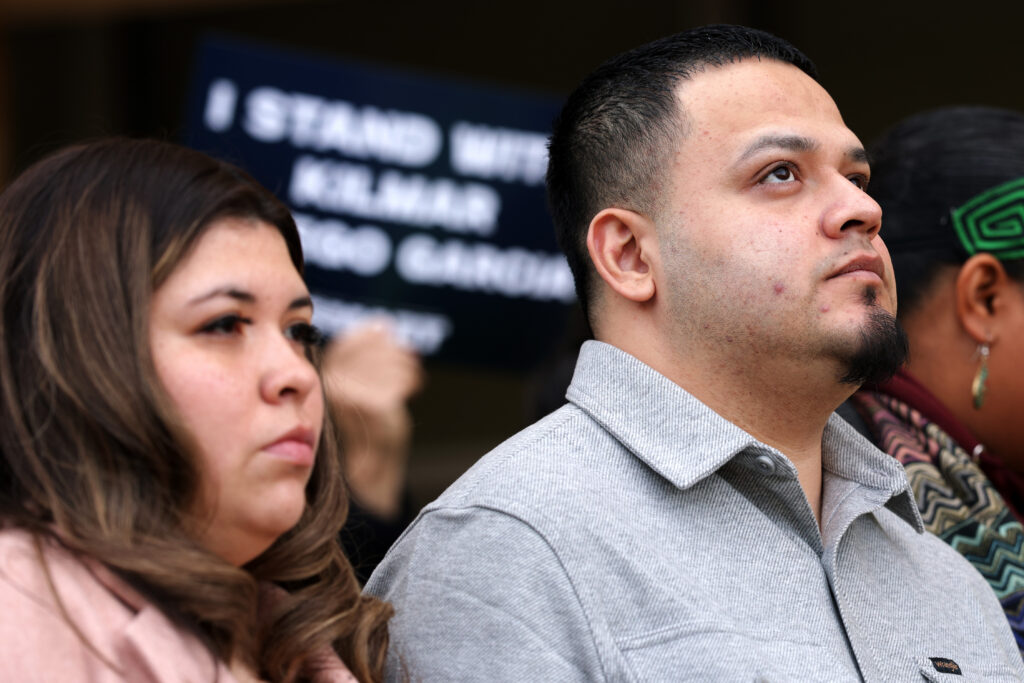
A federal judge in Tennessee dismissed the Department of Justice’s (DOJ) criminal charges against Maryland man Kilmar Abrego Garcia Friday, ruling that the case against him amounted to a vindictive prosecution.
U.S. District Judge Waverly Crenshaw Jr. determined that the DOJ pursued immigrant smuggling charges against Abrego Garcia to punish him for legally challenging his wrongful removal to an El Salvador megaprison last year.
“The evidence before this Court sadly reflects an abuse of prosecuting power,” Crenshaw wrote.
Get updates straight to your inbox — for free
Join 350,000 readers who rely on our daily and weekly newsletters for the latest in voting, elections and democracy.
While Crenshaw cited extrajudicial statements from senior Trump officials and internal DOJ communications in his decision, the judge laid much of the blame at the feet of acting Attorney General Todd Blanche.
In a Fox News interview in June, Blanche, who was then deputy attorney general, said the government only started investigating Abrego Garcia after a federal judge in Maryland found that the Trump administration had no right to remove Abrego Garcia from the U.S.
“Blanche’s words directly confirm that the Executive Branch reopened the criminal investigation because the Judicial Branch required the Executive Branch to facilitate Abrego’s return from El Salvador,” Crenshaw wrote.
Abrego Garcia, who has lived in the U.S. for years with his wife and children — all of whom are American citizens — was imprisoned in El Salvador for over two months after being removed from the U.S. through an alleged “administrative error” by the Trump administration.
His removal and continued confinement sparked outrage across the U.S. amid concerns over President Donald Trump’s effort to undermine due process rights by summarily deporting both legal and nonlegal immigrants from the country.
“We are going to savor this one. Our client, Kilmar Abrego Garcia, is freed of these outrageous, vindictive charges,” Sean Hecker, one of Abrego Garcia’s attorneys, wrote on social media Friday. “It’s a good day.”
The DOJ’s criminal case against Abrego Garcia centered on a 2022 traffic stop in Tennessee, during which a Tennessee trooper suspected Abrego Garcia of transporting undocumented immigrants from Texas to Maryland.
Federal officials contacted by the Tennessee trooper over the situation said there was no need to detain Abrego Garcia. No charges were filed, and the incident ended with Abrego Garcia receiving a warning to get his expired license renewed.
In addition to Blanche, Crenshaw also criticized the actions of Aakash Singh, one of Blanche’s aides at the time, who played a key role in opening and directing the investigation into the traffic stop.
Previous proceedings in the case revealed that Singh pushed federal prosecutors in the Middle District of Tennessee to open the investigation, saying it was “a top priority” for the department. He also continued to advise prosecutors and other federal officials until the DOJ secured the indictment against Abrego Garcia.
The judge said that Singh’s actions directly tied the indictment against Abrego Garcia to “Blanche’s vindictive motive.”
“Because the presumption of vindictiveness remains unrebutted, the indictment must be dismissed,” Crenshaw wrote.
The DOJ will likely appeal Crenshaw’s ruling.
The dismissal comes as Abrego Garcia is still fighting ongoing deportation proceedings in Maryland.
Though he previously agreed to self-deport to Costa Rica — his preferred destination — the Trump administration has refused to let him do so. Instead, the federal government has sought to send him to Liberia without outlining why it considers that a better destination.
This story has been updated with new information throughout.