Appeals Court Delivers Another Blow to Voting Rights Act
A federal appeals court issued a new ruling Monday that further erodes the Voting Rights Act (VRA).
The 8th Circuit Court of Appeals held that voters and private organizations can no longer sue under Section 208 – the VRA provision that protects the right of voters with disabilities or language barriers to receive assistance at the polls.
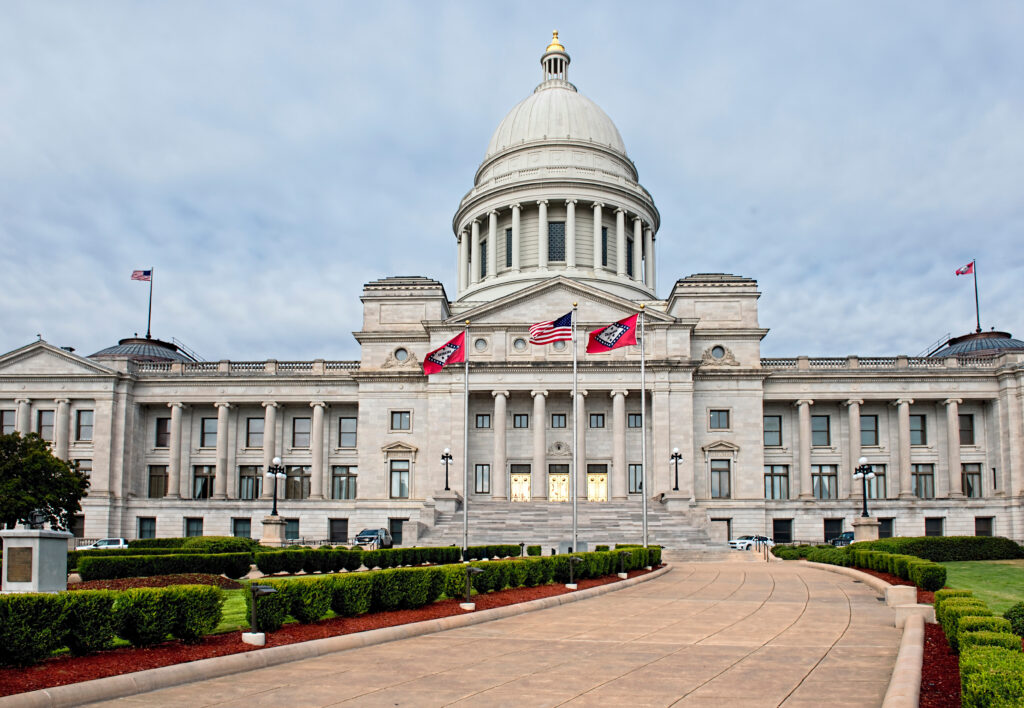
In its decision, the court ruled that the provision includes no private right of action, meaning only the U.S. Department of Justice may enforce it. The ruling upheld an Arkansas law that criminalizes anyone who helps more than six voters cast ballots and requires poll workers to maintain a list of names and addresses of anyone helping voters at the polls.
“We conclude the text and structure of § 208 do not create a private right of action,” the court wrote. “Neither the VRA nor the Supremacy Clause create a private right of action for § 208.”
The Supremacy Clause of the U.S. Constitution says that federal law, like the VRA, always supersedes conflicting state law.
The decision means that, in the seven states under the 8th Circuit’s jurisdiction – Arkansas, Iowa, Minnesota, Missouri, Nebraska, North Dakota and South Dakota – voters and voting rights groups can’t file lawsuits to enforce Section 208 themselves.
This latest ruling builds on the court’s earlier and widely condemned decision in Arkansas NAACP v. Arkansas Board of Apportionment, which held that no private right of action exists under Section 2 of the VRA, which bans racial discrimination in voting. A similar ruling was recently challenged in a separate case out of North Dakota, where Native American voters asked the U.S. Supreme Court to intervene after the 8th Circuit blocked their Section 2 lawsuit.
In that case, the Supreme Court granted a stay of the 8th Circuit’s mandate, temporarily preserving private enforcement of Section 2 while the justices consider whether to review the case.
Unless the U.S. Supreme Court steps in — again — the decision will strip away federal protections for vulnerable voters.
UPDATE: The Eighth Circuit Court of Appeals denied plaintiffs’ petitions to rehear the case.
As a result, Section 208 of the federal Voting Rights Act (VRA) — the provision that guarantees voters who need help because of disability or language barriers the right to receive assistance from a person of their choice — will remain unenforceable by private individuals or organizations within the Eighth Circuit, which covers Arkansas, Iowa, Minnesota, Missouri, Nebraska, North Dakota and South Dakota.