Alabama GOP Wants Do-Over Elections if SCOTUS Weakens Protections for Black Voters
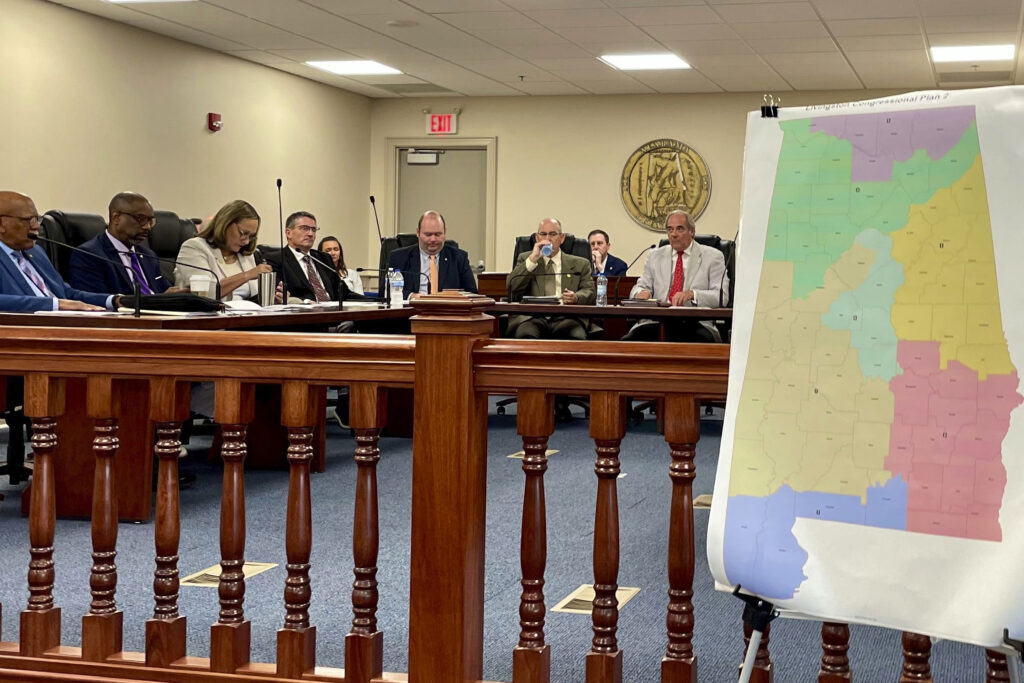
Alabama Republicans are pushing a new law that would let the state redo its primaries if the U.S. Supreme Court weakens protections against racial gerrymandering — a move that would open the door for politicians to throw out election results after voters have already spoken.
It also could allow lawmakers to eliminate one or both of the state’s two Black-majority congressional seats, grabbing yet more seats for the GOP.
Get updates straight to your inbox — for free
Join over 350,000 readers who rely on our daily and weekly newsletters for the latest in voting, elections and democracy.
The proposal, introduced by Senate President Pro Tem Garlan Gudger (R), would require the governor to call a special primary within five days if a court or the legislature changes district lines after the regular primary schedule has already been set.
The bill says those special primaries must be finished by the end of August, before the November general election, and that any previous primary results in the affected districts would be thrown out.
The new plan comes in the wake of Allen v. Milligan, the 2023 Supreme Court decision that forced Alabama to draw a second district where Black voters could elect a candidate of their choice. That ruling reaffirmed the Voting Rights Act, a landmark law protecting against racial discrimination in elections.
But it also angered Alabama’s Republican leaders, who said federal judges had overstepped by redrawing the state’s map themselves.
Now, as the Supreme Court decides Louisiana v. Callais — Republicans in Montgomery appear prepared. If the court changes how those protections work, Alabama’s GOP wants the power to rerun primaries under new district lines, even after voters have already cast ballots.
“If the Supreme Court overturns Callais, holding an election with districts that were unnecessarily redrawn by judges is unfair and punitive,” Gudger told Alabama Daily News. “It’s like football referees overturning a penalty. We’re simply trying to place the ball on the original line of scrimmage.”
The current map — which now includes two districts where Black voters can elect preferred candidates — is supposed to stay in place through 2030 under a federal court order. But this new bill signals that Alabama’s Republican leaders are preparing to scrap one or both districts altogether if the Supreme Court gives them the chance.