After losing midterms, GOP wants to kneecap incoming Democratic power in states
 Prefer us on Google
to see more of our voting rights news coverage when you search.
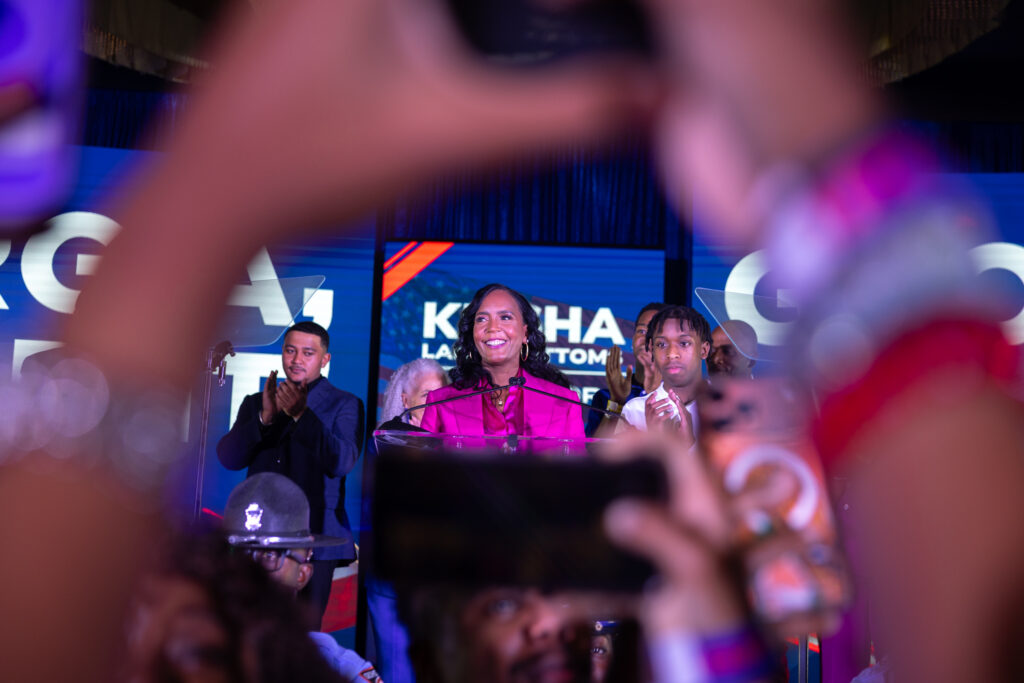
Lost the election? Just strip the winner of their powers before they enter office!
If that sounds like a patently dishonest maneuver to defy the will of the voters, you might not be a GOP official from Georgia, Ohio or Texas. Because that’s exactly what some Republicans in those three states want to do.
During the midterms, Democrats flipped six states’ governorships — and flipped one or both chambers of the state legislature in several other key battleground states, too. And the party also won races for other top jobs — like attorney general and secretary of state — in many states as well.
But some GOP officials, fearing what Democrats will do in their new positions of authority, want their outgoing Republican leaders to ram through last-minute bills to rein in the incoming party’s power.
These efforts, so far, appear poised to fail. But they show how far many Republicans want to go to subvert the results of the election and maintain power — even after voters showed them the door.
Here’s where that’s happening:
Get updates straight to your inbox — for free
Join 350,000 readers who rely on our daily and weekly newsletters for the latest in voting, elections and democracy.
Georgia
In Georgia, Gov.-elect Keisha Lance Bottoms (D) has a laundry list of policy priorities — from economic issues and education to health care and democracy reform — to enact. And she’s in a good position to do it: Democrats have won the offices of lieutenant governor, attorney general and secretary of state, along with flipping the state House.
But some GOP lawmakers are advocating for a last-minute gambit to weaken Lance Bottoms’ executive power when she’s sworn into office come January.
Members of the Peach State’s far-right Freedom Caucus called for a special session Wednesday to limit some of Lance Bottoms’ gubernatorial authority.
In a statement, Rep. Charlice Byrd (R), chairwoman of the group, also called for the state to redraw its maps in the wake of the U.S. Supreme Court’s Louisiana v. Callais decision, which gave lawmakers almost totally free rein to draw districts in order to maximize partisan advantage, including by targeting minority voters.
“Georgia is facing the prospect of an incoming radical leftist Governor,” Byrd said. “We should address these issues now to prevent Gov.-elect Bottoms, who has proven not to be an effective executive, from abusing the powers of the Governor’s office, we should redraw our racially gerrymandered legislative maps to ensure they are fair and legal.”
The Freedom Caucus’ plan has little chance of success. After the GOP’s midterm wipeout, outgoing Gov. Brian Kemp (R) said he wouldn’t call a special session to curb executive branch powers or consider redistricting.
The only other way to call a special session is through a petition signed by three-fifths of legislators in both chambers of the General Assembly. Republicans currently hold a majority in both chambers, but not enough to call a special session.
Ohio
Outgoing Ohio Gov. Mike DeWine (R) similarly rejected calls to pass new legislation to curtail executive authority after Democrat Amy Acton defeated the Trump-backed entrepreneur Vivek Ramaswamy (R) in the Buckeye State’s contentious gubernatorial race. In addition to Acton’s victory, Democrats also won nearly every statewide race in Ohio.
But the victories weren’t enough to flip partisan control of the state General Assembly, though Republicans will no longer have a veto-proof supermajority in the House.
Still, GOP lawmakers expressed interest in legislation to check Acton’s executive power when she’s sworn into office next year. State Rep. Adam Mathews (R) said there needs to be “checks and balances.”
“Sometimes things should be with the executive branch, and some should be in the legislative, and that type of give and take needs to be looked at on a case-by-case basis,” Mathews told a local outlet.
Nothing has been officially proposed yet, but DeWine swiftly shut down any notion of curbing the incoming governor’s power.
“No governor is going to sign a bill that dramatically took away powers of the governor,” DeWine said. “I don’t know that that’s been proposed or that even will be proposed.”
But Mathews isn’t the only elected official advocating curbing Democrats’ authority.
State Rep. Allison Russo (D) won the race to be Ohio’s next election chief, taking over the job from Secretary of State Frank LaRose (R), who will become the state’s auditor. But now LaRose wants to take a crucial duty of the secretary’s office with him: maintaining the state’s voter rolls.
“I do think there could be a role for the auditor of state to audit voter rolls, which is obviously an expertise that I have,” LaRose told Signal Ohio. LaRose said that he had discussed the notion with some Republican state lawmakers, but no bill has been introduced.
Russo told Democracy Docket this week that LaRose’s “push to now audit his own work raises serious questions about conflicts of interest and the use of taxpayer dollars to politicize a key function of the Secretary of State and election administration.”
Texas
After the historic blue wave that swept up and down the ballot in Texas, some GOP lawmakers took immediate steps to kneecap Gov.-elect Gina Hinojosa (D).
The day after Election Day, state Rep. Brian Harrison (R) called on outgoing Gov. Greg Abbott (R) to convene a special session of the Republican-controlled legislature to pass a bill to rein in Hinojosa’s authority.
“Republicans lost last night, but Democrats were not sworn in,” Harrison wrote on social media. “We still have total power in Texas, and we must act like it by using the remaining ten weeks to restore separation of powers and limit the emergency powers that Governor-Elect Hinojosa is set to inherit, which would allow her to destroy liberty in Texas by executive fiat.”
Harrison’s long, rambling post proposed a bill that would severely restrict Hinojosa’s ability to sign executive emergency orders and modify or suspend state statutes.
It doesn’t sound like Abbott will entertain Harrison’s plea. The governor has yet to respond to Harrison and, in his concession speech, pledged he would “assist [Hinojosa] and her team in a period of transition.”