Sen. Lee wants to skip recess to save the SAVE America Act
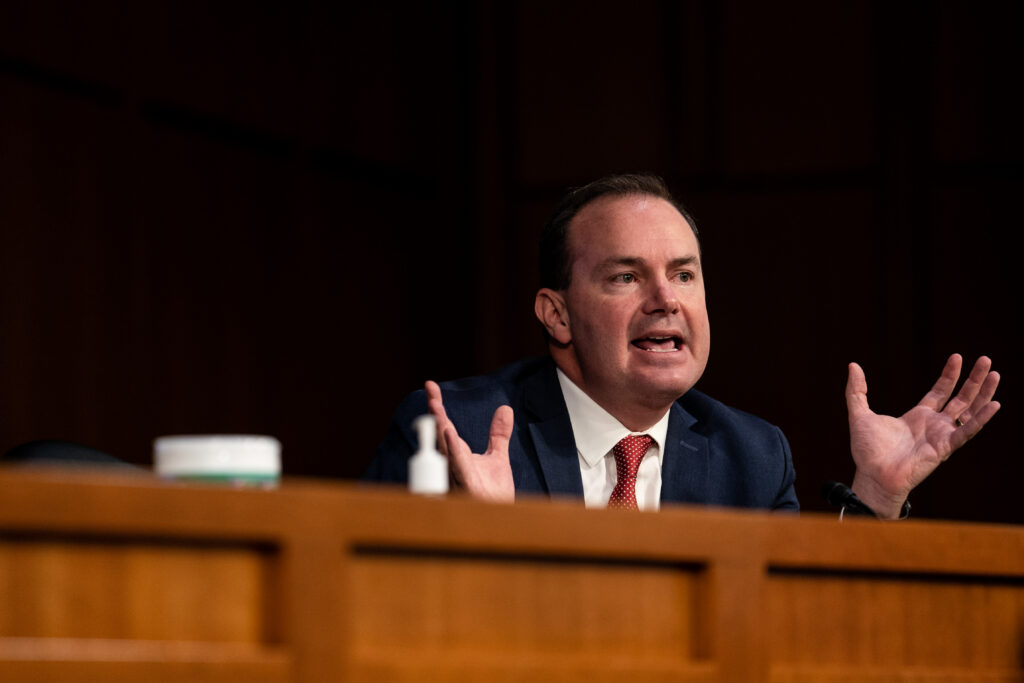
Sen. Mike Lee (R-Utah) wants the U.S. Senate to cut its upcoming recess, where its current session would end after the first week of August and reconvene on September 14, to stay on the floor in hopes of passing the anti-voting SAVE America Act.
“The Senate should stay here tomorrow, this weekend, next week, through weekends and long scheduled recesses, as long as it takes,” said Lee in a post shared on X. He has since been joined by Sen. Rick Scott (R-Fla.) and Sen. John Kennedy (R-La.) said on Meet the Press Sunday that the Senate should “take a few extra days,” to try to get it passed.
Republicans in the Senate have tried repeatedly, but unsuccessfully to pass the SAVE America Act, which would require voters to show documentary proof of citizenship to register and a restrictive set of photo ID cards to vote. It could also curb or eliminate mail-in voting, to fulfill President Donald Trump’s goals to make voting more difficult.
Get updates straight to your inbox — for free
Join 350,000 readers who rely on our daily and weekly newsletters for the latest in voting, elections and democracy.
The bill does not have enough votes to pass the Senate as Democrats are unanimously opposed to it, as are several Republican senators including Lisa Murkowski in Alaska and Thom Tillis in North Carolina. Republican supporters of the bill claim it is needed to root out voter fraud, but there is a consensus among studies, conducted by both liberals and conservatives, that such fraud is exceedingly rare, especially among noncitizens.
U.S. House Republicans recently tried to circumvent this by passing a bill through the budget reconciliation process, which would require less senate votes to pass. While the House’s bill doesn’t include the actual text of the SAVE America Act, it includes $10 billion in grants for states to pass their own versions of the federal legislation.
Senate Majority Leader John Thune (R-S.D.) has said that there are still not enough support to pass it, and also not enough time to implement its measures even if it had the votes. The November midterms are roughly 100 days away, and state and local officials would need to be trained and make changes to election administration manuals to allow voters to comply with the new law if passed.
Sen. Lee rejected the idea that there’s not enough time in his appeal to Sen. Thune, and wrote on X: “I hereby object to any effort to put the Senate into recess in August–at least until such time as the Senate has passed the SAVE America Act–and hereby request a roll call vote.
On Meet the Press, host Margaret Brennan asked Sen. Kennedy if trying to squeeze the bill in so close to an election might undermine voters’ faith in the elections process.
“No,” said Kennedy. “In our elections, we need to do two things and only two things. Number one, you have to prove who you say you are in order to register to vote, and to vote. And number two, however you decide to vote, that’s up to the states. … That to me is what the SAVE Act is all about, and I think we can pass it.”
However, as Sen. Elizabeth Warren recently pointed out to a right-wing blogger who pressed her about the bill, U.S. laws already ask people to prove their identity and citizenship in both the registration and voting processes. Voters have to attest under penalty of perjury that they are citizens when they register to vote. Election officials verify voters’ identity through their signatures and voter registration files before they allow them to cast ballots.
Also, Kennedy is correct in saying that how people vote is up to the states, as is authorized by the U.S. Constitution. But the SAVE America Act changes that by instituting federal controls and serving President Donald Trump’s agenda to nationalize elections.