Supreme Court won’t hear challenge to Texas anti-voting law in loss for voters with disabilities
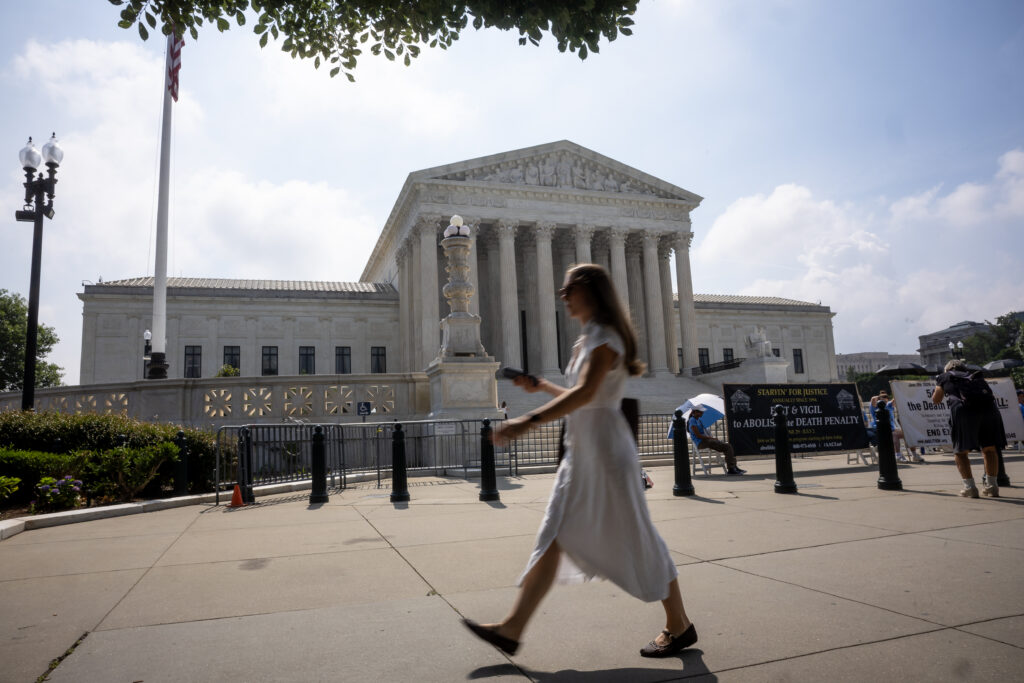
The Supreme Court Monday declined to take up a challenge to a Texas law that prohibits voters from receiving help with filling out or submitting their ballot from a person who is compensated for that service.
The decision represents a loss for voters with disabilities, who sometimes rely on assistance to vote. At the same time, it means the Court will not greenlight similar laws nationwide, which could have had far-reaching consequences for election canvassers.
The pro-voting group La Union del Pueblo Entero (LUPE) asked the Supreme Court to consider whether the provision conflicts with Section 208 of the Voting Rights Act (VRA), which allows voters who have a disability or are unable to read or write to receive assistance. The group argued that Texas law now effectively criminalizes a disabled voter offering compensation to a friend or neighbor for helping with marking their ballot, despite federal law explicitly protecting assistance with voting.
Get updates straight to your inbox — for free
Join 350,000 readers who rely on our daily and weekly newsletters for the latest in voting, elections and democracy.
The long-running lawsuit is one of many legal challenges to S.B. 1, the sweeping voter suppression legislation Texas passed in 2021. The law includes a ban on 24-hour and drive-thru voting, criminalizes many voter outreach efforts and creates new mail-in ballot signature matching rules.
Previously, a federal district court struck down some provisions of S.B. 1 for violating the VRA, including several voter assistance restrictions.
It also struck down the ban on compensated assistance for violating the Americans with Disabilities Act and Section 504 of the Rehabilitation Act. State defendants and Republican intervenors appealed the decisions to the 5th Circuit.
The 5th Circuit later reversed some of the district court’s rulings, deciding to uphold the ban on paid voter assistance.
With the Supreme Court’s decision not to take up the challenge, the ban on paid assistance will stand in Texas.
Earlier this month, the Supreme Court also declined to hear a lawsuit challenging an Arkansas law that criminalizes helping more than six voters cast ballots.
That decision left in place an 8th Circuit ruling, which found that only the Department of Justice — and not voters or private organizations — had the right to sue under Section 208 of the VRA.