DOJ now 0-9 in voter roll cases after Trump-appointed judge tosses its Maryland demand
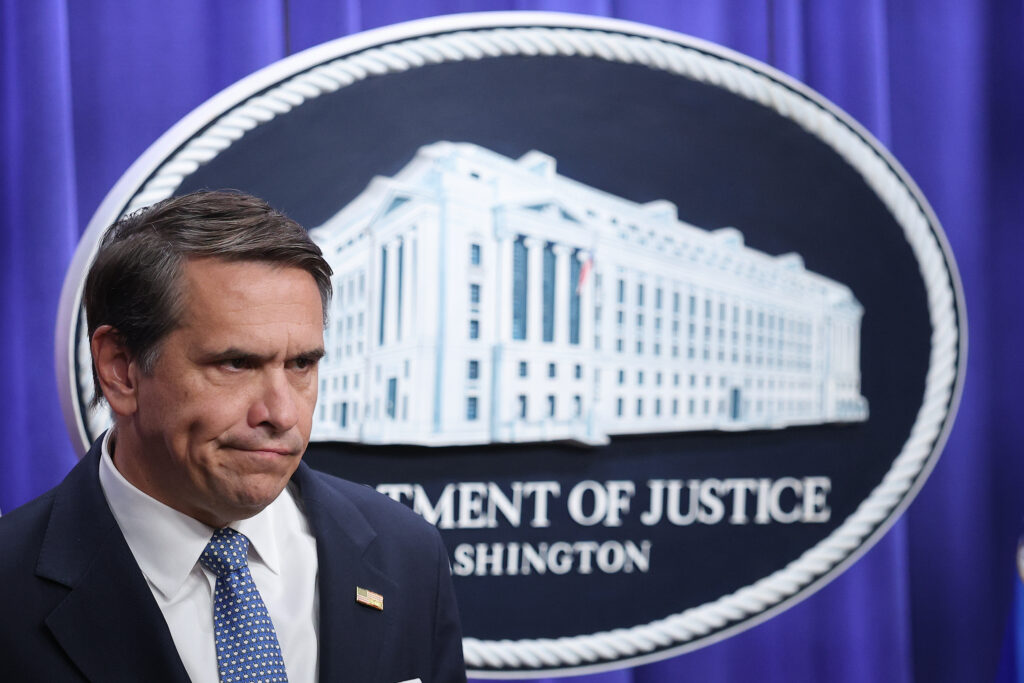
A federal judge threw out the Department of Justice’s (DOJ) lawsuit seeking Maryland’s statewide, unredacted voter registration list, dealing another blow to President Donald Trump and the department’s sweeping campaign to obtain voter data from the states.
The dismissal brings the DOJ’s record to 0-9 out of the 31 lawsuits it brought against states and Washington, D.C.
Get updates straight to your inbox — for free
Join 350,000 readers who rely on our daily and weekly newsletters for the latest in voting, elections and democracy.
U.S. District Judge Stephanie Gallagher, whom Trump appointed in his first term, ruled Thursday that the state’s voter roll was not a record the DOJ could obtain through legal force under the Civil Rights Act (CRA).
“This Court joins every court to have addressed this issue in concluding that an [statewide voter registration list] is not a record or paper that a state must produce to the United States under the CRA,” Gallagher wrote.
Because the CRA doesn’t allow the DOJ to obtain state voter rolls, the judge dismissed the lawsuit for failing to state a claim. She also dismissed the case with prejudice, meaning the department is legally barred from bringing its specific CRA claim back to the court.
In her opinion, Gallagher slammed a recent legal memo from the DOJ’s Office of Legal Counsel, which asserted the CRA allowed the department to force states to hand over unredacted statewide voter registration lists and then share that data with the Department of Homeland Security.
“This Court will not interpret the CRA contrary to its text simply because an office of the party advancing that interpretation has adopted it,” she wrote.
Throughout the lawsuit against Maryland, DOJ officials, including some who were involved in efforts to overturn the 2020 election, refused to answer Gallagher’s questions on what the department planned to do with the data it demanded.
So far, no federal court has ruled in favor of the DOJ in the voter roll lawsuits. The now nine dismissals came from judges spanning the ideological spectrum: Five judges were appointed or renominated by Trump and four other judges were appointed by Democratic presidents.
Beyond the lawsuits, the department has sent letters to almost all 50 states demanding access to their rolls. At least 16 Republican-led states have complied.
Alongside the DOJ’s voter roll lawsuits, Trump has directed the federal government to create what is essentially a national voter registration list as part of his wider effort to seize states’ power to run elections.
In other voter roll cases, the DOJ has argued that the federal government can force states to remove voters from registration rolls right before an election.
That argument took direct aim at the National Voter Registration Act’s “quiet period” provision, which bars states from systematically removing voters from rolls in a 90-day period before elections.