To save American democracy, invest in state houses
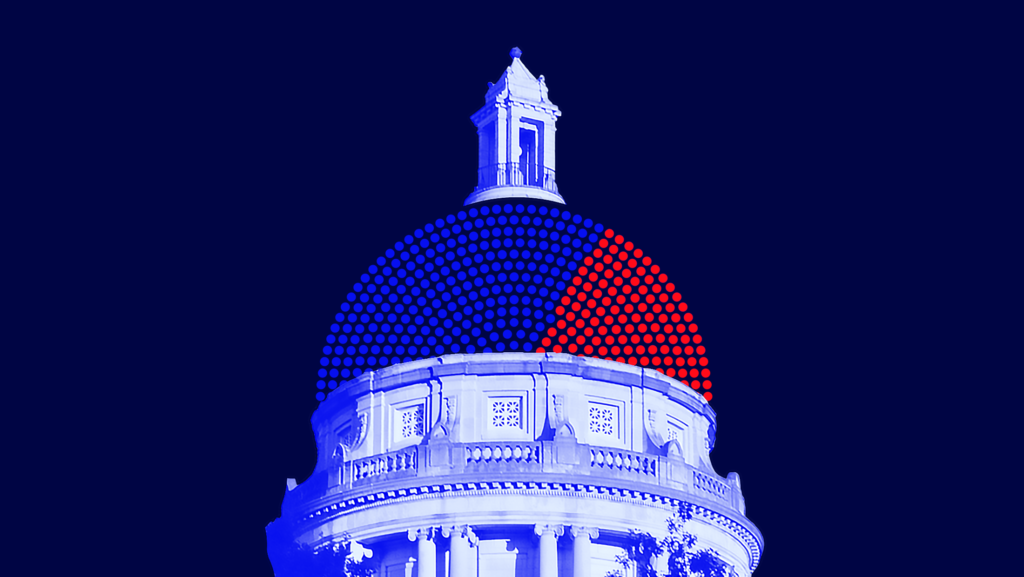
The future of American democracy will not be decided in Washington. It will be decided in state capitols across the country — in the 50 legislative chambers that serve as the republic’s essential, if chronically underestimated, fourth branch: the chambers that write our voting laws, draw our congressional maps, and set the rules that determine whether our republic stands or falls.
These bodies are the original building blocks of our republic. And right now, they are its most critical line of defense. As federal courts dismantle protections and Congress retreats deeper into dysfunction, state legislatures have become the primary arena where democracy is protected — sometimes by a single vote, in a single session. Investing in them is not a fallback option. It is the strategy.
Get updates straight to your inbox — for free
Join 350,000 readers who rely on our daily and weekly newsletters for the latest in voting, elections and democracy.
To understand the immense power of state lawmakers and the officials they appoint, look no further than Trump’s efforts to overturn the 2020 election.
The name Aaron Van Langevelde likely means nothing to you. A former member of the Michigan Board of State Canvassers, Van Langevelde is a man most Americans, even most Michiganders, wouldn’t know. Yet on a November afternoon in 2020, he held our nation’s democracy in his hands.
Days earlier, just before Thanksgiving, President Trump invited Michigan House and Senate Republican leaders to the White House, where he asked them to interfere in their state’s process and help him seize its 16 electoral votes.
As his lawyers had no doubt told the president, the formal power of state lawmakers over elections is broad. They can write voting laws, push forward amendments to the state constitution’s rules for elections, exercise vast investigative oversight authority, and determine how the state’s presidential electors are allocated. What they do not have the power to do — despite assertions to the contrary by Trump and his allies — is “certify” the presidential results.
But Trump paid no mind to the separation of electoral powers spelled out in the Constitution. His mission was clear: exploit the power of state politicians to unjustly prevent the certification of Michigan’s results.
The legislative leaders returned home in time to push the Michigan Board of Canvassers to reconsider certification. Ultimately, the vote came down to Aaron Van Langevelde, a lifelong Republican. Despite tremendous pressure, including a personal plea from Trump, Van Langevelde voted to certify Joe Biden as the rightful winner of the presidential election in Michigan, and in the process, snuffed out Trump’s last-ditch extrajudicial effort to remain in office. In other words, the entire presidential election came down to a single state-level official that no one had ever heard of.
Flipping a handful of state seats in places like Michigan, Pennsylvania, or Minnesota will do more than most people realize. It will allow a majority to deliver serious, tangible policies like paid family leave, cleaner drinking water, and expanded Medicaid. Crucially, as we’ve all seen recently, it also dictates the boundaries of congressional maps and the very rules governing our elections.
Following the Supreme Court’s decision in Louisiana v. Callais — which dismantled landmark protections of the Voting Rights Act — state legislatures effectively have a blank check to gerrymander as they see fit. And they’re wasting no time doing so. In states with withering Democratic investment, such as Louisiana, Florida, and Tennessee, GOP state lawmakers in the majority have already moved to draw minority-majority districts out of existence, effectively locking in GOP Congressional seats for years and silencing millions of voters.
State houses are where the most important battles of our time are being fought.
As federal protections continue to be rolled back by the courts, relatively small investments at the state level will fundamentally alter the trajectory of American politics, because it’s states that set it. And this dynamic isn’t limited to the ballot box — it governs every foundational right we hold dear.
In Arizona, for example, the recent fight for reproductive freedom came down to a razor-thin margin in Phoenix. When the state’s Supreme Court upheld a near-total abortion ban originating from a 1864 territorial law following the Dobbs Decision, the state was thrown into chaos. National Democrats expressed outrage from Washington, but the actual power to fix it rested solely in the hands of the state legislature, where Republicans held microscopic majorities in both chambers.
Because of that tight legislative makeup, a relentless floor strategy led by House Democratic leader Oscar De Los Santos successfully pressured three moderate Republicans to break party lines. By a narrow margin, the House voted to repeal the ban, a victory later mirrored in the State Senate. The GOP House Speaker was so angry at De Los Santos for organizing the effort that he immediately stripped him of his committee assignments.
This monumental victory was won because state-level campaigns had successfully narrowed the GOP’s legislative majority to the point where a single defection could preserve the rights of millions of Arizonans. Organizing to win these marginal state seats is the best way to build a firewall against such political extremism.
State houses are where the most important battles of our time are being fought, and this is exactly where grassroots energy must be deployed. Our rights, our livelihoods, and our elections are won and lost in state capitols, not the halls of Congress. The path forward is clear: invest in state legislatures – in Phoenix, in Lansing, and in capitols across the country – because these are the chambers that are the beating hearts of our democracy. That is how we build the firewall our democracy demands — one state house at a time.
Daniel Squadron is the author of the new book The Fourth Branch: How State Government Can Save Our Union(Zando). He is a former New York State Senator and co-founder of The States Project.