The SAVE America Act would disenfranchise Americans living abroad
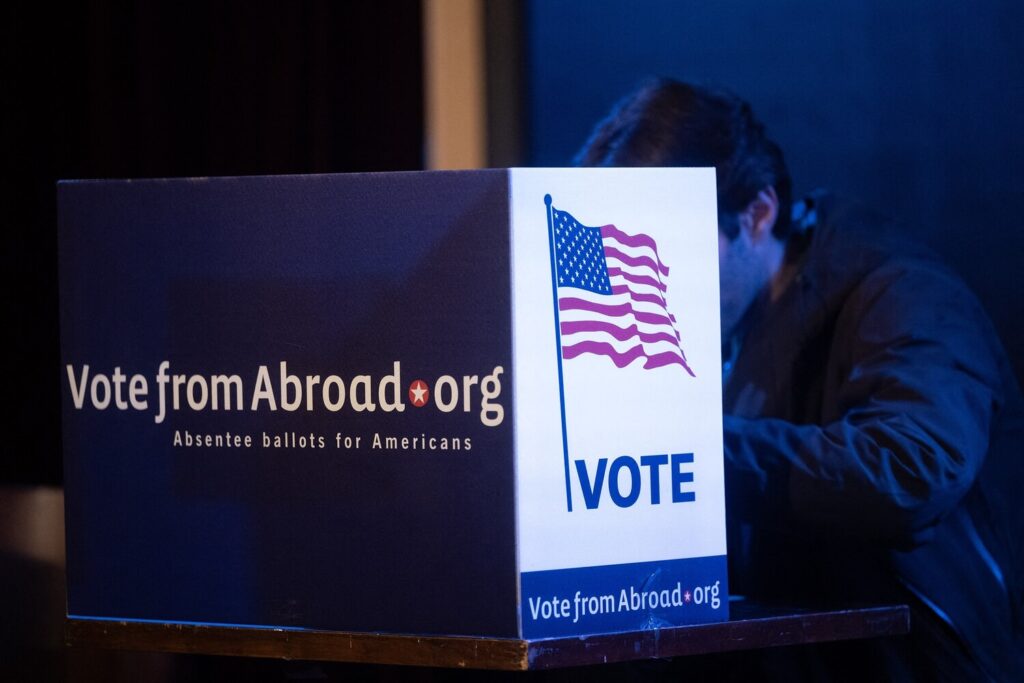
The millions of U.S. citizens living abroad love their country and are committed to taking part in American democracy despite the complexity and personal costs they must shoulder simply to request and cast a ballot.
Yesterday, that commitment to the democratic process was threatened by Republicans. The House of Representatives passed the SAVE America ACT, which if implemented, would cause voters living abroad — myself included — to effectively lose our right to make our voices heard.
And, as dangerous as it is, the measure isn’t the only GOP move that would restrict voting for Americans living abroad.
Get updates straight to your inbox — for free
Join 350,000 readers who rely on our daily and weekly newsletters for the latest in voting, elections and democracy.
The “SAVE America Act” is a rebranded version of the anti-voter SAVE Act, and its new name should not fool anyone. It retains the most extreme provisions of the original proposal and goes even further, imposing requirements that would block millions of eligible Americans from voting, including nearly every American living and serving abroad.
Under the bill, voters would be required to provide proof of U.S. citizenship in person when registering to vote. Voters would also need to provide proof of state residency, and submit photo ID and citizenship documents not only when they register and request a ballot, but also when they cast a ballot. For U.S. citizens abroad, these requirements are not just inconvenient; they would be nearly impossible to comply with.
In 2024, more than 1.3 million Americans living abroad received ballots as abroad voters under long-standing federal law. These voters include military service members stationed abroad, diplomats, missionaries, students, retirees and Americans whose careers or families have taken them beyond U.S. borders. Requiring in-person registration inside the United States, combined with repeated documentation demands at multiple stages of the voting process, would almost entirely shut U.S. citizens living abroad out of elections.
Supporters of the so-called “SAVE America” Act claim these measures are needed to prevent fraud. But election officials already maintain voter databases and routinely follow up with registrants from abroad when questions arise. That system works. From years of direct experience helping voters register, I know the real problem facing American democracy is not too many people voting — it is too few.
For U.S. citizens abroad, these requirements are not just inconvenient; they would be nearly impossible to comply with.
The bill’s disenfranchising effects would also vary wildly depending on where a voter lives, reflecting the diversity and scale of our election jurisdictions. Los Angeles County serves roughly 10 million residents and nearly 6 million registered voters. Loving County, Texas, serves a population of about 70 people, with roughly 50 registered voters. Requiring voters to present documentary proof in person to election officials might be manageable in the smallest jurisdictions. In major metropolitan areas, registering to vote would be more burdensome than a trip to the DMV, and effectively impossible for millions of working people.
In practice, this bill does not improve election administration. It overwhelms it. And the result is predictable: Mass disenfranchisement, especially in urban areas where most Americans live.
Beyond suppressing votes, the SAVE America Act represents a fundamental break with U.S. federalism. For more than two centuries, states have had primary authority to administer elections. This bill would force states to cede that power, effectively centralizing control over voter eligibility in the hands of the federal executive. Handing the White House new authority over who gets to vote is not election security but rather a dangerous consolidation of power.
The timing of this legislation is telling. With midterm elections approaching, President Donald Trump and House Republicans are aggressively pushing to pass the bill. When political leaders fear losing elections, shrinking the electorate can be easier than earning voters’ trust. The SAVE America Act fits squarely within that strategy.
Voting is not a privilege; it is a constitutional right. Americans do not lose that right when they marry and change their name, when they are disabled, when they cannot afford a passport, or when they serve and live abroad.
Republican efforts beyond the SAVE America Act threaten this fundamental right, particularly targeting those born abroad who inherit citizenship and voting rights through their parents.
Last year, House Republicans introduced the PROVE Act, which would require voters living abroad to prove a “current” U.S. residence or else be forced to vote only in Washington, D.C. — effectively stripping citizens of voices in their home states and relegating them to a district without congressional representation. At the state level, Republicans have pursued aggressive lawsuits in places like Arizona, Michigan and North Carolina, challenging long-standing laws that allow citizens born and living abroad to register and vote based on a parent’s prior address, claiming violations of state constitutions despite no evidence of fraud and repeated court dismissals. In North Carolina, court rulings have limited such voters to federal-only ballots, while pending legislation seeks further restrictions like mandatory photo ID.
As chair of Democrats Abroad, in every election I see how hard Americans abroad work to stay connected to our democracy. Through our volunteer support and VoteFromAbroad.org, our ballot request tool, we hear from service members voting from remote postings, parents registering from abroad while raising American children, and long-time citizens who refuse to give up their voice simply because their lives crossed a border. These are not abstract voters. They are U.S. citizens doing everything the law asks of them.
Congress must do its job, represent its citizens, and reject this bill.
Martha McDevitt-Pugh is the International Chair of Democrats Abroad, the Democratic state party for the millions of U.S. citizens who live abroad. Prior to that she served two terms as Chair of Democrats Abroad Netherlands (2011-2015).