Texas Republicans are punishing voters ‘because we can’
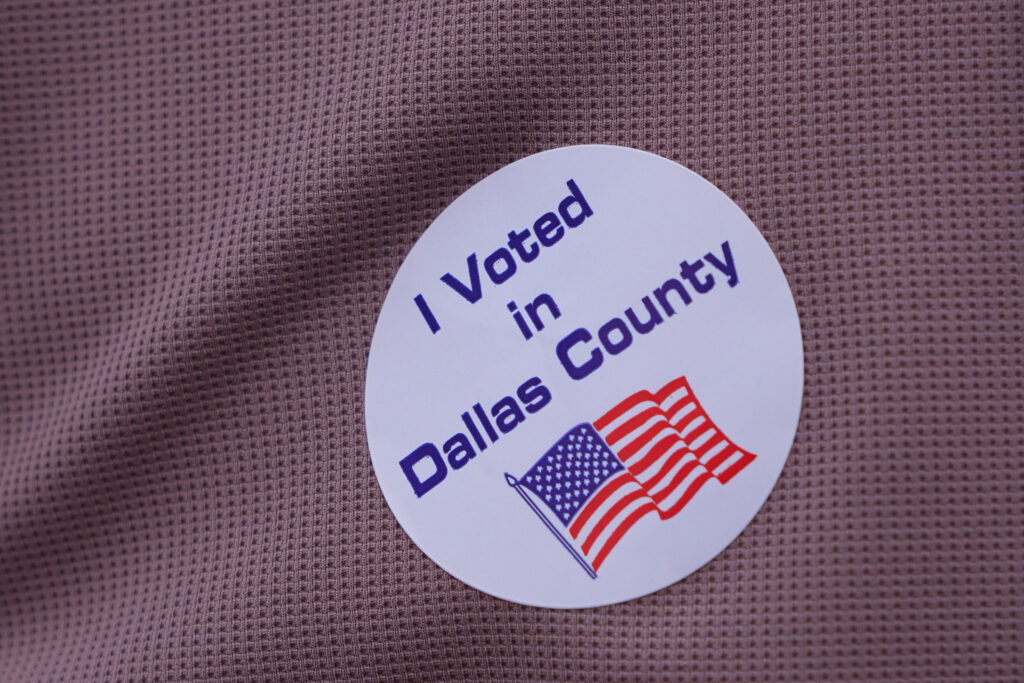
On Tuesday, more than three million Texans went to the polls to select the candidates who will represent each party on the ballot this November. While most of us were able to cast our ballots smoothly at our chosen polling place, over 157,000 Texas voters faced needless and deliberate barriers to voting.
These barriers were put up by two GOP county chairs believing tinfoil-hat-level lies. Texas has been minority-ruled by conspiracy theorists for years. Tuesday’s primary was a prime example of the ways that a foolish few can block broad electoral access for many.
Get updates straight to your inbox — for free
Join 350,000 readers who rely on our daily and weekly newsletters for the latest in voting, elections and democracy.
Texas has a generous in-person early voting period, with 11 days to vote in the 2026 primary before Election Day. During early voting, voters can cast their ballots at any polling place in their county. Election Day voting reverts to precinct-only polling places by default, but counties can change that by opting in to Countywide Polling. As of last fall, 100 of our state’s 254 counties have implemented countywide polling, representing about 85% of registered Texas voters.
During early voting, countywide voting is uncontroversial. It remains available on Election Day for most Texans. Though, as often happens in Texas, a few loud opponents shout over the broad majority of state voters. Among them are the Dallas County GOP Chair Allen West and the Williamson County GOP Chair Michelle Evans. Neither person has been able to show a single instance where countywide polling resulted in voter fraud, much less voter fraud that changed an election outcome. But thanks to Texas law, if one party’s county chair decides that they don’t want to use countywide voting for a primary election, the entire county has to revert to precinct-only polling places.
As a result, Tuesday’s primary descended into chaos for voters in Dallas and Williamson counties. Dallas voters have been voting countywide since 2019, and Williamson County voters since 2014. The sudden reversion to precinct-only polling, plus the shuffling of precincts due to last year’s mid-decade redistricting, understandably confused voters on both sides.
Since the Republican Party refused to share polling locations with the Democratic Party, a decision that would’ve saved considerable state funds, many precincts had to be merged, leaving fewer polling locations for a greater number of voters.
Tuesday’s primary descended into chaos for voters in Dallas and Williamson counties.
On Tuesday, overloaded poll workers directed voters from one polling place to another. Lines stretched through buildings, around corners and into parking lots. And while West and Evans have both said that Republican voters had no issues navigating the change, I am certain both parties will be well-represented among the ballots rejected for being cast in the wrong precinct.
The Texas Election Protection Coalition worked hard and quickly to fill in the gaps. Our 866-OUR-VOTE hotline monitored polling places hit hardest by this change. We sent nonpartisan poll monitors to help check line lengths, gather voter stories, and help voters check their precincts. Common Cause and Lawyers’ Committee sent pizza to voters as their wait time stretched into the night. Texas Civil Rights Project sued to extend hours in Williamson County, and they continue to fight to get those late ballots counted. Hundreds of Texans reached out to help the thousands of our neighbors who were impacted by the obstruction of two individuals: Allen West and Michelle Evans.
Unfortunately for voters, when Attorney General Ken Paxton (R) — who is on the ballot in the Republican U.S. Senate primary, which is headed toward a runoff — intervened in the suit to oppose extending voting hours, the GOP-controlled state Supreme Court issued an order to keep those ballots separate. As of this writing, the parties are still litigating those ballots.
What was the point of this mess? Why did these two GOP chairs upend a system that has worked for both parties for years? West and Evans have hand-waved at ballot security, but in January, Evans slipped up and gave us the real reason. “I could get into all of those details, but at the end of the day, it’s because we can,” she said. “It’s legal. It’s something we’re entitled to do.”
As chaotic as Tuesday was, every Texas voting rights advocate knows that it could have been much worse if West had not backed off on his plans to hand-count Dallas County votes. The time for this meaningless obstructionist attitude is over. We are through with letting our beloved state get trashed by a few nutjobs down the road. If you don’t like that, you can mosey along now.
Emily Eby French is the policy director for Common Cause Texas and a voting rights attorney specializing in county voting reforms and election protection.