MAGA has stacked state and local courts with judges who will back Trump’s election subversion
 Prefer us on Google
to see more of our voting rights news coverage when you search.
As Donald Trump seethed over his loss in late 2020, Nevada attorney Jacob Reynolds was fighting his own battle. His client, Las Vegas city councilman Stavros Anthony, had narrowly lost a race for county commission and wanted local officials to throw out the results. With Reynolds, a prominent Republican who had led several recall efforts, Anthony had the best counsel an election denier could ask for.
Like Trump, Reynolds and Anthony would fail in their fight to overturn the 2020 election. But it hardly mattered; within two years, Anthony soared from city council to lieutenant governor. Gov. Joe Lombardo subsequently rewarded Reynolds with a plum appointment to the Clark County District Court — ignoring local voters who had rejected Reynolds when he ran for judge on his own. Since then, Reynolds has distinguished himself with one of the highest rates of peremptory challenges from lawyers who don’t trust him to be fair.
Get updates straight to your inbox — for free
Join 350,000 readers who rely on our daily and weekly newsletters for the latest in voting, elections and democracy.
Among election deniers, Reynolds’ ascent to the bench was a dream come true. In every major election, Clark County convenes a three-judge panel to referee election questions in real time. In a swing state where local results can sway national outcomes, those rulings carry serious weight. As a judge, Reynolds is eligible to sit on the panel and put his thumb on the scale.
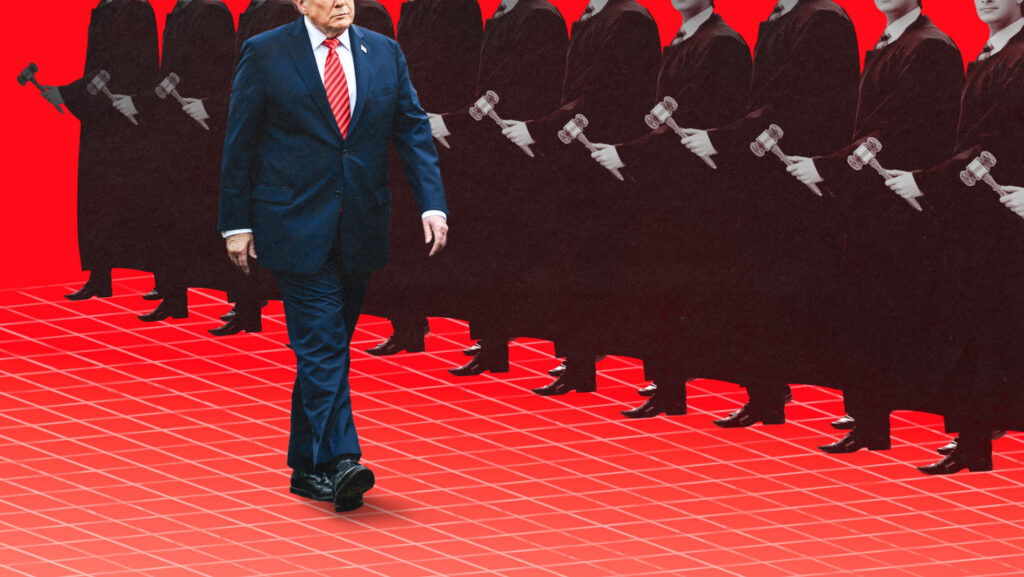
The situation in Nevada is not an outlier. As Democrats focus on federal candidates, Trump and his allies have kept one eye fixed on the local offices where most election disputes start and end. With little discretion and even less shame, they have stacked the courts with partisan judges who will approve whatever it takes — poll closures, gerrymanders and outright disenfranchisement — to ensure MAGA victories.
In Pima County, Arizona, a bright blue dot of progressive politics, 11 out of 13 local and appellate judges were appointed by Republican governors who local voters rejected at the polls. Those judges include Sean Brearcliffe, who raised eyebrows with thousands of dollars in political donations to right-wing candidates, and Catherine Woods, who is one of the few sitting judges to have been rated unfit for office by the Arizona judicial review commission.
Reynolds, Brearcliffe and Woods have something else in common. All three are up for re-election this year, in races buried so far down the ballot that many voters will skip them entirely. That’s what election deniers are counting on.
For years, right-wing operatives have funneled money into political action committees focused on electing judges friendly to their side. As Trump’s efforts to purge voter rolls and dismantle vote-by-mail have stalled in court, his allies are confident in their back-up plan. By 2028, they aim to install scores of state-level judges who will cast aside election results at the whim of their powerful patrons.
These MAGA operatives already have a working model. In North Carolina, state courts remade by the far right have upheld extreme gerrymandering and greenlit a GOP takeover of local election boards. As North Carolina has become more Democratic, judges have become more reactionary — transforming their courts into a citadel that shields MAGA candidates from the will of the people.
But there’s good news: advocates for fair courts are fighting back. The State + Local Election Alliance (SLEA) is investing millions of dollars in judicial races across North Carolina, Arizona, Nevada and Michigan, backing judges and candidates from both parties who have a record of standing up for democracy and the rule of law. Through exhaustive research and message testing, SLEA is pioneering effective strategies to get voters to care about the judges at the bottom of their ballot — and an early victory in Marathon County, Wisconsin, this year shows that it’s working.
In the coming years, the most consequential fights over American elections will not be decided in Washington. They will be in state and county courthouses, decided by judges who were elected with a fraction of the spending in a federal race. There is still time to elect judges who will safeguard our elections — but it will take looking beyond the top of the ballot and investing in races that don’t draw headlines. With 2028 on the horizon, the fate of our democracy depends on it.
Kim Rogers is the President of the State + Local Election Alliance
Eric Ming is the Executive Director of the State + Local Election Alliance