Tennessee Republicans move to eliminate state’s last Democratic district following Voting Rights Act carnage
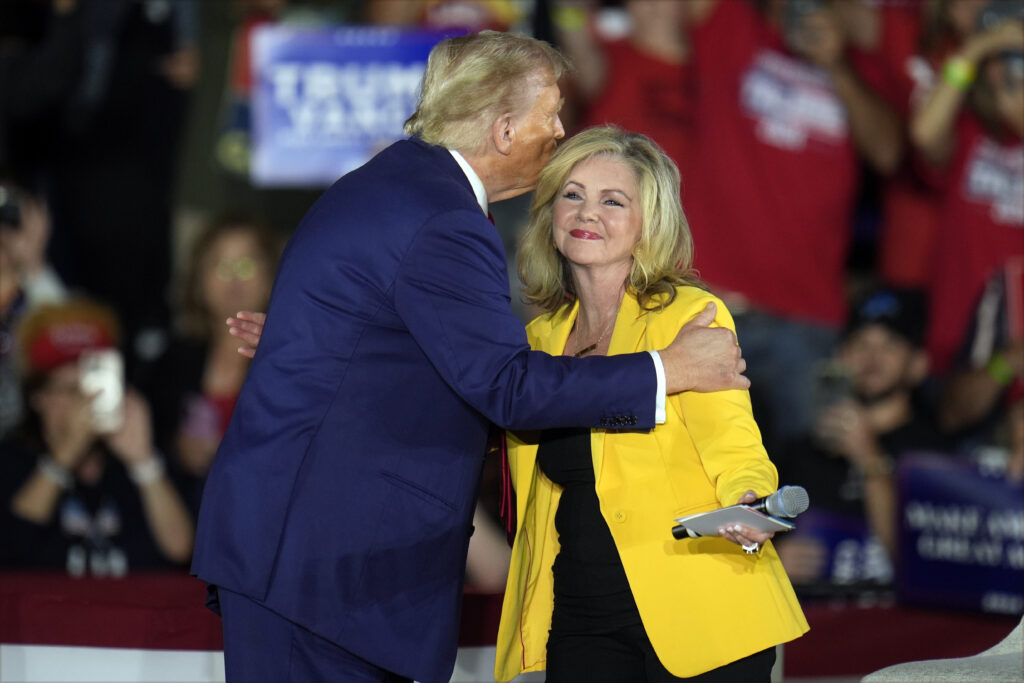
Tennessee Gov. Bill Lee (R) called a special legislative session Friday to review and redraw the state’s congressional map — targeting a majority-Black district in Memphis in the wake of the Supreme Court’s decision gutting the Voting Rights Act.
And local Democrats are mobilizing for the fight.
“We have to defend Black representation and our ability to elect Black people to positions of power,” state Rep. Justin Pearson said at a Friday rally. “Because that is what was fought for.”
Get updates straight to your inbox — for free
Join 350,000 readers who rely on our daily and weekly newsletters for the latest in voting, elections and democracy.
Lee said in the statement that the legislature would convene in special session to review the map following “renewed nationwide action around congressional representation.”
Within days of the Callais ruling, top Republicans — including President Donald Trump and Sen. Marsha Blackburn — began publicly urging Tennessee lawmakers to redraw the state’s congressional lines, a move that could turn the state’s current 8-1 Republican delegation into a 9-0 GOP sweep.
Blackburn, who is running for governor in 2026, seized on the ruling Wednesday.
“I urge our state legislature to reconvene to redistrict another Republican seat in Memphis,” Blackburn wrote. “It’s essential to cement Trump’s agenda and the Golden Age of America.”
In a separate statement, Blackburn said a new gerrymander “should yield another conservative seat” and told the legislature to act “as soon as possible” to implement a new map ahead of this year’s midterm elections.
Trump later weighed in, claiming he had spoken with Lee.
“I had a very good conversation with Governor Bill Lee, of Tennessee, this morning, wherein he stated that he would work hard to correct the unconstitutional flaw in the Congressional Maps of the Great State of Tennessee.” Trump wrote. “Likewise, all of the other Political Representatives of Tennessee have promised to do so. This should give us one extra seat. Thank you Governor Lee — PUSH HARD!”
At the center of the push is Tennessee’s 9th Congressional District — a Memphis-based, majority-Black district that represents the state’s only Democratic seat and had long been protected under the Voting Rights Act.
Republican proposals would likely “crack” Memphis — splitting its heavily Democratic voters across multiple Republican-leaning districts — similar to what lawmakers did to Nashville in 2022.
The result could be a 9-0 Republican congressional delegation in a state where about a third of voters supported Democrats in recent elections.
Democratic lawmakers and local leaders in Memphis are already mobilizing against the potential gerrymander, framing it as an attack on Black voters and representation.
“We are hearing attempts to disenfranchise us completely with the removal of District 9. We’re not going to take it. That’s right. We are going to defend District 9 with every breath that we have,” state Rep. Justin J. Pearson said at a “Defend District 9” press conference Friday morning, before Lee’s statement. “We have to defend District 9. We have to defend Black representation and our ability to elect Black people to positions of power because that is what was fought for. That was what was died for. And that is what democracy must be in order for it to be realized.”
In remarks at the event, Pearson warned that the effort could “disenfranchise us completely with the removal of District 9” and vowed to “defend District 9 with every breath that we have.”
Meanwhile, state Sen. Raumesh Akbari (D) named it “voter disenfranchisement” and “voting discrimination, full stop” while state Sen. London Lamar (D) called it “a raw political power grab aimed directly at Memphis, Black voters and the only Democratic congressional district left in Tennessee.”
The push comes just after the Supreme Court’s ruling in Callais, which has made it nearly impossible to challenge racist maps under the Voting Rights Act.
For decades, the law helped protect districts like Tennessee’s 9th by allowing challenges based on discriminatory effects — not just proof of intent.
But under the court’s new standard, plaintiffs must show a “strong inference” of intentional discrimination — a much higher bar.
Tennessee’s legislative session has already ended, meaning any redraw would require Lee to call a special session.
Congressional primaries are scheduled for August, creating a narrow window for lawmakers to act — though Louisiana and Alabama have already shown states are willing to disrupt ongoing and upcoming elections in the wake of Callais.