Disqualified Trump appointee Halligan accuses judge of ‘gross abuse of power’ for questioning her authority
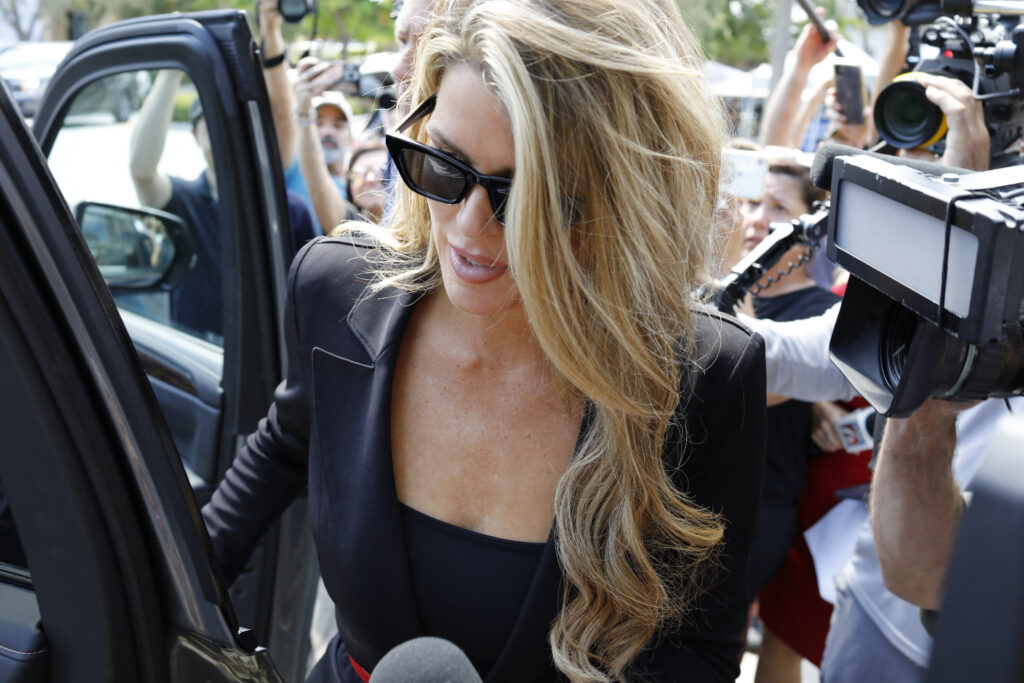
Lindsey Halligan, the loyalist lawyer President Donald Trump handpicked to prosecute his enemies last year, has accused a federal judge of abusing his power by asking her to explain how she remains the top federal prosecutor in eastern Virginia after a court formally disqualified her more than a month ago.
Halligan’s response to the judge Tuesday — a remarkably defiant document that strains the boundaries of standard legal rhetoric and logic — represents the Department of Justice’s (DOJ) latest pugilistic attempt to keep her at the helm of the U.S. Attorney’s Office for the Eastern District of Virginia, one of the largest and most prestigious federal prosecutor offices in the country.
Get updates straight to your inbox — for free
Join 350,000 readers who rely on our daily and weekly newsletters for the latest in voting, elections and democracy.
In November, U.S. District Judge Cameron Currie determined that Trump and Attorney General Pam Bondi circumvented the Constitution and federal law in appointing Halligan to lead the office. She then dismissed the DOJ’s criminal indictments against former FBI Director James Comey and New York Attorney General Letitia James — two cases that Halligan alone brought just days after her appointment.
Then, last week, U.S. District Judge David Novak ordered Halligan to explain how her continued identification as the top federal prosecutor in eastern Virginia did not amount to making false or misleading statements to a court — and why he shouldn’t strike her identification as a U.S. attorney from a criminal indictment secured after her disqualification.
In response, Halligan characterized Novak’s questions as “a thinly veiled threat” against her authority and claimed the previous unlawful appointment ruling only prevented her from working the dismissed cases against Comey and James.
“This Court appears to be under the misimpression that because Judge Currie’s rationale for dismissing the indictments was her conclusion that Ms. Halligan was unlawfully appointed, the United States must acquiesce to that rationale in all other cases or else it is ‘ignor[ing]’ Judge Currie’s orders,” the response, which was authored by Halligan, states.
“The bottom line is that Ms. Halligan has not ‘misrepresented’ anything and the Court is flat wrong to suggest that any change to the Government’s signature block is warranted in this or any other case.”
Halligan did not explain why she and the DOJ have repeatedly identified her as a full U.S. attorney in court filings — dropping “acting” or “interim” from her title — even though she was never confirmed by the Senate or federal judges in the Eastern District of Virginia.
Last year, the Fourth Circuit Court of Appeals assigned Currie, who is normally based in South Carolina, to hear Comey and James arguments that their cases should be dismissed because Halligan was illegally carrying out the powers of a U.S. attorney when she sought the indictments against them.
The Fourth Circuit ordered Currie to hear Comey’s and James’ arguments because the judges in eastern Virginia had a conflict of interest in Halligan’s appointment: they had selected her predecessor.
Before he appointed Halligan, Trump forced Erik Siebert, the judges’ pick to lead the U.S. attorney’s office, out of his post for raising concerns about the viability of bringing charges against Comey and James.
Halligan claimed Currie’s order was solely limited to the Comey and James cases. However, the judge was specifically appointed to consider Halligan’s “appointment, qualification, or disqualification” in both the Comey and James cases and “in other cases involving similar challenges against” Halligan’s appointment.
And while she did not explicitly state that Halligan was disqualified in her unlawful appointment order, Currie ruled that federal judges in eastern Virginia had the authority to appoint a new interim U.S. attorney to replace Halligan — which strongly implied Halligan’s disqualification.
Though Halligan argued Currie’s order only precluded her from working on the now-dismissed cases, she has also identified herself as a U.S. attorney in one of the DOJ’s attempts to re-indict James.