Judge orders Trump administration to allow men expelled to El Salvador to return, challenge removal
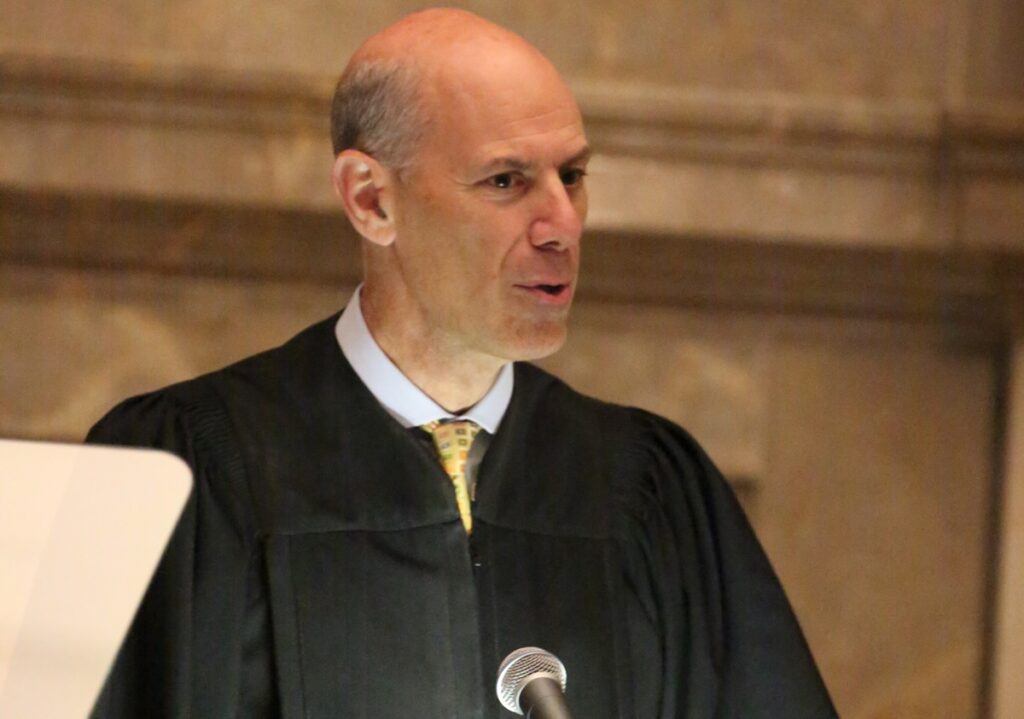
A federal judge has ordered the Trump administration to allow Venezuelan men who were previously expelled to a notorious megaprison in El Salvador to return to the United States and challenge their removal from the country.
Early last year, President Donald Trump invoked the Alien Enemies Act (AEA) — a rarely used, 18th century wartime law — to fast-track the men’s removal from the United States, alleging that they were members of the Tren de Aragua criminal gang. The men were subsequently released to Venezuela as part of a prisoner exchange between Washington and Caracas.
The administration’s decision to rapidly remove the men to the Terrorism Confinement Center (CECOT) in El Salvador became one of the first flash points in Trump’s aggressive immigration crackdown. But it has not stood up well in court.
Get updates straight to your inbox — for free
Join 350,000 readers who rely on our daily and weekly newsletters for the latest in voting, elections and democracy.
In his order published Thursday, James E. Boasberg, chief judge of the U.S. District Court for the District of Columbia, stressed that his court had ruled in December that the Trump administration denied the men due process. His previous order also offered the government a chance to propose steps to allow the Venezuelan nationals to challenge their expulsion.
“Apparently not interested in participating in this process, the Government’s responses essentially told the Court to pound sand,” Boasberg wrote.
As a result, Boasberg has now ordered the government to “facilitate” the men’s return to the U.S. or allow them to challenge their removal from abroad. Should they choose to come back to the U.S., the government must also cover the cost of their travel.
Still, it’s not clear how many of the 137 Venezuelans who the government removed from the U.S. will actually take the offer up.
Boasberg noted that anyone who returns to the U.S. to challenge their removal will be taken into U.S. custody during their court proceedings and could ultimately be subject to redeportation.
Last year, the Supreme Court in a preliminary ruling allowed the Trump administration to deport people from the United States under the AEA, but only if they were first given a chance to challenge their removal. The court also determined that the Venezuelans removed to El Salvador had been denied due process.
But the administration has resisted bringing these people back — including Kilmar Abrego Garcia, a Maryland resident whose removal to El Salvador provoked an outcry throughout the country and became a symbol of Trump’s lawless overreach.
Abrego Garcia was eventually returned to the U.S. and released from immigration detention. But a federal judge had to expressly bar the administration from re-arresting him after an immigration official sought to retroactively “correct” a years-old ruling in Abrego Garcia’s immigration case to force his removal from the country.