In New Letters, DOJ Escalates Hunt For State Voter Data, Threatens Legal Action
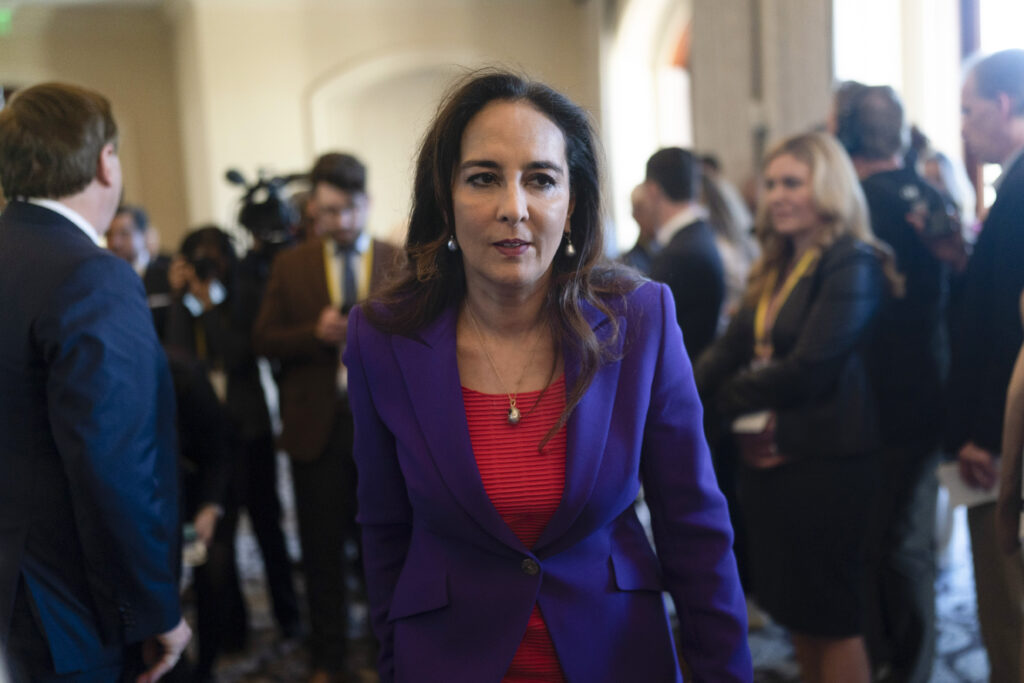
The U.S. Department of Justice (DOJ) is escalating its effort to pressure states to hand over sensitive voter data, including by threatening legal action, according to letters from a top department official obtained by Democracy Docket.
It’s the latest step in the Trump administration’s ongoing quest to obtain state voting information to bolster its hunt for illegal voting.
Over the past few months, DOJ has sent letters to dozens of states — with plans to eventually contact all 50 states — demanding access to voter registration lists and proof of compliance with federal voting laws. The unusual inquiries raised serious concerns among state election officials and voting rights experts, who questioned the legality of the effort.
But in letters sent last week to election officials in California, Illinois and Pennsylvania, the department went further. Assistant U.S. Attorney General Harmeet Dhillon threatened California with legal action if it did not provide DOJ with full access to its voter registration list (VRL) within seven days.
Dhillon made a similar demand of Illinois. Though her letter didn’t threaten a lawsuit, it noted that DOJ is empowered by federal law to “bring enforcement actions” to ensure that states are maintaining accurate rolls.
And in a letter to Pennsylvania election officials, Dhillon clarified DOJ’s recent demand for access to the Commonwealth’s voter rolls to include all private voter data, “given responses from other states thus far.” Dhillon similarly noted that DOJ is empowered by federal law to “bring enforcement actions” to ensure the Commonwealth is complying with federal voter laws.
After DOJ asked California for its statewide voter roll, Secretary of State Shirley Weber (D) responded by citing state law that prohibits making the state’s VRL available for public inspection. Weber also cited privacy concerns, and wrote that “the NVRA has never been interpreted to require total and unqualified access to all information contained in a voter registration record.”
But Weber did offer to make California’s full voter registration list available for DOJ to inspect in person at her office in Sacramento.
Dhillon responded August 13, reiterating the demand for the voter list and threatening legal action.
“Please be advised that failure by California to provide its statewide VRL may result in legal action,” Dhillon wrote.
Dhillon sent a letter to Illinois State Board of Elections Executive Director Bernadette Matthews on August 14, in response to Matthews providing DOJ with only part of Illinois’ voter rolls, which left out voters’ private information.
In her letter, Dhillon demanded Matthews send DOJ a list of every Illinois voters’ “full name, date of birth, residential address, his or her state driver’s license number or the last four digits of the registrant’s social security number,” within seven days.
DOJ recently sued Orange County, California for access to similar private voter information, alleging federal voting law violations.
In her original response to DOJ, Matthews omitted sensitive voter information, citing Privacy Act concerns. In her response, Dhillon wrote that “all data received from you will be kept securely and treated consistently with the Privacy Act.”
There’s been growing concern that DOJ might not be complying with federal privacy laws in its efforts to obtain states’ voter registration data.
Justin Levitt, a constitutional law scholar and a former deputy assistant attorney general in the DOJ’s Civil Rights division, recently noted that DOJ had failed to provide a notice in the Federal Register — allowing both Congress and the public an opportunity to comment on the request — as required by the 1974 Privacy Act.
“The tiny bit of the Privacy Act the DOJ cited is about Social Security number disclosure,” Levitt told Democracy Docket about Dhillon’s most recent round of letters to states. “It allows election officials to ask for the last four of an individual’s SSN on voter registration forms. It does not in any way allow the government to collect the voter files without notifying the public and Congress.”
Levitt said that submitting notice in the Federal Register, allowing the public and Congress to comment on DOJ’s request to obtain voter roll data from states, would force the department to answer the question at the center of its hunt for voter data: What do they plan to use it for?
“The fact that they’re working so hard to avoid answering the real question leaves me even more suspicious than I was before,” Levitt added. “If there were a straightforward answer to ‘just show me where you’ve complied with the Privacy Act requirement to publish a notice on how your plan to collect and use the voter rolls,’ they’d have done it by now.”
This article has been updated to include DOJ’s letter to Pennsylvania.