ICE backs off exclusive voter fraud contract with Thomson Reuters after public outcry
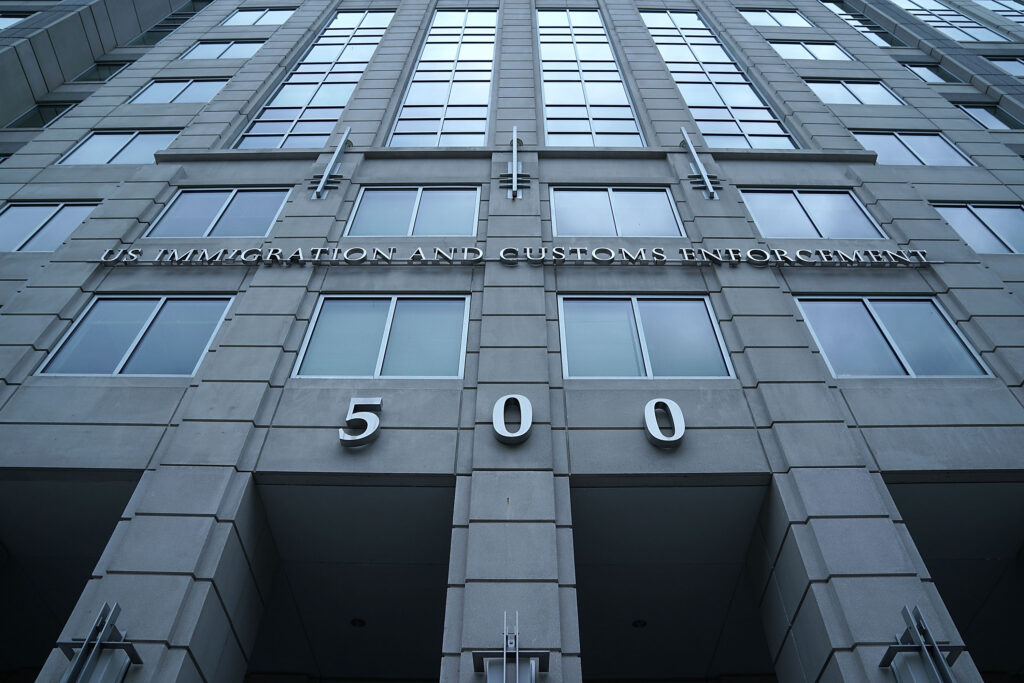
U.S. Immigration and Customs Enforcement (ICE) backed down from plans to offer an exclusive $125 million contract to Thomson Reuters’ commercial data arm after the seemingly sweetheart deal garnered intense public scrutiny.
Critics alleged the immigration agency could use the data not only to target immigrants but also in an attempt to verify allegations of voter fraud and illegal voting by noncitizens.
Now, ICE will open up the contract to bids by multiple companies. However, Thomson Reuters could still ultimately win the tender.
The news site Biometric Update first reported about the change on Saturday.
ICE previously planned to pay the $125 million to Thomson Reuters Special Services for access to its CLEAR database, a massive platform that aggregates records like people’s names, addresses, property records, driver’s licenses, social media profiles, and voter registration records from both public and private sources.
In recent months, opponents — including some of Thomson Reuters’ own employees and shareholders — have protested the company’s relationship with ICE.
Get updates straight to your inbox — for free
Join 350,000 readers who rely on our daily and weekly newsletters for the latest in voting, elections and democracy.
Election experts and officials have also raised concerns that the government’s use of commercial data for immigration and elections investigation purposes will lead to false matches that have serious consequences for innocent people.
Officially, the $125 million procurement order says that ICE is looking for greater access to data for its expanding mission to track what it terms fraud.
“Due to ICE’s re-prioritized mission, there is need for this data to be readily accessible to support the presidential mandate of the identification of Voters Fraud, Immigration Fraud and National Security,” reads the procurement order.
The order isn’t just sounding alarm bells because of ICE’s record of lawless abuse of immigrants.
The order, which 404 Media first made public, was originally issued in July, around the same time that Department of Homeland Security (DHS) Secretary Markwayne Mullin announced that his office had discovered more than 250,000 noncitizens registered to vote in four states.
Mullin did not name the source of that figure or explain how it was calculated. Election experts and state election officials have questioned the validity of the number.
Last month, David Becker, executive director of the Center for Election Innovation & Research, told journalists that a White House official had cited the figure during a briefing he attended and said it was based on comparisons with commercial databases.
But commercial data is less detailed than voter records, often making exact identifications impossible, Becker explained.
“That 250,000 number is an irresponsible number to share given the opaque methodology that they claimed here,” he said.
A report from NPR that week suggested that Thomson Reuters’ CLEAR could be the commercial database ICE was using to get that number — though the journalists could not prove that.
Thomson Reuters has also pushed back on that suggestion.
It initially denied connections to ICE when 404 Media first asked about it earlier this year.
But when confronted with the procurement order from ICE, the commercial data company later told 404 Media: “We continue to work with our customers to provide technology and services that support investigations into areas of national security and public safety, such as child exploitation, human trafficking, narcotics and weapons trafficking, and fraud/financial crime.”
Reuters also told 404 Media that it prohibits the use of CLEAR for tracking “noncriminal immigrants or undocumented individuals with the intention of deportation solely on the basis of the individual’s immigration status.”
But that hasn’t prevented some employees from decrying what they call Thomson Reuters’ “troubling” relationship with ICE and DHS.
Calling themselves the Committee to Restore Trust, roughly 200 of the commercial data company’s employees released a public letter earlier this month demanding Reuters sever ties with the federal agencies.
“The Committee to Restore Trust finds this latest contract between DHS/ICE and TRSS [Thomson Reuters Special Services] to support the ‘presidential mandate of the identification of Voters Fraud, Immigration Fraud and National Security’ deeply troubling,” reads the letter, which was published in The Nation. “Numerous sources have reported human rights abuses by ICE and DHS agents during Operation Metro Surge and around the country. We ask the company to refrain from further business with DHS and ICE until an independent board audits and reviews their usage of public records applications in 2026.”
In March, Thomson Reuters employees also spoke out against their company’s prior contract with ICE, after immigration agents unleashed waves of violence on protestors in Minnesota and killed two people. One Thomson Reuters employee was fired allegedly for blowing the whistle on the ICE contract and is currently suing her former employer.
On August 11, a group of civil rights and pro-democracy organizations wrote a letter to congressional leaders calling for hearings to probe the ICE CLEAR contract.
“The contract may expressly contemplate use of the platform in investigations relating to voter fraud in addition to immigration fraud and national security,” reads the letter. “This demonstrates the broad range of government functions now supported by commercially acquired surveillance tools. Without clear statutory guardrails, agencies across the federal government will continue to circumvent constitutional safeguards and expand their reliance on commercially purchased personal information.”
In June, a group of Thomson Reuters shareholders also called for a review of the human rights implications of the company’s contracts with ICE.