GOP-backed ballot rules plague North Carolina voters in Democratic stronghold
 Prefer us on Google
to see more of our voting rights news coverage when you search.
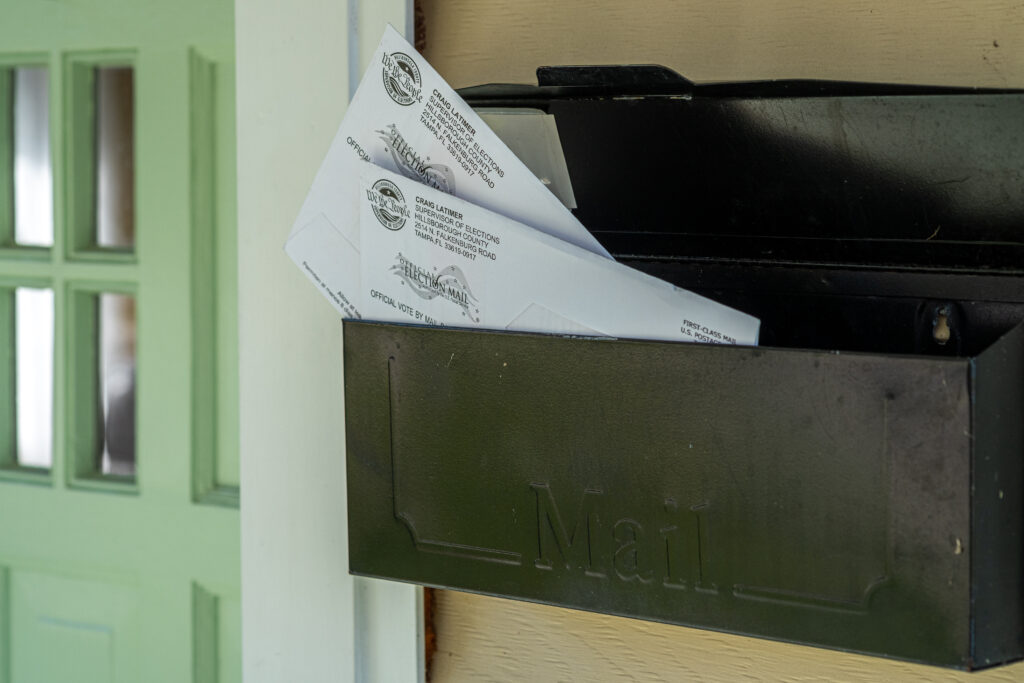
Mail ballots in North Carolina’s largest county, a key Democratic stronghold, are being rejected at a high rate. And over half of those rejections are the result of a strict new GOP-backed rule about ballot envelopes, according to data shared with Democracy Docket.
“We’ve had voters who we’ve had to mail them four or five different ballots just because they keep mailing it back with some type of deficiency,” Wake County Board of Elections Deputy Director Spencer Berg told Democracy Docket.
As of Wednesday, Wake County, which contains Raleigh, had received 7,629 mail ballots and had rejected 277 of these, according to numbers from the county board of elections.
That’s a 3.5% rejection rate. In 2022, 2.2% of mail ballots were rejected statewide, according to federal data.
Get updates straight to your inbox — for free
Join 350,000 readers who rely on our daily and weekly newsletters for the latest in voting, elections and democracy.
One hundred and forty-seven of Wake’s rejected ballots — over half — were flagged due to an unsealed inner envelope, county data showed.
The rule requiring voters to seal an inner ballot envelope within an outer one, passed recently by the GOP-controlled state board of elections (NCSBE), has faced scrutiny across North Carolina following Democracy Docket’s exclusive reporting on ballot rejection rates.
Wake County is the largest of North Carolina’s 100 counties, with over 1 million residents, as of 2025 U.S. Census data. It’s also a Democratic stronghold that could sway election results in the battleground state. Nearly 62% of Wake voters supported Vice President Kamala Harris in 2024.
In 2022, 36,235 Wake County residents voted by mail. If a 3.5% rejection rate were to hold in this election, with the number of residents voting by mail reduced by 30% to account for decreased mail voting requests, an estimated 887 ballots would be rejected in Wake County this year by the end of ballot counting.
If a ballot is rejected, it doesn’t mean the voter is automatically disenfranchised. Wake County data shows that so far, 53 voters either returned a replacement absentee ballot or voted in person after their ballot was spoiled. But this also means a majority of voters with spoiled ballots have not yet taken action.
Separately, the total rate of rejected ballots across 27 counties for which Democracy Docket has reviewed data has spiked to 4.22%, as of Friday afternoon, according to data provided by Common Cause North Carolina, which is working to monitor absentee voting this election.
That’s nearly double the rate for the state’s 2022 election across all 100 counties, which was 2.2%, according to the U.S. Election Assistance Commission.
The NCSBE has said the rate for rejected ballots across the state so far — including all 100 counties — is 3.1%. In 2022, it was 2.6% at the same time of the election season.
“The new absentee ballot rules follow the plain text of state law, which requires ballots to be ‘sealed in the container-return envelope,’ the board wrote in a statement to Democracy Docket. “These new rules provide an added layer of security to help prevent any ballot tampering and have been affirmed by a federal court.”
Mail voting has significantly decreased this year. Absentee mail ballot requests are down 32% from the 2022 general election, with some voters telling Democracy Docket they believe it’s a direct result of a GOP assault on mail voting.
Berg said that while Wake County is the largest and has seen a “definite increase” in rejected ballots, the county also has a wealth of resources. There are 48 permanent staffers helping to notify voters if their ballots are spoiled, a process that happens within one day of the initial count, per state recommendations.
Berg said he was more concerned about smaller counties with fewer staff, wondering if they would be able to comply with this 24-hour recommendation if they are seeing similar rejection rates to Wake County.
In Guilford County, another large Democratic-leaning county, voters are notified via phone, email and postal mail if their ballot is rejected, according to Carolyn Bunker, one of two Democrats on her county’s election board. Bunker said even though the county has been notifying voters within a day, there is no guarantee voters will respond.
“We’ll probably get another 10,000 in the next 12 days so I think what you’ll see, unfortunately, is the ones that come back deficient just have that turnaround time that is so short,” Berg said. “That’s where we have been seeing some voter frustration.”
Voters can track the status of their ballots using the state’s BallotTrax website.