DOJ Sues Six More States in Sweeping Push to Obtain Unredacted Voter Rolls
 Prefer us on Google
to see more of our voting rights news coverage when you search.
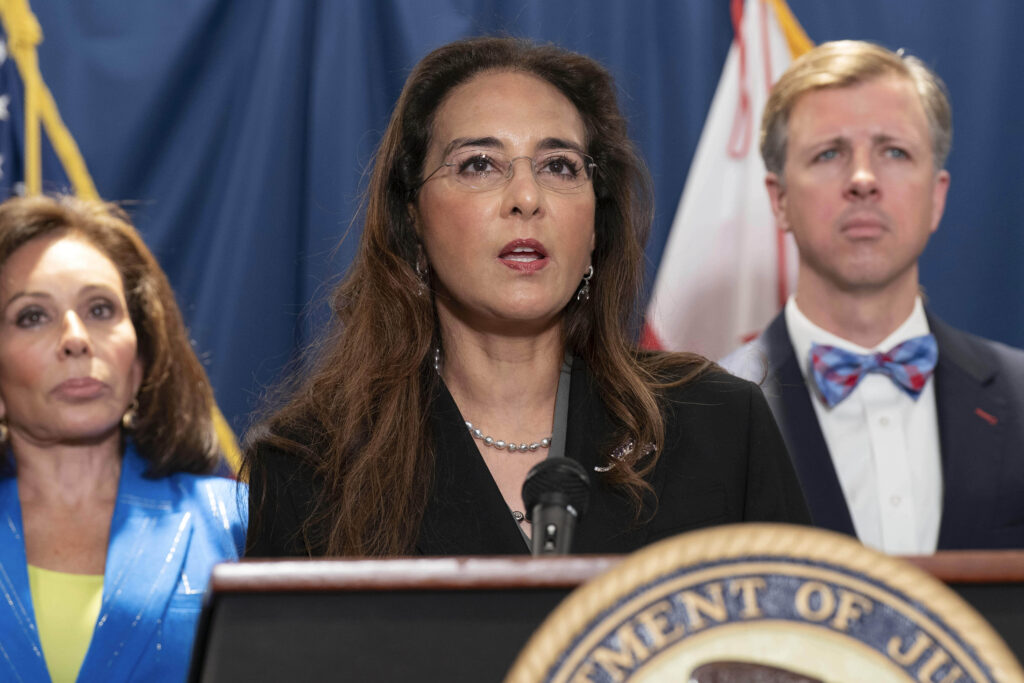
The Justice Department launched a new wave of lawsuits against six more Democratic-led states Tuesday — escalating a federal effort to seize unredacted information from millions of voters.
The new suits — filed against Delaware, Maryland, New Mexico, Rhode Island, Vermont and Washington — mirror the department’s cases against eight states from earlier this year. All demand the same sweeping trove of voter data, including full names, residential addresses, birth dates, driver’s license numbers and the last four digits of Social Security numbers.
Get updates straight to your inbox — for free
Join 350,000 readers who rely on our daily and weekly newsletters for the latest in voting, elections and democracy.
“I denied the DOJ’s unsubstantiated request for Rhode Islanders’ private information because the administration of elections falls under the purview of the states under the United States Constitution,” Rhode Island Secretary of State Greg Amore said in a statement. “This lawsuit, like those filed in other states, is a continuation of the current presidential administration’s unconstitutional attempts to interfere with elections processes across the country. Rhode Islanders can be sure that our voter list maintenance activities adhere to federal and State election laws.”
At the center of these six new lawsuits is a section of the Civil Rights Act of 1960, which was originally enacted to stop Jim Crow registrars from hiding voter suppression records.
The DOJ now argues that the same law gives it nearly unreviewable authority to demand entire statewide voter files for “inspection, reproduction, and copying” — a position deeply alarming to privacy and democracy advocates.
“Title III of the Civil Rights Act of 1960 (‘CRA’) imposes a ‘sweeping’ obligation on election officials to ‘retain and preserve all records and papers which come into their possession relating to any application, registration, payment of poll tax, or other act requisite to voting in such election,'” the department wrote in all six new filings. “Title III likewise grants the Attorney General the sweeping power to obtain these records.”
And the filings go even further, asserting that courts have almost no ability to examine the DOJ’s motives or the scope of what it wants.
“The CRA requires ‘a special statutory proceeding in which the courts play a limited, albeit vital, role’ in assisting the Attorney General’s investigative powers,’” the department added. “The court does not adjudicate ‘the factual foundation for, or the sufficiency of, the Attorney General’s ‘statement of the basis and the purpose’ contained in the written demand’ or ‘the scope of the order to produce.'”
The DOJ’s latest filings arrive as the earlier eight lawsuits remain stalled. Not a single one has resulted in a court-ordered disclosure.
Democratic and Republican election officials alike have warned that the DOJ’s demands violate state privacy laws, risk exposing voters’ information for political targeting and trample the Constitution’s delegation of elections to the states. Voting rights groups have moved to intervene in all of the past eight lawsuits across the country.
“Our office has already provided the DOJ with publicly available voter data, but we are legally prevented from providing them with personal private voter information,” New Mexico Secretary of State Maggie Toulouse Oliver’s office said in a statement. “This lawsuit is a continuation of the Trump administration’s assault on free and fair elections as they want access to New Mexicans’ personal private voter data. And the weaponized Justice Department is now suing Secretary Toulouse Oliver over it.”
The new lawsuits intensify a national confrontation that now spans fourteen states and over a third of the U.S. population.
Should the DOJ prevail in any case, states could be forced to transmit deeply sensitive voter data to federal officials and potentially other agencies, with little explanation and minimal judicial oversight.
This story has been updated.