After Trump’s gerrymander and Abbott’s scheming, Houston voters face most confusing election of 2026
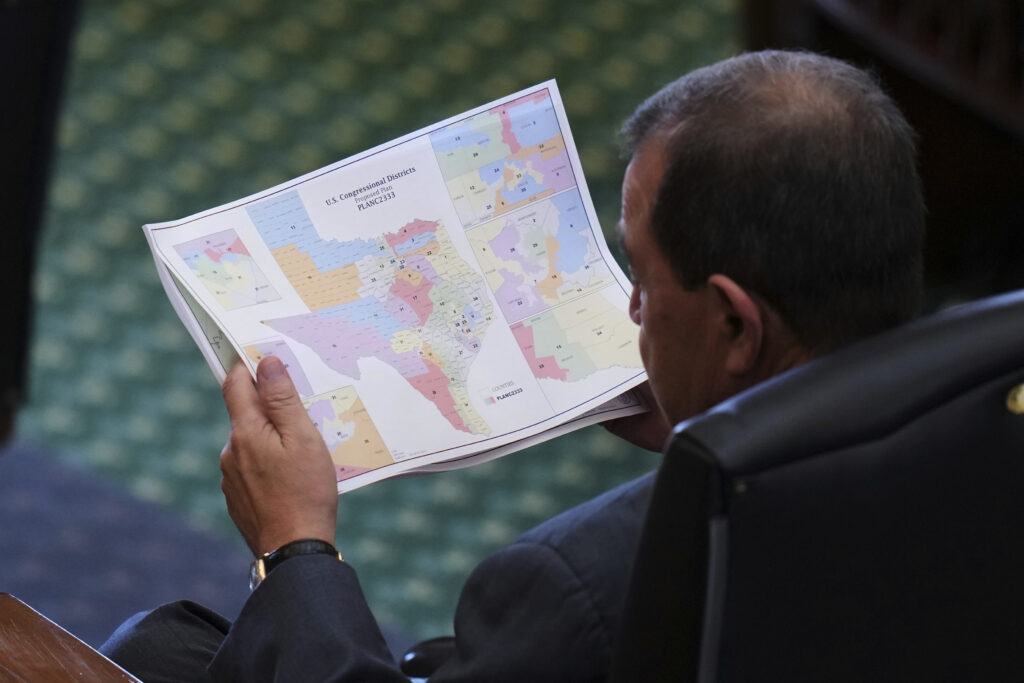
Note: Confused Houston voters can look up their congressional district here. Information about voting locations and hours is available here.
It’s a strange time to be voting in Houston.
Since Rep. Sylvester Turner (D) died in office this past March, voters in Texas’s 18th district, which covers much of the city and is safely Democratic, haven’t had representation in Congress. They will finally elect a replacement to finish his term during a Jan. 31 runoff.
But that’s far from the end of the story. Just two weeks after the runoff election on Jan. 31, early voting will begin in a primary to fill that exact same seat for the upcoming term. The two elections are bumping up against each other because Gov. Greg Abbott (R) delayed holding the vote for Turner’s replacement as long as he could, in order to deny Democrats a seat in Congress.
And this second election will be held using a new, drastically changed congressional map with different voters and a longtime incumbent from a neighboring district entering the race.
It’s poised to be the most confusing congressional election this year.
Get updates straight to your inbox — for free
Join 350,000 readers who rely on our daily and weekly newsletters for the latest in voting, elections and democracy.
Last year, President Donald Trump called on Republican-controlled states to gerrymander their electoral maps to give the GOP a big advantage in the 2026 midterms. Texas rushed to comply.
Now, when Houstonians head back to the polls next month, only 25% of District 18’s current population will still live in the district, according to court filings in a lawsuit* that sought to block the map.
Voters are bearing the brunt of this change.
Ivory Bickham is one of around 2,000 Houstonians who braved the rain Wednesday to cast a ballot on the first day of early voting in the runoff.
“It’s a lot going on,” Bickham told Democracy Docket. “It’s hard to keep up. It really is.”
Bickham is more on the ball than many. Most people, he says, aren’t aware of the changes and how they may be impacted — and he worries it may stop them from making their voices heard.
“It’s almost like it happened overnight,” he said.
Bickham’s fears appear justified.
Alan Foster, an election worker at one of Houston’s busiest polling places, saw just a slow but steady trickle of voters Wednesday. But next month, he expects a big turnout for the primary – and he anticipates spending a lot of time helping voters who are surprised to find a completely different congressional race on their ballots.
“It is a laborious process of calling downtown and determining that ‘Yes, in fact, it is correct. You used to be in [District] 18. You’re not anymore,’” Foster said.
He wishes poll workers had accessible “before” and “after” maps to explain the changes to voters.
Another election worker, who asked not to be named, told Democracy Docket that he wasn’t even sure which district he will be in on the new map.
And one voter arrived Wednesday to cast a ballot, only to be told she didn’t actually live in the district.
Recipe for confusion
This isn’t the first electoral confusion District 18 residents have faced.
In July 2024, Rep. Sheila Jackson Lee (D) died in office. She was replaced by Turner, who died less than a year later.
After Turner’s death, Abbott saw an opportunity. He delayed scheduling a special election to replace the late representative until November. That left national Democrats down one vote in the U.S. House for months and helped the GOP push their agenda into law despite having just a razor-thin majority.
When November rolled around, there were more than a dozen candidates running to replace Turner. As a result, no one got at least 50% of the vote. Now, the top two candidates – both Democrats – are competing in the runoff to serve out the remainder of Turner’s term.
But when District 18 voters head back to the polls next month for early voting in the March 3 primary, the situation will get even more confusing: The election will be held under the new map with new boundaries.
Adding to that mess, both runoff candidates — Harris County Attorney Christian Menefee and former Houston City Council Member Amanda Edwards — will be on the Democratic primary ballot regardless of who wins the January election, because candidates were required to file for a spot in the primary by December.
But in another plot twist, longtime incumbent Rep. Al Green, who currently represents neighboring District 9, will also be in the race.
It’s a glaring illustration of how gerrymandering works: Republicans effectively dismantled District 9 on the new map – drawing in white voters from a rural area, while moving many minority voters into District 18. Only 2.9% of the former district remains in the new District 9 boundaries, according to court filings.
Katie Campbell Shumway, executive director of the League of Women Voters of Houston, is experiencing the changes firsthand – she’s been redrawn from District 29 into District 18.
She fears impacted voters don’t realize they’re in a different district now, because their minds are on other, more pressing issues. “There’s so much to be concerned about right now, with home prices and groceries and day-to-day things,” she said.
That could mean they only learn about the change on election day.
Legal struggle
After the Texas legislature approved the new map in August, voting advocates and minority voters swiftly challenged it in court, arguing it was unconstitutional under the Fourteenth and Fifteenth Amendments. Federal judges subsequently ruled that the map was likely an illegal racial gerrymander.
In the majority opinion, Judge Jeffrey Brown, who was appointed to the bench by Trump, concluded that the Texas legislature likely had “purposefully manipulated” the racial makeup of the Houston-area districts.
If Republicans were motivated by partisanship alone, they would have been unlikely to come up with the new boundaries, he wrote in the ruling.
But then the U.S. Supreme Court’s conservative majority allowed the new map to be used for the 2026 election. The case remains on appeal before the court.
Houston voters aren’t the only ones navigating a confusing election.
In November, California voted to authorize the state legislature to redraw its congressional maps in a bid to neutralize the GOP’s gains from the Texas gerrymander and prevent Trump from rigging the midterms.
Then, earlier this month, Rep. Doug LaMalfa (R) unexpectedly died, leaving California’s 1st District without a representative.
In response, Gov. Gavin Newsom (D) took a cue from Abbott’s playbook and set a special election for Aug. 4, just three months before the midterms.
LaMalfa’s district was one of the five redrawn by California Democrats in response to Texas redistricting. Under the new map, the district is expected to be Democratic-leaning.
The Republican leadership appeared unhappy with Newsom’s decision to copy its tactics.
Rep. Richard Hudson, chair of the National Republican Congressional Committee, said in a statement, “Californians deserve a voice in Congress, and Newsom is denying them one for purely political reasons.”
Partisan politics aside, there are also concerns about the practical effects of the redistricting arms race Trump launched last year and the confusion it created.
In Houston, the League of Women Voters’ Shumway worries that the new congressional districts could disincentivize civic participation.
“When you encourage people to build connections with their representatives and their offices, and then you draw them out of those maps, it can be hard,” she told Democracy Docket. “Because it’s like, ‘What’s the point in me putting in the effort of calling these reps and understanding their backgrounds and what they stand for, if the maps are just going to get rewritten again?’”
*Some plaintiffs in the case were represented by the Elias Law Group (ELG). ELG firm chair Marc Elias is the founder of Democracy Docket.