‘A perfect storm for nobody to show up’: Why Alabama voters skipped the redistricting primary
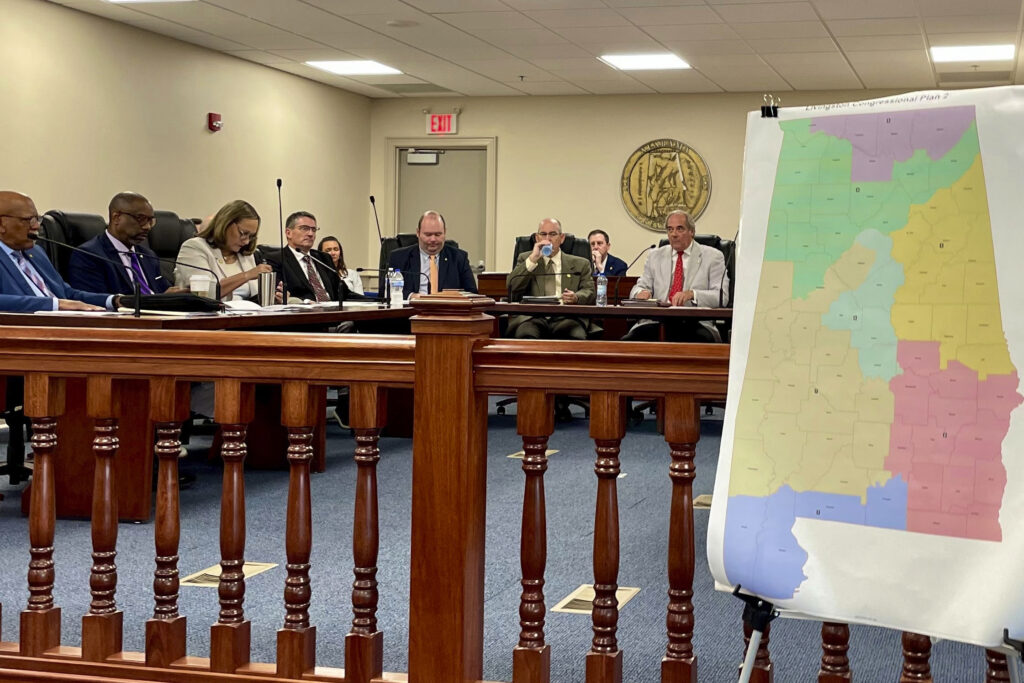
Only a fraction of Alabama voters turned out this week to vote in an unusual second primary election, though more than half of the state’s congressional districts were on the ballot.
The combination of few competitive races, confusion over the rescheduled primary, the unusual timing of the second vote and things like schools reopening all collided to depress turnout, observers said.
Get updates straight to your inbox — for free
Join 350,000 readers who rely on our daily and weekly newsletters for the latest in voting, elections and democracy.
“It’s a mix of things. Kind of like a perfect storm for nobody to show up,” Richard Fording, a political science professor at the University of Alabama who also serves as co-director of the voter outreach nonprofit Return My Vote, said.
Alabama redrew four of its seven congressional districts in a last-minute bid to increase the odds that Republicans keep the House after the U.S. Supreme Court gutted the Voting Rights Act.
Nearly one in four registered voters cast a ballot in the May primaries, when voters weighed in on candidates for governor, U.S. Senate and many downballot races. But turnout in the August primary plummeted to just 5.24% this week, when only the newly drawn congressional districts were up for a vote, according to data published by the Alabama Secretary of State’s office.
The highest turnout race on the ballot only drew 33,000 voters as Rhett Marques won the Republican nomination for the 2nd District, which the GOP gerrymandered in a bid to oust Democratic incumbent Rep. Shomari Figures (D).
The lowest turnout was in the Democratic race for District 6, in which fewer than 9,000 Alabamians cast a vote.
Alabama did not make a robust effort to make sure voters were aware of the new districts or the new election dates, Barker said.
“I think it goes beyond voter apathy when you have systemic barriers like a new voting cycle with new dates that voters are expected to get out and vote — when you change the districts in which the voters are told that they belong to,” Jessica Barker, founder of the Alabama voting advocacy group Lift Our Vote, said. “When you have different things like that happening simultaneously, it’s going to increase that voter apathy and decrease voter participation.”
Many Alabama residents may have been confused because Alabama tossed out the votes they cast in May for the House seats while keeping their votes for all other races. Barker had warned in May that voters were confused about whether to cast ballots in the first primary, and she anticipated low turnout in August.
“That’s over half of the entire state that had their votes basically invalidated from the May primaries and were told that they would have to vote again,” Barker said.
Barker said the low turnout is disheartening, but it also underscores just how much work Alabama voting advocates have ahead of them this year.
“There is a level of education that really has to take place between now and November,” Barker said.
Another factor driving low turnout was that Alabama voters aren’t accustomed to going to the polls in August, Fording said.
“August is a really busy time for most people. Kids started back to school this week,” Richard Fording, a political science professor at the University of Alabama, said. “It’s just an unusual time, and I think there wasn’t much media coverage of it.”
Fording said he was shocked when Alabama lawmakers decided to change the district maps so close to the election that some mail ballots had already been cast in the May primary.
“It’s so disrespectful to all the people who came out to vote — and to the candidates for that matter, too,” Fording said.