Pro-voting group sues Trump DOJ over its alleged voter purge lists
The Brennan Center for Justice sued the Trump administration Thursday seeking records on whether the Department of Justice has created lists of voters for states to remove from the rolls — a new transparency fight over the administration’s nationwide campaign to seize sensitive voter data ahead of the midterms.
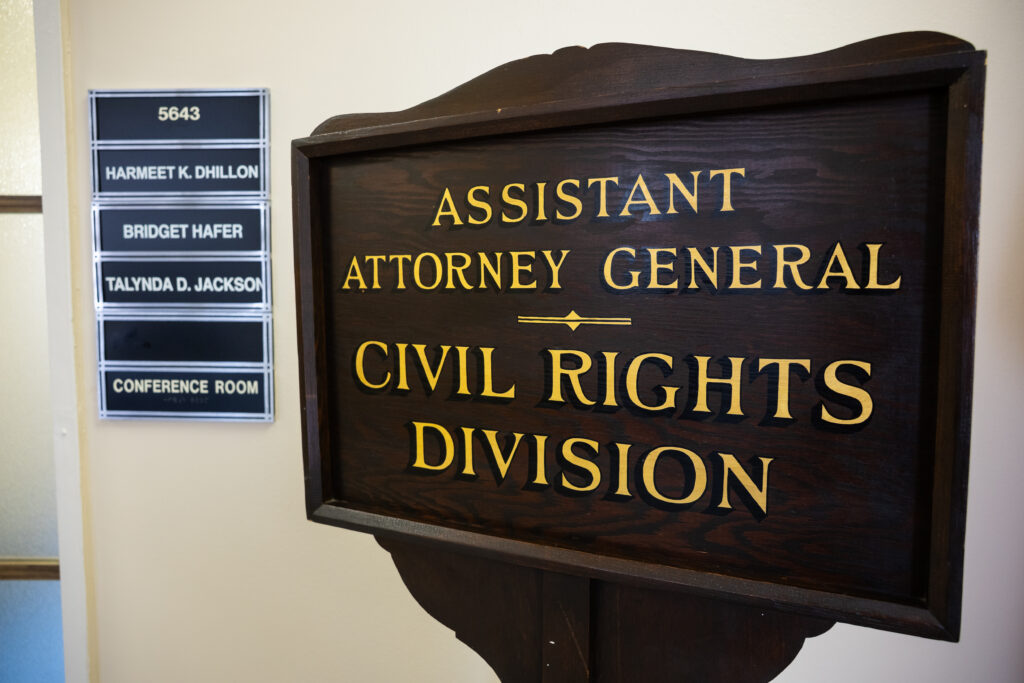
The lawsuit, filed in U.S. District Court for the Southern District of New York, targets DOJ’s Civil Rights Division, which has spent months demanding sensitive voter data from states across the country. Brennan* also filed a motion for a preliminary injunction, asking the court to make DOJ process and release the records fast enough for the public to use them before voting begins this fall.
Get updates straight to your inbox — for free
Join 350,000 readers who rely on our daily and weekly newsletters for the latest in voting, elections and democracy.
“Over the last ten months, DOJ has intensified its efforts to obtain the nation’s voter registration lists and direct the removal of voters it deems ineligible,” Brennan wrote. “But the public, and even state governments and courts, have been kept in the dark about the nature and scope of DOJ’s efforts.”
The records Brennan seeks go to the heart of the Trump DOJ’s voter roll crusade, including how the department is using the data it has demanded from states, whether it is sharing that data with the Department of Homeland Security or outside contractors and whether the government has already created lists of people it wants removed from voter rolls.
Brennan is requesting DOJ communications with cooperating states, key agreements and “the lists of voters DOJ has identified for removal from voter rolls.”
It says those records are critical because the administration is trying to act before the 2026 midterms, when voters and advocates may not have enough time to stop wrongful removals.
“These records are urgently needed to inform the public about the federal government’s use of sensitive voter information,” Brennan wrote. “And because the records involve DOJ efforts to determine who may vote in the upcoming 2026 federal election, the records will be of substantially reduced value after voting begins this fall.”
According to the filing, DOJ proposed confidential agreements (MOUs) requiring states to transfer their complete statewide voter registration data to the Civil Rights Division within five business days. The proposed agreements would also let a contractor access the data and require states to remove voters within 45 days after DOJ flags them as ineligible.
“DOJ’s MOU thus sought to vest DOJ with extraordinary power to control the nation’s voter registration lists: the power to determine who may and may not vote in this year’s elections,” Brennan wrote.
The suit lands one day after the Trump administration suffered its first appellate loss in its voter data campaign. On Wednesday, the Sixth Circuit Court of Appeals upheld an order preventing DOJ from forcing Michigan to hand over unredacted voter rolls.
DOJ has sued 30 states and Washington, D.C., seeking voter lists, and has lost all nine cases decided so far at the trial court level.
Still, the administration is pressing ahead on multiple fronts.
On Thursday, a federal judge blocked key parts of Trump’s March executive order targeting mail-in voting, including provisions directing DHS to compile voter eligibility lists and pushing USPS to deliver mail ballots only to voters on approved lists.
The order came as Postmaster General David Steiner told senators that, under a new proposed rule, the Postal Service would not deliver ballots in states that refuse to provide voter information required by the proposal.
Brennan says the public cannot wait until after the election to find out what DOJ is doing.
“Without sufficient transparency, the Administration and DOJ’s potential actions could impact individuals’ rights to vote too close to the election for them to take corrective action,” Brennan wrote. “Further, the Administration and DOJ’s actions in advance of the elections could undermine election integrity more broadly if the public is kept in the dark until the elections have been held and it is too late for corrective advocacy or action.”
*The plaintiffs in this case are represented by Democracy Forward Foundation. Democracy Docket Founder Marc Elias is the chair of Democracy Forward’s board.