Through a mid-decade gerrymander, it’s the voice of the people that is threatened
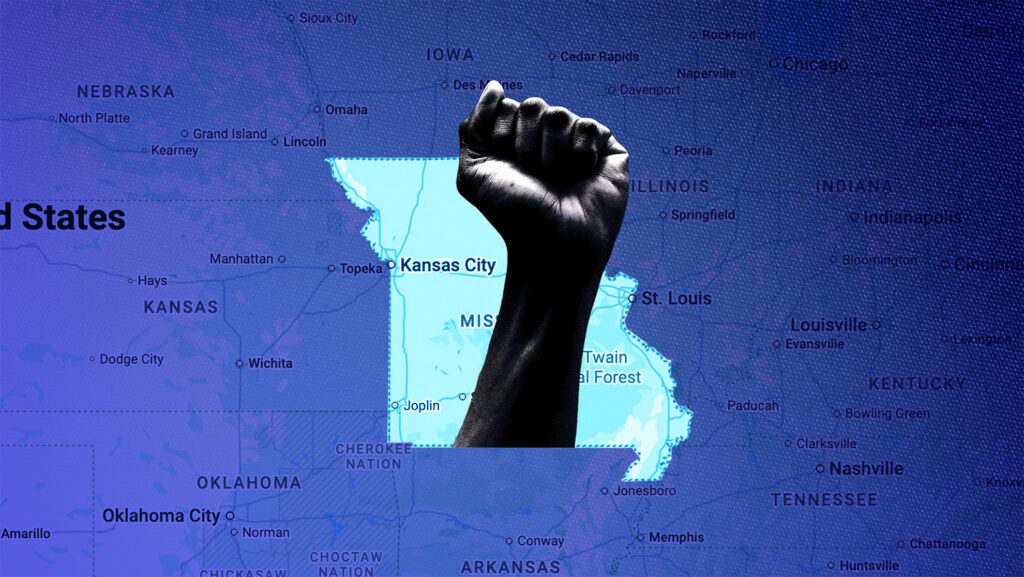
Unprecedented mid-decade redistricting launched a race for state legislatures to redraw congressional district maps before the November midterm elections. With control of the House of Representatives hanging in the balance, there’s a lot at stake.
In my home state of Missouri, however, the issues hit closer to home. Whether the new map is left to stand will determine the voices, power, and well-being of my community.
Get updates straight to your inbox — for free
Join 350,000 readers who rely on our daily and weekly newsletters for the latest in voting, elections and democracy.
Last year, as Texas and California moved to redraw almost a dozen seats between them, the Missouri legislature, on orders from Washington, D.C., put Kansas City in the battle over political power.
Without warning, our city became a casualty of colonization, reminiscent of the Missouri Compromise of 1820. Back then, Missouri became a political battleground when it was admitted as a slave state, tipping the political power of the nation at the expense of people’s lives. Now, over 200 years later, we are experiencing a similar playbook. In the 1800s, it was freedom that was under attack; arguably, it still is.
Of Missouri’s eight congressional districts, two have traditionally represented St. Louis and Kansas City, both home to our largest Black and Brown communities. In September, legislators passed a new congressional map, slicing up Kansas City and moving our citizens, including 70,000 people of color, into three traditionally conservative, rural and predominantly white congressional districts. The bill was signed into law in September.
This new law corrupts the power, agency and resources of our city and the millions of people who live here. As history often repeats itself, Missouri is reminded too often that politicians are willing to besmirch democracy and the best interests of their constituents in favor of holding onto power.
Encompassing Kansas City and stretching east into vibrant farmland, Missouri’s 5th Congressional District has a rich history, electing some of the most prominent congressional civil rights proponents below the Mason-Dixon Line, including Reps. Richard Bolling, Alan Wheat and, currently, Emanuel Cleaver II.
If the new district maps remain, Missourians’ power will weaken, undermining fair electoral participation for Black Kansas Citians.
The district is my home. I grew up as a little girl living in Kansas City, the daughter of a single mom of three who — displaced from the middle class by divorce — went from public assistance to the CEO of a notable Kansas City economic empowerment nonprofit. My mother’s ascension, in part, was because of proximate leaders who understood the needs of the district and brought opportunity home to the district.
If the new district maps remain, Missourians’ power will weaken, undermining fair electoral participation for Black Kansas Citians, and conflating the interests of urban and rural communities whose unique socioeconomic conditions need to be honored and resourced distinctly.
Congressional districts are meant to give voice to families who share neighborhoods and community experiences. We send our kids to the same schools, travel the same roads and work in the same office parks and factories.
Districts that are fairly designed give their citizens an informed and balanced voice in Washington, D.C., affecting everything from vital health care services to economic opportunities like my mother benefited from.
In Missouri’s 5th District, with Kansas City having a singular voice in Congress, we recently secured federal funds for critical resources, including affordable housing projects and a public streetcar system. All these resources are in jeopardy if we don’t have continued fair representation in Congress.
Fortunately, the people of Missouri have united to defeat the gerrymander.
Last year, more than 300,000 Missourians signed a petition, teeing up a citizen referendum to place the new map on a 2026 ballot so that the people of Missouri, not politicians under orders from D.C., can decide how we will be represented. Unsurprisingly, state officials are attempting to delay or disqualify the effort. Even with the legal challenges, the map will likely be on the ballot, and when we go to the polls in November, we will not let them win.
The Foundation I lead is supporting the referendum because our mission for inclusive, powerful, and healthy communities depends on citizens having unhindered political agency.
Our business, labor, nonprofit and faith communities have made clear that we do not want our voices to be gerrymandered out. Our movement offers a model for other states where gerrymanders are reversing hard-earned voting rights for millions of hard-working people in urban and rural areas who stand to lose trust and resources from our government.
Missourians aren’t new to civil rights struggles. And a trusted strategy remains: investing in the power of people united by a righteous cause is always the best political calculus.
Qiana Thomason, a life-long Kansas Citian, has dedicated her career to the improvement of health and wellness across the region. Thomason serves as the president and CEO of Health Forward Foundation.