The RNC tried to throw out your ballot. I fought back and won
This piece was originally written for Democracy Docket members. We’re sharing this one with everyone because today’s ruling is too consequential not to. Become a member to get Marc’s exclusive analysis first.
The Republican National Committee thought it had found a new way to disenfranchise hundreds of thousands — if not millions — of lawful voters. It spent millions building a case in an attempt to use disenfranchisement as a systematic tool to gain partisan advantage.
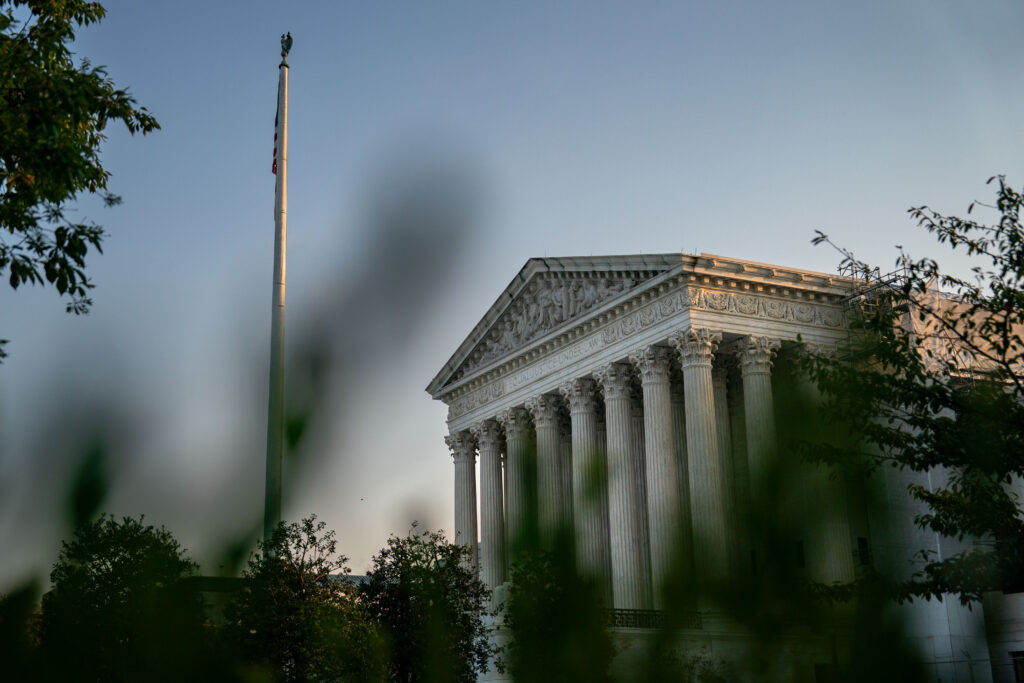
The Supreme Court rejected that gambit. In a 5-4 decision authored by Justice Barrett, the Court held that the Federal Election Day statute does not prohibit states from counting mail-in ballots postmarked by Election Day but received afterward.
Get updates straight to your inbox — for free
Join 350,000 readers who rely on our daily and weekly newsletters for the latest in voting, elections and democracy.
In a healthy democracy, we would agree that no citizen should be disenfranchised because the U.S. Postal Service took too long to deliver their ballot to the election office. Yet we do not live in a healthy democracy.
For the better part of the last decade, Republicans and I have engaged in a legal battle over whether these ballots should count. Some of the most important cases I have litigated have sought to enfranchise these voters.
I have written and spoken extensively on this issue. Indeed, in the first major piece I wrote for Democracy Docket, I called out the practice of rejecting these ballots as “simply wrong and unfair to voters who have done everything right but have their ballots thrown out because of delays with the postal service.”
Republicans have aggressively taken the opposite position. For the GOP, it is purely a matter of partisan advantage — the pool of so-called “late-received” ballots skews disproportionately young, minority and Democratic.
I have won most of the legal battles over whether these ballots should count. And the GOP has certainly noticed. In 2024, a frustrated Republican Party developed a new litigation strategy.
First, it simplified the legal argument to rely principally on the Federal Election Day law: “The Tuesday next after the 1st Monday in November, in every even numbered year, is established as the day for the election.”
According to the RNC’s theory, the “day for the election” means the date by which all ballots must be received for tabulation.
To advance this theory, the GOP chose to sue Mississippi rather than a swing state. By picking Mississippi — a reliably red state with a Republican Secretary of State and Attorney General — Republicans hoped to secure a favorable ruling against a sympathetic defendant.
But they did not count on my law firm intervening to defend the Mississippi law on behalf of Vet Voice Foundation and the Mississippi Alliance for Retired Americans.
After several years of back-and-forth in the lower courts, the case — Watson v. RNC — arrived at the U.S. Supreme Court for argument this spring.
The Court rejected the RNC’s scheme to disenfranchise voters. Democracy won.
“The federal election-day statutes do not preempt Mississippi’s law. The defining element of an ‘election’ — the term used in all three federal statutes — has always been the electorate’s choice of candidate,” Justice Barrett wrote for the majority.
Perhaps most importantly, the Court held that “by ‘default,’ however, ‘responsibility for the mechanics of congressional elections’ belongs to States.” The Court noted that the Constitution’s framework for presidential elections is similar.
I hope Donald Trump is listening. But sadly, I’m sure he isn’t.
Regardless of the ruling, Trump is not likely to give up his attack on free and fair elections. We won the battle, but the war over mail-in voting will continue. The GOP’s goal is to require nearly everyone to vote in person on Election Day — banning no-excuse mail-in voting, all forms of early voting, and so-called “cure periods” that allow voters to fix technical errors in their mail-in ballots.
Those fights will likely take on new urgency in the wake of this decision.
We have already seen the Trump administration attack mail-in voting through the SAVE Act and actions targeting the U.S. Postal Service. The Watson case grew in importance precisely because mail delivery delays have increased — and new postal regulations and practices are likely to make those delays even longer.
At least for now, states have a way to fight back and ensure voting rights. A win is a win. We should all celebrate.
Analysis like this from Marc always lands exclusively in members’ inboxes. If this one resonated, become a member so you don’t miss the next one — and support our mission as a pro-democracy newsroom that never pulls punches.