One day in the fight for democracy
 Prefer us on Google
to see more of our voting rights news coverage when you search.
Throughout my years practicing election law, I have come to expect Friday evening court rulings. I imagine judges, eager to decide these cases quickly, strive to publish them before the weekend.
But on Friday, the good news came early in the day. Shortly after 8:00am, I learned that a federal judge in Rhode Island had dismissed the Department of Justice’s lawsuit seeking to obtain sensitive records on every voter in the state.
Get updates straight to your inbox — for free
Join 350,000 readers who rely on our daily and weekly newsletters for the latest in voting, elections and democracy.
The outcome was not unexpected: The hearing in the case had gone badly for the government, but good news to start the day is always welcomed. So, my law firm, which had represented voters in the case, has reason to celebrate.
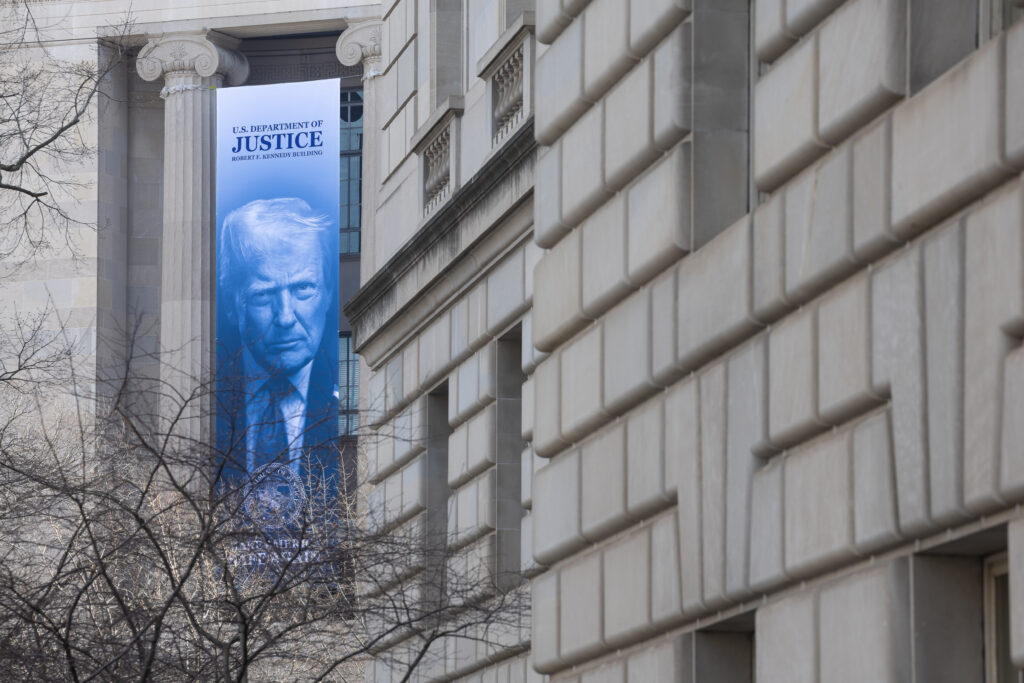
This was the fifth case in a row that we had won — and the fifth case DOJ had lost — on this same issue. The Trump administration badly wants these records from all 50 states and has sued 30 states that refused its demands. My law firm is fighting the DOJ in all of them — protecting voters and voting groups from this illegal and unconstitutional power grab.
The pressure within the DOJ has been growing as its losses mount. So on Friday, it was no surprise when its lawyers hastily filed a notice to a federal judge in Minnesota, attacking an article that suggested one non-citizen may have voted in 2024. Thin gruel indeed.
Even that simple filing was marred by a snafu. The DOJ lawyer attached the wrong article and had to subsequently correct the record.
That was not the only activity in the voter file lawsuits. Throughout the day, my team finalized briefs opposing the DOJ’s motion to reverse its defeats in Oregon and California on appeal.
The pressure within the DOJ has been growing as its losses mount.
Our brief in California was on behalf of the NAACP and spanned 71 pages. Our brief in the Oregon case was two pages longer.
Both legal filings made statutory and constitutional arguments to uphold the trial courts’ decisions to dismiss the DOJ’s lawsuits. But each had to be tailored to address the specifics of each state and the lower court rulings.
Those weren’t the only time-sensitive filings we were juggling on Friday. Shortly before midnight, we filed a motion for a preliminary injunction to block Donald Trump’s recent executive order on voting.
Frustrated by his defeats in the DOJ voter file cases and with the SAVE Act stalled in the Senate, Trump issued an executive order asserting the power to dictate who is permitted to vote by mail.
It is a blatantly unconstitutional power grab and one that we had sued to stop within 24 hours of its issuance. Friday was the day the court had set for us to seek preliminary relief. Unlike in the voter file cases, our clients here are the national Democratic Party and its congressional leaders.
Sandwiched between the cases against the federal government, my firm was also readying to contest Louisiana’s latest legal maneuver to impose a new “proof of citizenship” requirement to register to vote. Though it claims to prevent noncitizen voting, Louisiana’s law actually burdens married women who have changed their last names.
My firm had already sued to block Louisiana’s scheme, but now the state is trying a different approach by suing the Election Assistance Commission. On Friday, we were racing to enter that lawsuit on behalf of our clients, the Greater New Orleans Chapter of the National Council of Jewish Women. Late in the evening, we got on file.
If all of this sounds like a lot for one firm to be handling, it is. With only 60 lawyers, we carry the largest docket of voting and election lawsuits of any law firm in the country. We are currently litigating 87 voting and election cases in 44 states and the District of Columbia.
These numbers are likely to grow in the months ahead as we get closer to the midterm elections. Just this weekend, the Republican National Committee sued two Virginia counties in connection with the state’s redistricting special election.
Then, of course, there is the Supreme Court. Each day the court is scheduled to release opinions, my firm is on alert. We have a hand in three cases — including one that I argued in December — that could change the rules of elections for this November. We need to be prepared to react to each of them regardless of the outcome.
I have been asked whether the pace is sustainable. The honest answer is that we have no choice. It must be.
Days like Friday are a testament not only to the lawyers I work with but also to our clients. The voters who are standing up and the institutions that are fighting back play no small role in protecting democracy.
The midterms are coming. The other side is not slowing down. Neither are we.