New Attack on Free Speech: South Carolina GOP Wants to Criminalize Sharing Abortion Info
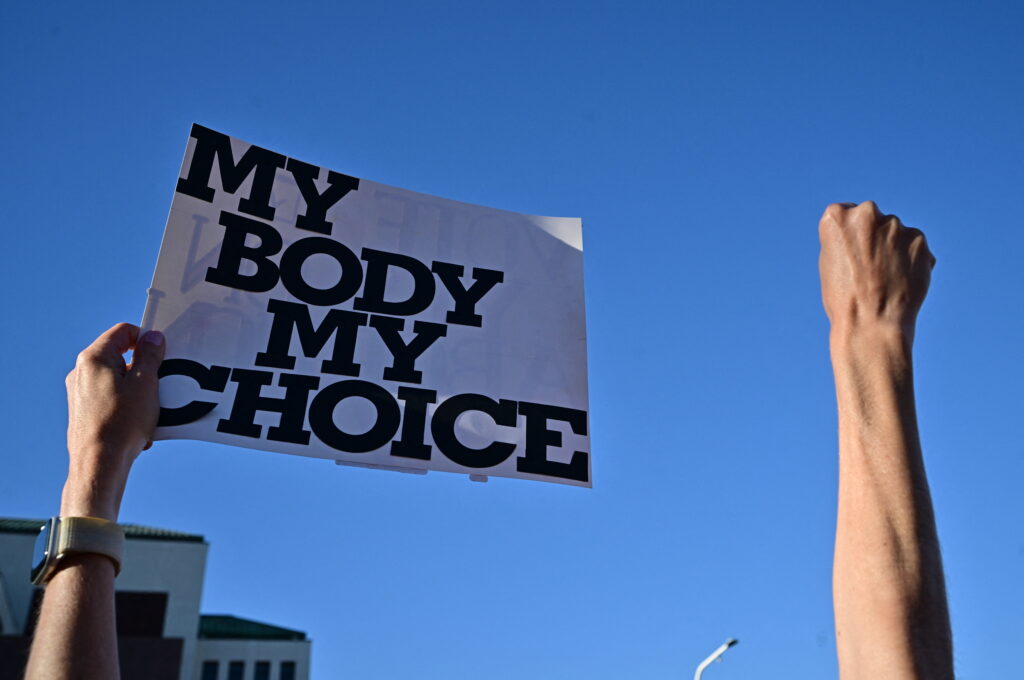
South Carolina already bans abortions after about six weeks of pregnancy, but that’s not enough for some conservatives in the state. GOP lawmakers have sponsored a horrifying new bill that would create a total abortion ban and redefine what counts as birth control.
Perhaps most troubling, the measure also would criminalize sharing information about abortion, trampling on free speech rights.
The legislation comes at a time when the First Amendment is under direct assault by the White House and its allies, and political groups opposed to the Trump administration are being targeted for a government crackdown. The South Carolina bill underscores how attacks on reproductive rights are just one component of a broader attack on basic democratic freedoms.
Last week, a state senate committee held a hearing on the bill — Senate Bill 323 — which would be one of the strictest abortion bans nationwide if passed. In addition to a total abortion ban, SB 323 would make abortion a felony equivalent to homicide. This could result in a prison sentence of up to 30 years — and women who have abortions can actually be charged with murder. The bill removes exceptions for rape, incest, and cases of fatal fetal anomaly, only allowing abortions to prevent the death or “substantial and irreversible physical impairment” of the pregnant woman.
In addition to a total abortion ban, SB 323 would make abortion a felony equivalent to homicide.
SB 323 defines life as beginning when sperm fertilizes an egg and then, alarmingly, changes the state’s definition of a legal “contraceptive” to exclude methods that prevent a fertilized egg from implanting in the uterine wall. As the ACLU of South Carolina notes, this opens the door to future restrictions on certain methods of birth control — such as IUDs and morning-after pills, which are plagued with the false, right-wing narrative that they block the implantation of fertilized eggs.
If you think that SB 323 can’t get worse, it does. In a blatant attack on the First Amendment, the bill would also criminalize speech about abortion. SB 323 makes it a crime to provide information via the phone or internet about how a pregnant person can obtain an abortion, which it considers “aiding and abetting” a felony. It effectively gags doctors from making referrals to abortion providers, a shameful intrusion on the practice of medicine. This provision could implicate trusted friends and family members, but it would also make it impossible for non-profit groups known as abortion funds to operate in the state.
SB 323 explicitly says that hosting or maintaining a website with abortion information would also be banned. That’s notable given how many people access medication abortion via telemedicine in the wake of the Supreme Court overturning Roe v. Wade. According to the Society of Family Planning, one in four abortions reported in the U.S. by the end of 2024 were done with pills via telehealth. South Carolina lawmakers appear to be looking for a way to shut down these telemedicine prescriptions, alongside a concurrent campaign to pressure the federal government to do so. Project 2025 called to end telehealth access, if not pull abortion pills from the market entirely.
In a blatant attack on the First Amendment, the bill would also criminalize speech about abortion.
South Carolina isn’t the first state to target speech about abortion. A Texas bill that would have allowed lawsuits against online pill providers and tech companies that host abortion-related websites died in the regular session, and the version that passed in the second special session stripped out the provision attacking free speech rights. Now, South Carolina seems eager to try, and lawmakers scheduled the hearing before the regular session, in a move advocates believe is designed to fast-track the bill.
In a just world, if this bill passed, the speech-related parts of the law would be immediately blocked by courts. But this Supreme Court may not see laws like this as an infringement on speech, and instead as a permissible restriction on conduct inducing criminal activity, as journalist Linda Greenhouse has noted. Yes, lower court judges have rejected this kind of argument in cases over laws in Alabama, Idaho, and Indiana that sought to ban abortion referrals or helping young people access care out of state. But lower courts also rejected the Mississippi abortion ban in the Dobbs case only for the justices to uphold it and strike down Roe.
Conservatives seem to understand that they cannot fully enact their agenda without trying to make people afraid of sharing medical information, or even just speaking their mind. In the aforementioned Alabama case, district judge Myron Thompson wrote that “unable to proscribe out-of-state abortions, the attorney general interprets state law as punishing the speech necessary to obtain them.” That ruling was in May 2024, but it rings just as true today, especially as the Trump administration is threatening to attack non-profit groups that oppose its agenda.
Trump signed a memo directing the federal government to investigate and dismantle “domestic terrorism networks” and suggested that pro-democracy groups fit that description. In a statement to Democracy Docket, the Open Society Foundations said the Trump administration’s accusations are “meant to silence speech the administration disagrees with and undermine the First Amendment right to free speech.”
The Constitution is increasingly meaningless to Republicans using their elected offices to bend the law around speech, including the president trying to get late-night hosts fired for criticizing him. While these attacks on free speech are out in the open, Republicans are also quietly dismantling our First Amendment rights behind closed doors. It’s up to us to stop them.
Susan Rinkunas is an independent journalist covering abortion, reproductive health, and politics. She is a cofounder of Autonomy News, and a contributing writer at Jezebel. Her reporting has appeared in The Guardian, Slate, The New Republic, The Nation and more.
As a Democracy Docket contributor, Susan covers the intersection of abortion, bodily autonomy and democracy.