For democracy, June is the cruelest month
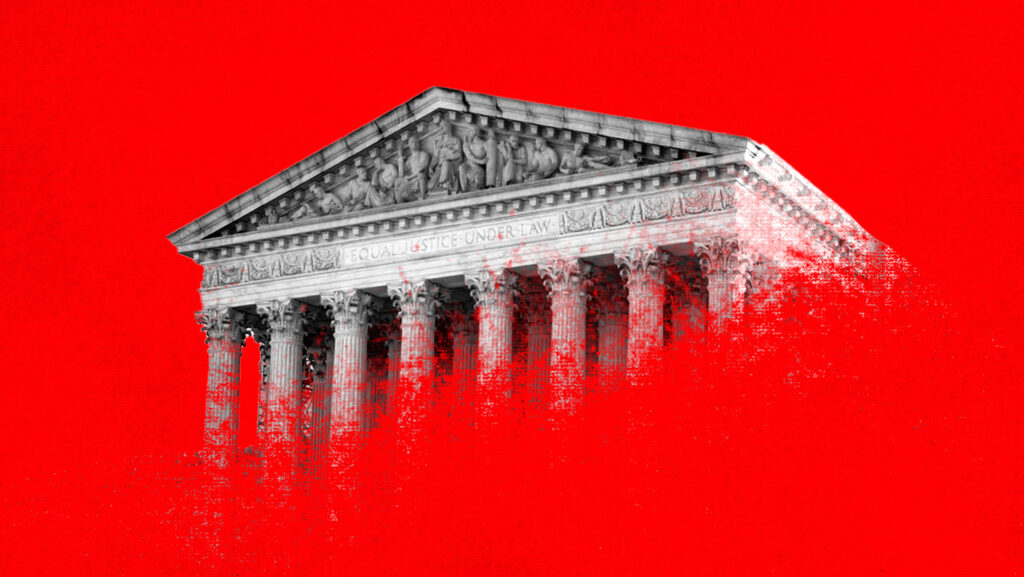
In “The Waste Land,” T.S. Eliot describes April as “the cruelest month.” With all due respect, the renowned poet was clearly not a lawyer awaiting Supreme Court decisions that may define democracy for a generation.
For while April might contain a disquieting blend of death and renewal — “breeding lilacs out of the dead land, mixing memory and desire, stirring dull roots with spring rain” — in recent years, June has been the time when the high court delivers its most devastating blows against individual rights and the rule of law.
While November may hold elections, it has been June that is the cruelest month for our democracy.
Get updates straight to your inbox — for free
Join 350,000 readers who rely on our daily and weekly newsletters for the latest in voting, elections and democracy.
As we enter June this year, the Court has yet to issue opinions in 26 cases. Among them are two that I was personally involved in litigating: National Republican Senatorial Committee v. FEC and Watson v. Republican National Committee.
Arguing before the Supreme Court is a highlight of any attorney’s career. I have had that honor five times. The first four cases I argued all involved voting rights and redistricting. I won each one of them.
I argued the fifth – NRSC v. FEC – in December. It was different in every way.
The case concerned a core provision of federal campaign finance law — a limit on the amount of money a political party can spend in full coordination with its candidates. The Republican Party has spent my entire 30-year career arguing in court to strike down this limit.
Indeed, the first brief I ever worked on in the Supreme Court involved an earlier GOP challenge to this same law in the 1990s. It survived Supreme Court review before — but that offers no guarantee this time.
What makes this case so unusual, however, is its procedural posture. In a normal administration, the Solicitor General would have been defending the federal law before the Supreme Court. But nothing about the Trump administration is normal.
Instead of defending a law that has been on the books for 50 years and has survived prior legal challenges, after Trump took office, the Department of Justice switched sides. It argued that the GOP was correct and the law should be struck down.
With no party left to defend the law, the Democratic Party moved to intervene in the Supreme Court to fill the void. When that motion was granted, I had the honor of representing the Party in the case.
It is widely assumed that we will lose this case. The Supreme Court has grown more conservative and hostile to such laws since it was last upheld. It had no reason to grant review if its intention was simply to once again reject Republican attacks.
Yet none of that makes this case less important or less worthy of close attention. If the Republican Party gets its way, it will not only expand the arms race of campaign spending — it will deal a severe blow to the core tenets underlying all limits on campaign contributions. The result could be catastrophic.
The second case I was involved in is likely more familiar to you — Watson v. RNC. This case involves a Republican challenge to a state law that permits mail-in ballots mailed prior to Election Day to be counted if they are received a few days afterward.
The dispute is over the scope of the federal law that sets Election Day as the Tuesday following the first Monday in November. The RNC argues that federal election statutes require ballots to be received by that day, while my clients and Mississippi argue that the law requires only that ballots be cast by Election Day.
While this may seem like a minor dispute, the implications are vast. It will determine the future of mail-in voting, and if the Supreme Court sides with the RNC, tens of thousands of voters will be disenfranchised. That is because the RNC argues that mail-in ballots should not be counted if received after Election Day — even if they are postmarked on time.
In the interest of full disclosure, I had hoped to argue this case before the Court. We had intervened to become defendants when the case was first filed.
Yet, despite being parties to the case, the conservative Supreme Court denied my request. The result was that only the lawyer for Mississippi was left defending a law that will have implications across the nation.
Finally, I will be watching a case I did not litigate — the challenge to Trump’s effort to undo birthright citizenship. It is hard to imagine the Supreme Court — even this Court — siding with Trump in this case. The question is whether the outcome will be a total victory and repudiation of Trump’s unorthodox theory, or something more nuanced and measured.
I fear we have a cruel month ahead of us: the future of campaign finance law, the definition of Election Day, the fate of birthright citizenship. While I remain hopeful, I am prepared for democracy to leave this month weaker than it entered.
And if that is the result, we must be ready to fight back even stronger. Even April, cruel as it is, eventually gives way to summer.