Trump DOJ appeals California ballot case before judge even rules
 Prefer us on Google
to see more of our voting rights news coverage when you search.
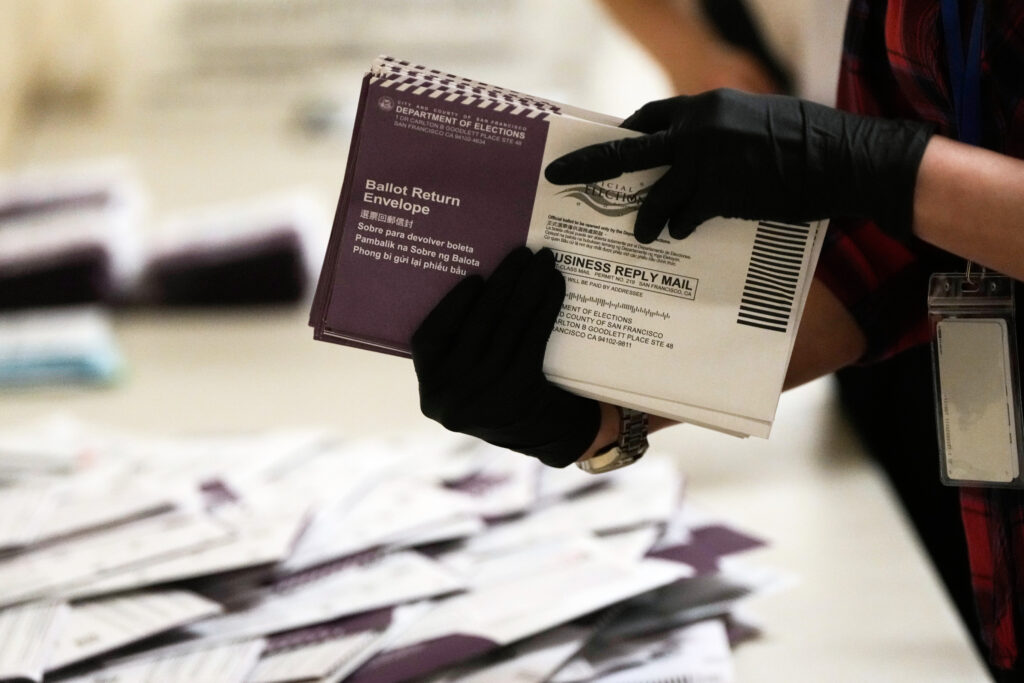
The Trump administration appealed its California ballot lawsuit to a federal appeals court Thursday — even though the judge overseeing the case has not yet ruled on its request to block the counting of thousands of ballots.
The Department of Justice (DOJ) filed a notice of appeal with the 9th Circuit Court of Appeals after U.S. District Judge David O. Carter did not meet a noon deadline the department had requested for a ruling on its emergency bid to stop the ballot counting.
DOJ acknowledged in its filing that Carter “has not ruled” on the request but argued that, given what it called the “critical and exigent nature” of the case, his silence amounts to a “constructive denial” of its request for preliminary relief.
Get updates straight to your inbox — for free
Join 350,000 readers who rely on our daily and weekly newsletters for the latest in voting, elections and democracy.
The extraordinary procedural maneuver comes one week after DOJ sued California, Secretary of State Shirley Weber and Los Angeles County Registrar Dean Logan in an effort to stop election officials from counting ballots belonging to more than 20,000 people federal agencies have identified as likely noncitizens unless their citizenship can first be verified.
On Wednesday, DOJ asked Carter to rule by noon Thursday, claiming that “every minute” California continued processing ballots without segregating those belonging to federally flagged voters caused irreversible harm.
California and Los Angeles County have sharply disputed that premise and asked Carter to dismiss the lawsuit entirely.
They argue that DOJ lacks standing and has no legal authority to use 18 U.S.C. § 611 — a criminal statute prohibiting noncitizens from voting in federal elections — to force state officials to change how they administer and count ballots.
California has also argued that Congress expressly authorized the attorney general to seek civil injunctions under other federal election laws but did not provide that authority under Section 611.
The state and county filed those dismissal motions Wednesday, shortly after the case was transferred to Carter.
DOJ’s appeal does not point to an order denying its request. Instead, the department says Carter’s failure to rule within DOJ’s requested timeframe has the “practical effect” of denying a preliminary injunction and is therefore appealable.
The department initially filed its emergency request Monday and refiled it Wednesday after Carter granted its request to exceed the court’s normal word limit.
Whether the 9th Circuit will accept DOJ’s characterization of Carter’s silence as an appealable denial remains to be seen.
For now, the district court has issued no ruling denying DOJ’s request to intervene in California’s ongoing ballot processing.