South Carolina county deliberately disenfranchising Black voters by closing poll sites, local official alleges
 Prefer us on Google
to see more of our voting rights news coverage when you search.
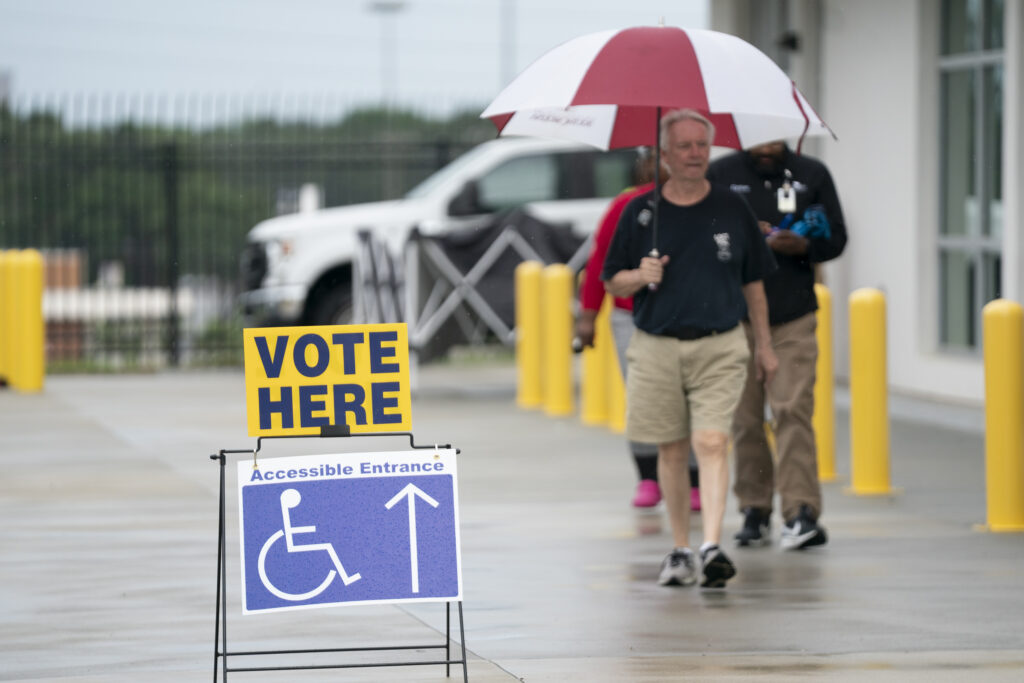
A local Democratic official told Democracy Docket that she believes the GOP-controlled election board in South Carolina’s Clarendon County is attempting to suppress the Black vote by shuttering six voting sites ahead of the midterm elections.
“They’re disenfranchising voters so that they can keep an eye on them,” said Patricia Pringle, the Clarendon County auditor and chairperson of the county Democratic Party. “They can consolidate them to the point where they know they can keep control of what’s going on at each precinct.”
Her comments come after the American Civil Liberties Union (ACLU) of South Carolina sent a letter on Oct. 8 to State Election Commission (SEC) chairman Conway Belangia, urging action.
In that letter, ACLU lawyers Allen Chaney and Sarah Schreiber said that the Clarendon Board of Voter Registration and Elections (BVRE) had violated the law by closing the voting sites.They also alleged that BVRE Chairman Edward Gamble mischaracterized the consolidations as “moving locations only,” despite the fact that the change left eight precincts voting at only four locations.
“As a result, about 10% of the county’s voting age population will now have to travel outside their precinct to vote in the 2026 election,” Chaney and Schreiber wrote. “What’s more, these precinct consolidations disproportionately harm Black voters, who are twice as likely as white voters to be affected by the BVRE’s actions.”
According to the ACLU’s analysis, the polling site consolidations affect over 61% of the Black voting population in Clarendon County.
Under South Carolina law, only the state’s General Assembly — not county election boards — is allowed to establish voting precincts. In 2019, Assistant Attorney General Matthew Houck clarified that county election boards aren’t authorized to alter polling locations.
Get updates straight to your inbox — for free
Join 350,000 readers who rely on our daily and weekly newsletters for the latest in voting, elections and democracy.
“Harms will also be felt by voters who now must share their polling location with voters from adjacent precincts,” Chaney and Schreiber wrote. “With a new influx of voters, crowding, confusion, and delays are far more likely than before. Again, these harms are disproportionately levied on Black voters.”
Pringle, the auditor and Democratic chair, also confronted the SEC about the polling site closures, along with other voting-related issues in Clarendon County, in a Sept. 28 letter to Belangia.
In a response to a request for comment, the SEC provided Democracy Docket with a copy of a response Belangia sent to Pringle on Oct. 8. An ACLU of South Carolina spokesperson said that the SEC also sent Belangia’s letter to Pringle in response to the ACLU letter.
“Polling locations may change for a variety of reasons, and the Board should have more details regarding specific changes,” Belangia wrote. “Generally, some reasons to change a polling place include a facility is no longer available, the facility no longer meets accessibility or other requirements, or the location can no longer accommodate the number of voters in the precinct. Changes may also be necessary due to an inadequate number of poll workers or other logistical and operational considerations.”
Chaney, the ACLU lawyer, told Democracy Docket that the organization is “exploring the extent of the problem and are keeping all options at our disposal for protecting the rights of voters.”
“South Carolina law protects voters and facilitates voting by requiring that every precinct have at least one voting location and that the voting location be inside the precinct,” he added.
Pringle also told Democracy Docket that repeated changes in BVRE leadership have contributed to problems with voting in Clarendon County, which she raised in her letter to Belangia.
Last week, the board appointed Susan Thomas as its new elections director — the third in just over a year. In September, the board voted 7-1 to fire its previous director, Robert Adams, after only six weeks on the job. Before that, the position sat vacant for nearly a year, after the BVRE fired Princess Lang from the position in September 2025 — just over a month after her appointment.
Pringle said that she believes both Adams and Lang were terminated because they pushed back against the BVRE’s pressure to close polling sites and make other changes.
“I think they probably wanted [Adams] to do things he wasn’t going to do, and didn’t, because he’s going to follow state statutes and laws,” she said. “They were micromanaging him instead of letting him do his job.”