Leaked Memo: DOJ To List, Target Anti-Trump Activists as ‘Domestic Terrorists’
 Prefer us on Google
to see more of our voting rights news coverage when you search.
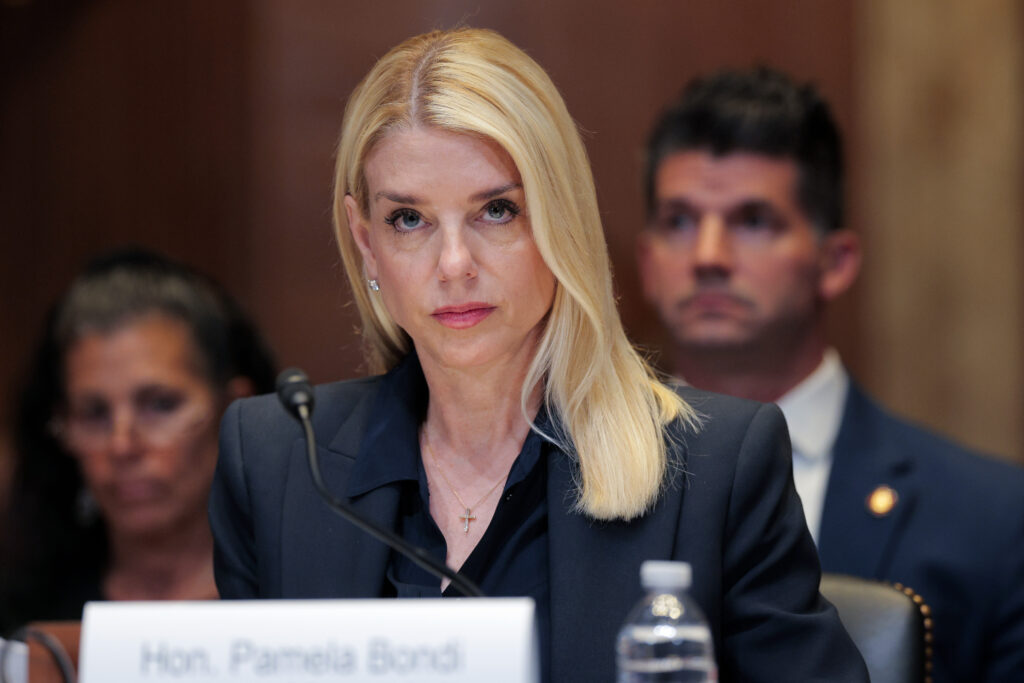
The Department of Justice (DOJ) will potentially treat opponents of President Donald Trump’s policies as “domestic terrorists,” according to a leaked memo from Attorney General Pam Bondi to all U.S. law enforcement agencies.
The document, which was first published over the weekend by investigative journalist Ken Klippenstein, appears to represent the first attempt to implement Trump’s calls to target left-wing activists and others who protest his administration’s policies as “terrorists” affiliated with antifa, an anti-fascist movement that often serves as a boogeyman for the right.
Get updates straight to your inbox — for free
Join 350,000 readers who rely on our daily and weekly newsletters for the latest in voting, elections and democracy.
In the Dec. 4 memo, Bondi instructed the DOJ to compile a “list of groups or entities engaged in acts that may constitute domestic terrorism” under U.S. law.
The memo suggests Bondi is working from an exceedingly broad definition of “domestic terrorism” — and an exaggerated perception of the threat it poses. And despite the administration’s denials, the memo suggests it could target Americans based on their political beliefs, not their actions.
“For too long, rampant criminal conduct rising to the level of domestic terrorism—e.g., organized doxing of law enforcement, mass rioting and destruction in our cities, violent efforts to shut down immigration enforcement, targeting of public officials or other political actors, etc. —has been tolerated,” she writes.
The alleged perpetrators of these actions are defined by extreme viewpoints, anti-American sentiments and a willingness to use violence to serve those beliefs, the attorney general claims.
Among the “anti-American sentiments” Bondi enumerates are anti-Christianity, anti-capitalism, “adherence to radical gender ideology,” “hostility towards traditional views on family, religion, and morality” and “views in favor of mass migration and open borders.”
Bondi also instructs law enforcement to prioritize combatting these actors and to refer instances of possible domestic terrorism to the Joint Terrorism Task Forces, the FBI-led, multi-agency teams that, prior to Trump’s return to office, worked to prevent and disrupt real terrorism at home and abroad.
Supporting any of the views Bondi names in the memo — whether opposition to Trump’s immigration crackdown or “radical gender ideology” — is protected speech under the First Amendment.
Bondi acknowledged as much, though in a footnote.
“The United States Government does not investigate, collect, or maintain information on U.S. persons solely for the purpose of monitoring activities protected by the First Amendment,” she wrote. “No investigation may be opened based solely on activities protected by the First Amendment or the lawful exercise of rights secured by the Constitution or laws of the United States.”
Still, there are reasons to believe the memo may signal a coming assault on protected speech and expression — particularly by progressive activists and organizations.
This fall, Trump issued a pair of executive orders claiming to designate antifa as a “domestic terrorism organization” and directing the federal government to go after “domestic terrorism networks” that supposedly fund antifa.
At the time, it wasn’t clear what — if any — legal weight the orders would have: No federal law allows the president to label domestic terrorist groups. Additionally, antifa is not a formal organization, but a loosely connected network of activists.
Bondi’s memo appears to be the DOJ’s first efforts to set Trump’s orders in motion.
Several legal and national security experts have warned that Trump and his allies are attempting to use these orders to criminalize organized opposition to the Trump administration or create a pretext to target people or organizations that support progressive causes.
Trump signed the orders shortly after the assassination of conservative activist Charlie Kirk. Trump, Vice President JD Vance and other administration officials subsequently claimed that Kirk’s murder and other recent acts of political violence were the product of a shadowy cabal of left-leaning non-profits. They further vowed to avenge Kirk by destroying progressive nonprofits and going after major Democratic donors.
In fact, the Utah man charged with Kirk’s killing appears to have acted alone. While there is some evidence he was motivated by opposition to Kirk’s position on transgender rights, his broader political beliefs remain unclear.