Judge probes whether Trump defrauded the court to create $1.8 billion “anti-weaponization” fund
 Prefer us on Google
to see more of our voting rights news coverage when you search.
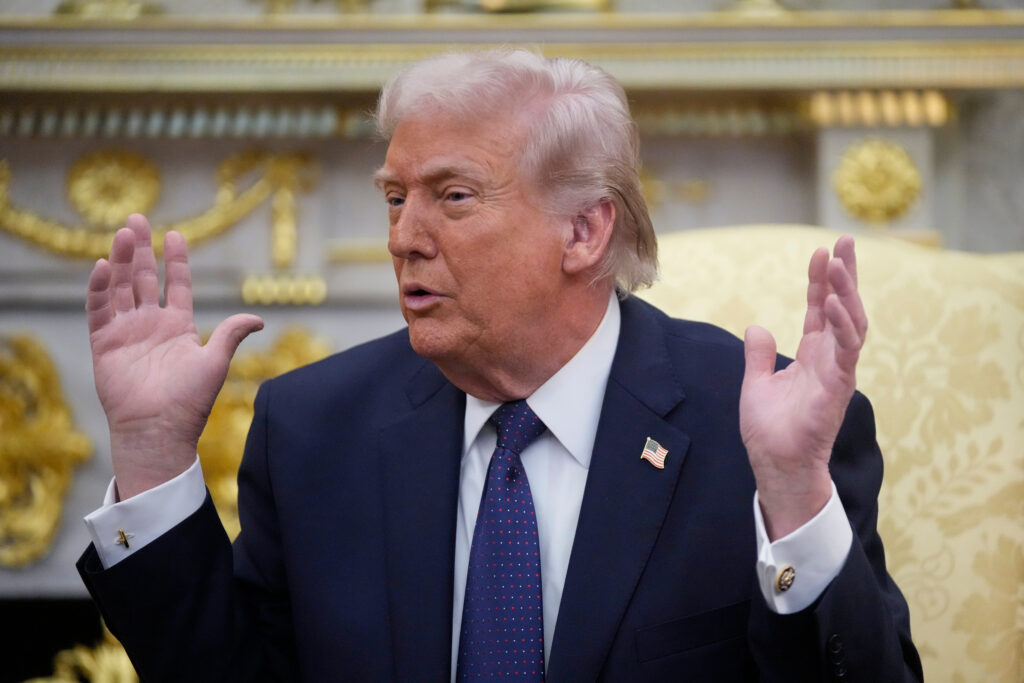
A federal judge is probing whether President Donald Trump’s lawyers made the court a “victim of a fraud” by colluding through his lawsuit against the Internal Revenue Service (IRS) to create the controversial “anti-weaponization” fund.
U.S. District Judge Kathleen M. Williams opened the inquiry Friday evening, giving Trump’s lawyers until June 12 to respond to allegations that they deceived the court to obtain the $1.8 billion settlement connected to the IRS lawsuit.
The allegations stem from a brief filed by a group of 35 former federal judges who asked the court to reopen the case due to questions about “manipulation of the judicial system.”
“The Court was deceived,” reads their brief.
Get updates straight to your inbox — for free
Join 350,000 readers who rely on our daily and weekly newsletters for the latest in voting, elections and democracy.
“To be clear, [Trump’s]’ settlement was not, and never will be, legally justified,” it reads. “That is because the Acting Attorney General’s Order creating the Anti-Weaponization Fund identified the Judgment Fund and the Attorney General’s authority to enter ‘compromise settlements’ … as the basis for the creation of the Anti-Weaponization Fund. Both of those authorities require the existence of a legitimate litigation and not, as here, one that is collusive, feigned, or fraudulent.”
The fund was already temporarily blocked earlier today by U.S. District Judge Leonie Brinkema, who said the hold was necessary to ensure no money was “irreversibly disbursed” from it, since several lawsuits are pending against it.
The “Anti-Weaponization Fund” was created to compensate people the Trump administration deemed victims of adverse actions from the Biden administration. However, the fund was immediately panned, even by congressional Republicans, and derided as a corrupt “slush fund” for Trump’s friends and allies.
It was created after Trump withdrew his $10 billion lawsuit against the IRS for allegedly leaking his tax records during his first term. However, the former federal judges’ brief noted that no settlement was referenced in that dismissal.
“Here, the [former judges] advance grievous allegations that Plaintiffs voluntarily dismissed this litigation solely to avoid judicial scrutiny of a lawsuit that ‘was collusive from the start,’ and was only filed to provide the imprimatur of legality for an unlawful settlement,” reads Judge Williams order.