Facing bipartisan backlash, North Carolina GOP operative resigns over ‘meddling’ in local voting plans
 Prefer us on Google
to see more of our voting rights news coverage when you search.
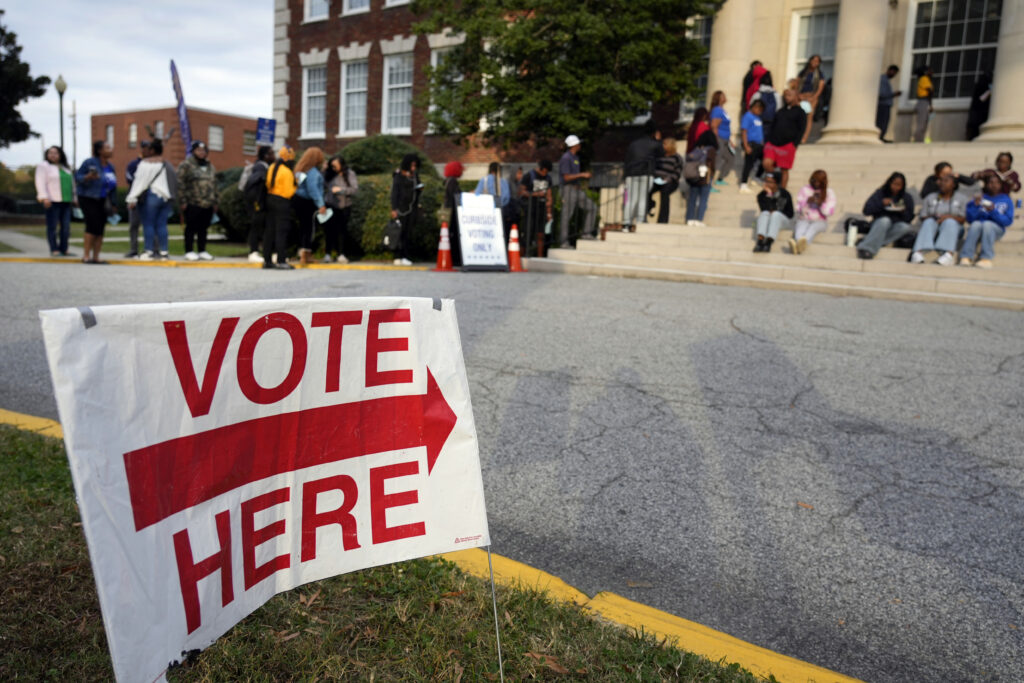
A North Carolina GOP operative has resigned from a state elections oversight role after the State Auditor’s office was caught aggressively attempting to influence how counties picked their early voting locations — a move that drew significant backlash from local officials in both parties.
The scheme to influence polling sites is just the latest example of how North Carolina Republicans have injected an openly partisan agenda into state and local election administration processes since taking control of the state board of elections last year. In that time, they have stripped Gov. Josh Stein (D) of election oversight duties and handed them to the state’s highest ranking elected Republican, Auditor Dave Boliek.
Get updates straight to your inbox — for free
Join 350,000 readers who rely on our daily and weekly newsletters for the latest in voting, elections and democracy.
Boliek, in turn, installed GOP operative Dallas Woodhouse as his liaison to local boards of elections, a controversial decision. The former executive director of the state GOP, Woodhouse made national headlines in 2016 for asking local boards to reduce early voting hours, not offer Sunday voting and refrain from reinstating polling sites on college campuses.
Then, with high-stakes midterm elections coming up in November, Woodhouse was caught pressuring local election board members to enact explicitly partisan early voting plans when an activist obtained records of his communications through public records requests and shared them with the Carolina Public Press.
Woodhouse reportedly resigned yesterday, after those records became public.
Sailor Jones, state director of Common Cause North Carolina, told Democracy Docket that it’s unheard of for the auditor’s office to be caught working to influence local voting plans — particularly early voting, the most popular way North Carolinians vote.
“I cannot stress enough how unprecedented it is,” Jones said.
This summer, county election board members have been signing off on their local plans for polling locations and voting hours for the November general election. In several counties, that’s led to heated debates over GOP efforts to cut campus polling places and Sunday voting hours — the same targets Republicans like Woodhouse have sought to eliminate for years.
And the battle for North Carolina’s early voting options isn’t over yet. The GOP-controlled state board of elections will have the final say in August for all North Carolina counties that did not unanimously approve their voting plans.
But the routine process took a dramatically partisan turn this year. That first came to light in Jackson County, where Republican members of the local election board revealed during a June public meeting that they had been pressured by Boliek’s office to deny a campus early voting site at Western Carolina University. One GOP member wrote in a letter that he had resigned his seat rather than “submit to their control.” Another Republican board member cast the deciding vote to allow the campus polling site.
Then, this week, emails and text messages came to light showing that Woodhouse had provided Anson County board members with a proposed early voting plan, and he was directly involved with negotiating the weekend early voting hours.
Ultimately, North Carolina voting advocates see Woodhouse’s resignation as a win — but one that’s part of a much larger war, according to Jones.
“This is not the last time we will hear of the auditor meddling in our elections through the work of Dallas Woodhouse or other people in the auditor’s office,” Jones said. “So it will be vital that North Carolinians continue to turn the anger and outrage about the meddling in our elections into action.”
Jones said some counties still haven’t passed their early voting plans for the general election, including Guilford County, home to North Carolina A&T State University, the largest of the country’s historically Black colleges and universities.
Guilford County already denied A&T students the early voting location they demanded during the primary election this year. Now, the community is gathering to fight for it again, Jones said.
With numerous consequential races on the ballot this year — including a U.S. Senate seat, a state Supreme Court seat and important state legislative races — Jones said Woodhouse’s resignation should be a “clarion call” to North Carolina voters about just how much is at stake in their elections.
“I think the repercussions are more far-reaching, and they will show up during the 2026 elections,” Jones said. “It is proving, once again, that we are a purple state and that North Carolina deserves options that work for all parties and all sides.”