DOJ partially confirms DHS whistleblower allegations in new notice to federal court
 Prefer us on Google
to see more of our voting rights news coverage when you search.
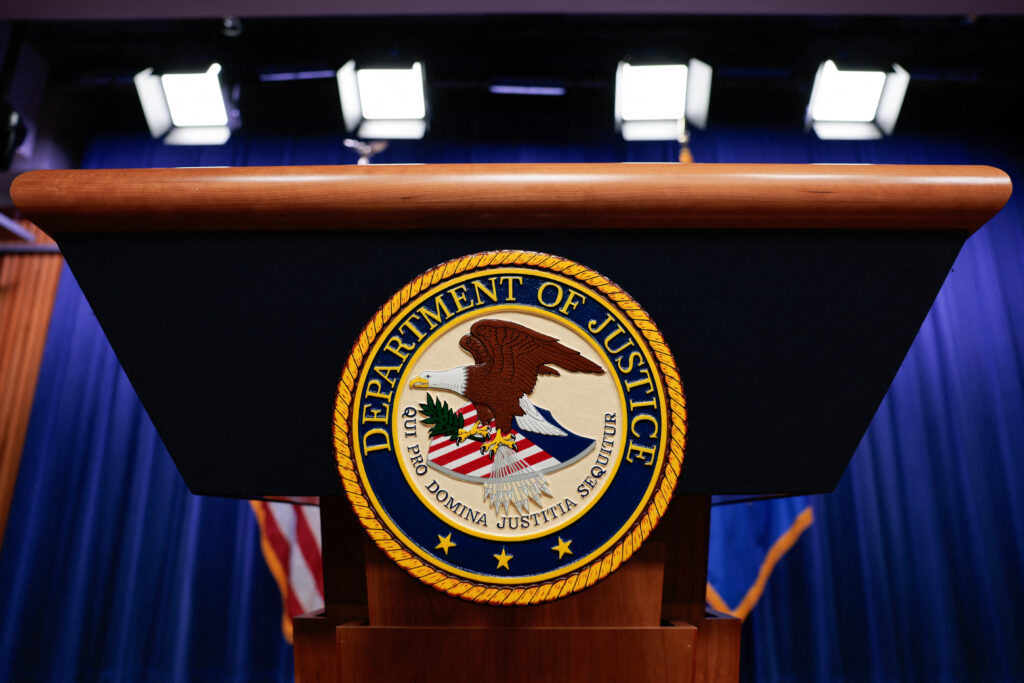
The Department of Justice (DOJ) informed a federal court that Homeland Security agents have used Social Security data in the Trump administration’s expansive search for voting fraud ahead of the midterm elections.
The disclosure, which the department included in filings Monday to U.S. District Judge Sparkle Sooknanan, partially confirms allegations an anonymous federal official made in a bombshell whistleblower report this week.
The whistleblower claimed that Department of Homeland Security (DHS) officers used personal data to illegally access people’s voter registration files through state election websites as part of the department’s broad effort to find noncitizens on state voter rolls.
But the DOJ filing also appeared to be an attempt by the department to get ahead of information in the whistleblower report suggesting DHS had violated a court injunction preventing its agents from using the Systematic Alien Verification for Entitlements (SAVE) database, which the agency had improperly turned into a citizenship-checking tool.
Get updates straight to your inbox — for free
Join 350,000 readers who rely on our daily and weekly newsletters for the latest in voting, elections and democracy.
In its notice to Sooknanan, DOJ attorneys said DHS recently “reactivated” a link between DHS and the Social Security Administration’s (SSA) databases and used SSA data “to verify information and help determine whether illegal voting may have occurred.”
The DOJ did not specify precisely what officers do with the SSA data. However, the whistleblower specifically alleged that Social Security numbers were among the personally identifiable information agents plugged into state registration portals to obtain people’s voter records.
In some instances, agents accessed people’s registration information even though the state portals explicitly said that only individual voters could use the search tool to look up their own records.
The DOJ filed the notice to Sooknanan because she is overseeing a lawsuit against DHS’s integration of SSA data in the SAVE system, a flawed federal immigration database DHS is using to help initiate state voter roll purges.
For years, states used SAVE to check the immigration status of people applying for government benefits.
But DHS has attempted to integrate SSA data into SAVE to turn it into a new tool to monitor and shape state voter rolls, following instructions from President Donald Trump’s March 2025 executive order.
LWV and the other plaintiff in the case, the Electronic Privacy Information Center (EPIC), challenged DHS’s attempt to expand SAVE as a violation of the U.S. Constitution and federal privacy laws. They warned that SAVE was never designed to check voter eligibility and, when used in this manner, would likely erroneously disqualify eligible voters.
In fact, in states that have used the database, eligible voters were routinely flagged as noncitizens.
In June, Sooknanan sided with the plaintiffs and barred DHS from using the SAVE system as a mass voter-citizenship checker, finding it lacked statutory authority to do that and that the scheme violated the Social Security Act, the Privacy Act and the Administrative Procedure Act.
The judge also warned that the effort “haphazardly” threatened “the sacred right to vote” and “trampled on the privacy rights of American citizens.”
The DOJ claimed in its notice Monday that DHS’s election-related searches using SSA data were not related to the SAVE system and therefore did not violate Sooknanan’s order.
However, the same data link between DHS and SSA that was reactivated to carry out these new searches was a central issue in LWV and EPIC’s lawsuit. In fact, the link was deactivated following Sooknanan’s ruling and was reactivated in part to carry out these new searches.
The whistleblower alleged that DHS agents conducted dozens of searches as part of the Trump administration’s “Unlawful Voter Initiative,” a sweeping search for voting fraud — specifically instances of noncitizens registering or casting a ballot — ahead of the November elections.
While LWV and EPIC haven’t yet argued that the SSA-assisted searches violated Sooknanan’s order, LWV said in a statement Monday that the whistleblower’s allegations, if true, are “a five-alarm fire for American democracy.”
“Allegations that federal workers were pressured to fabricate evidence and falsely frame citizens as criminals strike at the heart of the Constitution and the rule of law,” LWV CEO Celina Stewart said.
LWV filed its opposition Tuesday afternoon to DOJ’s recent request for the U.S. Supreme Court to pause Sooknanan’s order. The department appealed to the Court days after the D.C. Circuit Court of Appeals denied the administration’s motion to pause the lower court’s order blocking use of the database.
In its motion Tuesday, LWV said the government had “recklessly created an error-laden master citizenship database that endangers millions of Americans’ privacy and voting rights” through its expansion of SAVE.
In a separate lawsuit, EPIC is also challenging DHS’s ongoing effort to create lists of people eligible to vote in every state — essentially federal versions of state voter rolls. Combined, the lists would amount to a national registration list.
EPIC has alleged that DHS’s lists, which stem from Trump’s second anti-voting executive order, are an illegal attempt to influence who can vote just weeks before the midterms.