Voting rights groups urge court to reject DOJ bid to erase Alaska election defeat
 Prefer us on Google
to see more of our voting rights news coverage when you search.
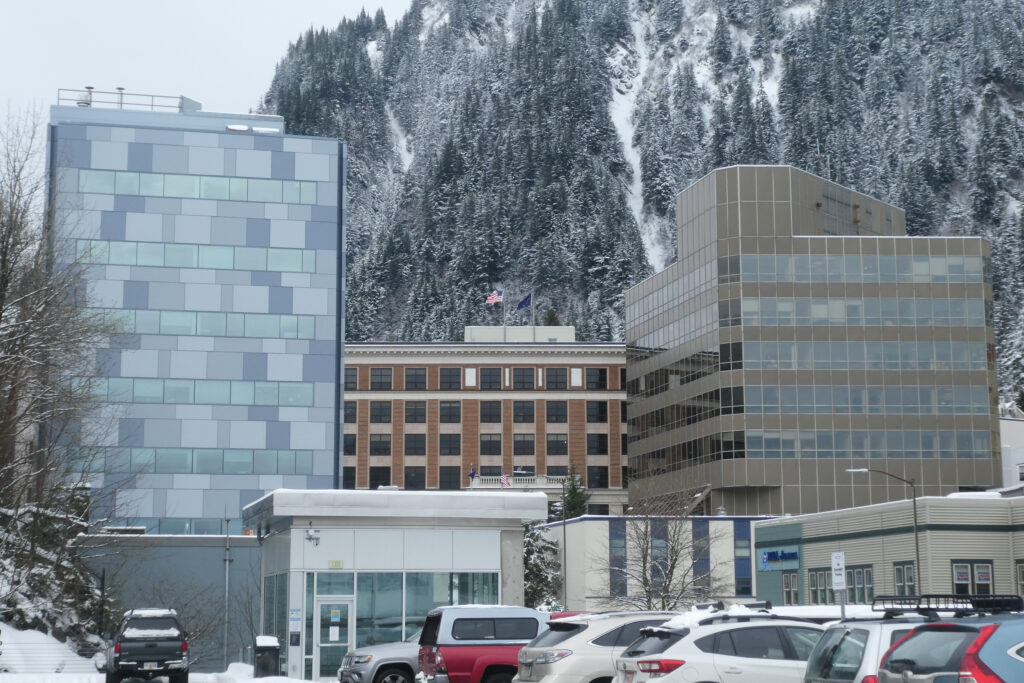
Voting rights groups are urging a federal appeals court to reject the Department of Justice’s attempt to erase its defeat in a lawsuit seeking to block certification of Alaska’s U.S. Senate election. They are also continuing to demand sanctions against the department for pursuing what they call “a frivolous lawsuit.”
In a filing Tuesday, the League of Women Voters of Alaska, Common Cause and two Alaska voters accused DOJ of trying to escape accountability after failing to prevent the state from certifying its election results.
“The United States cannot baselessly exploit the legal process, threaten Alaska voters, and then walk away with a mulligan,” the groups wrote. “The reckless actions of federal officials cannot be memory-holed for personal convenience.”
Get updates straight to your inbox — for free
Join 350,000 readers who rely on our daily and weekly newsletters for the latest in voting, elections and democracy.
The unusually sharp response comes after DOJ acknowledged last week that its lawsuit challenging Alaska’s election certification is now moot because the department can no longer obtain the relief it originally sought.
But rather than simply withdrawing its appeal, DOJ asked the Ninth Circuit Court of Appeals to vacate a federal judge’s Nov. 1 ruling dismissing the lawsuit for lack of standing.
Vacating the decision would effectively wipe away the adverse judgment instead of leaving DOJ’s courtroom defeat intact.
The underlying dispute centered on two candidates named Sullivan who appeared on Alaska’s Senate ballot: Republican incumbent Sen. Dan Sullivan and Daniel J. Sullivan Jr., whose candidacy DOJ alleged was intended to confuse voters and undermine the incumbent’s reelection bid.
DOJ sued shortly before Election Day, seeking to prevent certification if alleged voter confusion could have changed the outcome. U.S. District Judge Sharon Gleason dismissed the case, finding that the department had failed to establish that a court could provide an effective remedy.
Democrat Mary Peltola ultimately defeated the incumbent with a majority of the vote, and Alaska certified its election results Monday.
In its filing, DOJ conceded that because ballots had not been segregated, it could no longer determine whether voters who supported the second Sullivan actually intended to vote for the incumbent.
The voting rights groups questioned DOJ’s newfound position that the case is moot, arguing that recount and election-challenge deadlines remain open and that the department has not adequately explained why no judicial relief remains possible.
“To be sure, the United States may have realized that a favorable outcome is extremely unlikely, or it may simply wish to avoid further scrutiny of the sanctionable and embarrassing merits arguments underlying its lawsuit,” the groups wrote.
They also accused DOJ of avoiding the central legal question underlying its case: whether the National Voter Registration Act (NVRA), a federal law governing voter registration, authorizes the government to intervene in state election certification over alleged voter confusion.
“It talks about anything but the merits—anything but the glaring question of how any colorable or potentially legitimate reading of the NVRA could possibly justify the underlying lawsuit,” the groups wrote.
The groups argued that DOJ should voluntarily dismiss its appeal rather than seek to erase the earlier ruling.
“But the United States cannot file a frivolous lawsuit, lose, notice an appeal, and then demand that this Court ignore the frivolous nature of its claims,” they wrote.
They urged the Ninth Circuit to uphold the dismissal if the case remains live, or dismiss the appeal without vacating Gleason’s ruling if it is moot.
They also asked the court to sanction DOJ and its attorneys for pursuing the appeal.
“This conduct is not normal,” the groups wrote. “It is deeply corrosive to our democracy, our national institutions, and the rule of law. Sanctions are warranted.”
The Ninth Circuit has not yet ruled on DOJ’s request or the groups’ demands.